Bali · Bali
Nusa Lembongan and Ceningan guide: mangroves, snorkelling, where to stay
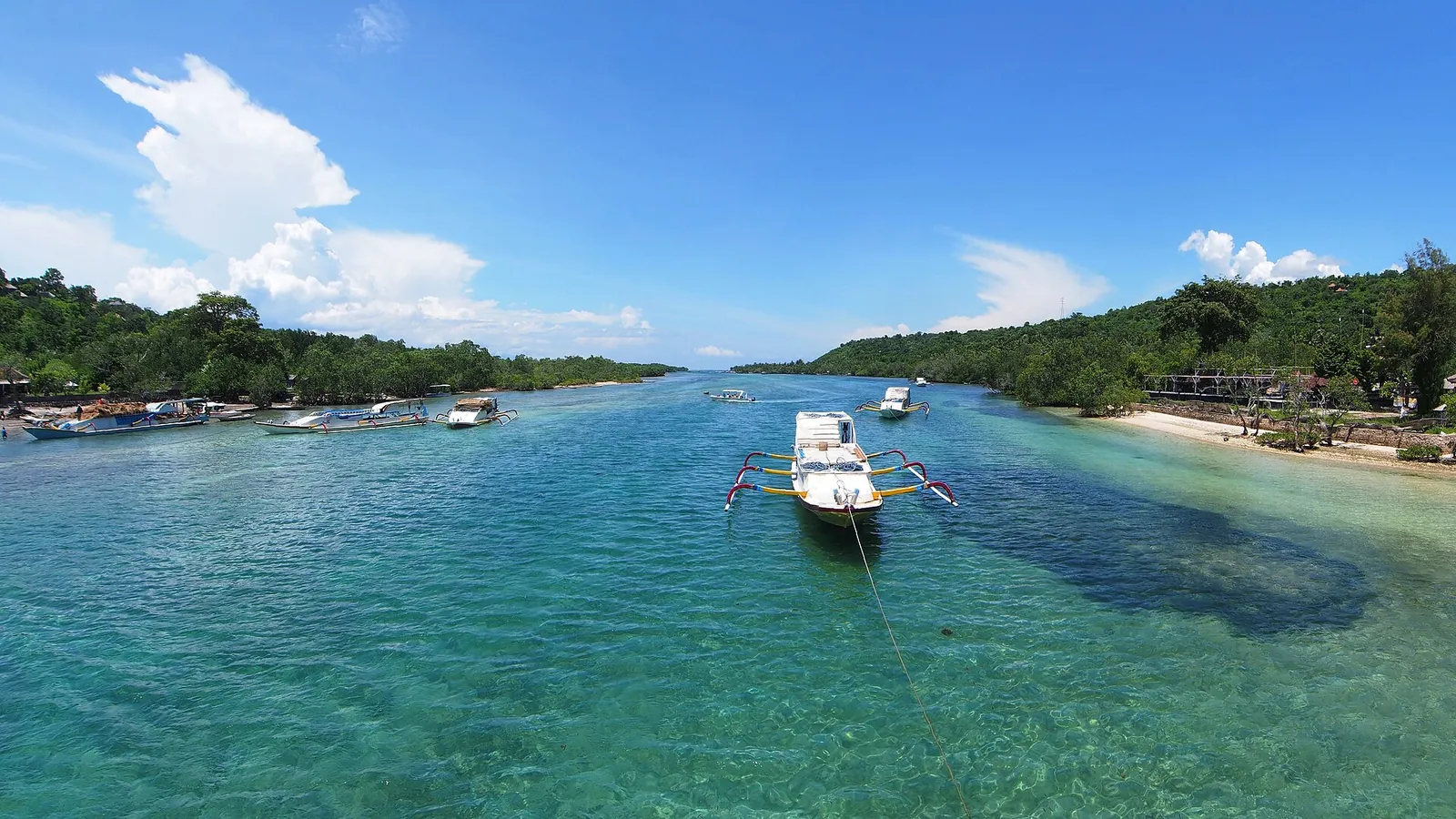
Nusa Lembongan is the smallest-feeling of Bali's three offshore Nusa islands and the easiest to settle into. It covers about 8 square kilometres, has almost no cars, and you can walk between most of its beaches, guesthouses and warungs. A yellow suspension bridge crosses a shallow, seaweed-farmed channel to tiny Nusa Ceningan, and mangroves fringe the north-east shore. Where neighbouring Nusa Penida is a big, hilly island of distant clifftop viewpoints, Lembongan is a place to swim, snorkel, watch the sunset and slow down.
- Suggested time
- 2–3 nights
- Where to stay
- Jungutbatu for choice and budget; Mushroom Bay or the south-west coast for quiet; Nusa Ceningan for a rural stay
- Season and timing
- Wikivoyage describes Lembongan as noticeably drier than mainland Bali, particularly from May to September, and suggests avoiding the height of the rainy season in January and February. Reef manta rays are present all year; mola-mola gather mainly from July to October, according to the Coral Triangle Center. Boat crossings can be rough or cancelled in bad weather.
The short answer
Stay two to three nights. Take a fast boat from Sanur (about 30 to 45 minutes, according to Indonesia's Ministry of Tourism), sleep at Jungutbatu for budget rooms and the sunset beach, or at Mushroom Bay for a quieter bay once the day-trippers leave. Spend one morning on a boat snorkelling trip to the mangroves and, sea permitting, Manta Point; spend another exploring by scooter or on foot: Devil's Tear and Dream Beach in the south-west, the seaweed farms, and the yellow bridge to Ceningan for its viewpoints and sunset ridge. Add Nusa Penida as a separate stay rather than a hurried day trip from here.
Lembongan or Penida: which island suits you
The three islands across the Badung Strait from Sanur — Nusa Penida, Nusa Lembongan and Nusa Ceningan — form the Nusa Penida district of Klungkung Regency. They are often sold as one trip, but they suit different travellers. Lembongan has most of the islands' hotels and restaurants, is roughly 4 kilometres end to end, and has virtually no cars: local transport is scooters, bicycles, walking and small pick-up trucks, as Wikivoyage describes. Nusa Penida, next door, is far larger; the Ministry of Tourism warns that its terrain is hilly and some roads are still rocky, and its famous viewpoints lie on opposite coasts.
Choose Lembongan if you want to swim and snorkel from a comfortable base, walk to dinner and spend the late afternoon on a west-facing beach. Choose Penida if the clifftop views of Kelingking and Diamond Beach are the point of the trip, and give it its own nights. Many travellers combine the two: Wikivoyage notes that local boats hop between the islands in about 10 minutes, so you can move from one to the other without returning to Bali.
The pace is part of the appeal. The Ministry of Tourism's own snorkelling feature presents Lembongan as an island without traffic jams or car horns, and Wikivoyage warns that some visitors find it a little slow after South Bali. If you want nightlife and shopping, stay on Bali and visit for a day; if you want a quieter island, sleep here.
Mangroves, seaweed farms and the island's working shore
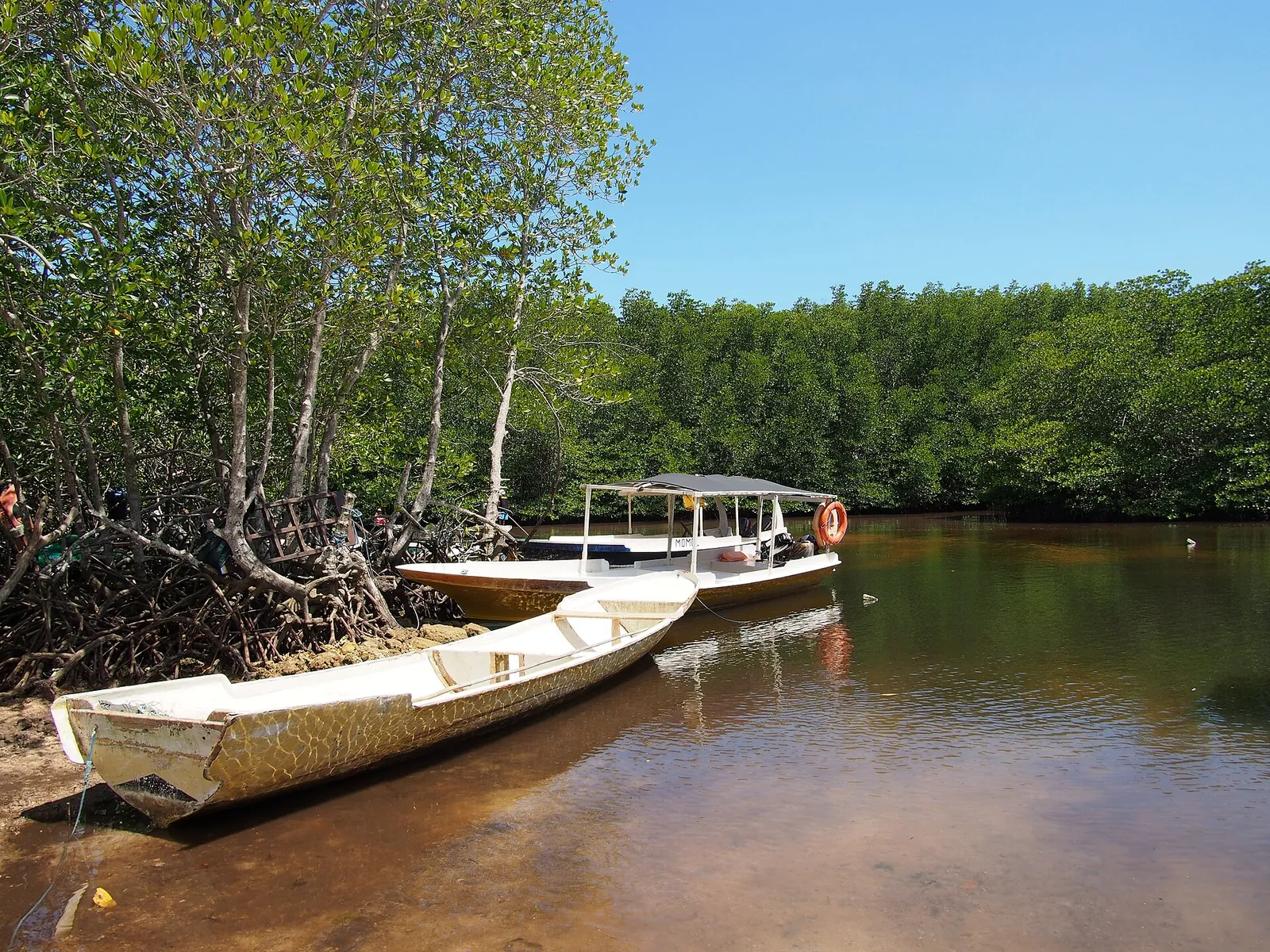
The north-east of Lembongan is fringed by about 212 hectares of mangroves, according to a survey cited by Wikipedia. The Coral Triangle Center, which supports the management of the Nusa Penida Marine Protected Area, notes that the marine park's mangrove forests are found mainly on Lembongan and Ceningan and that eight seagrass species occur, mainly around Lembongan. Wikivoyage describes exploring the mangrove channels in a traditional jukung outrigger, reached by following the coast road north from Jungutbatu; at high tide the shallow lagoon there is also good for children to swim in.
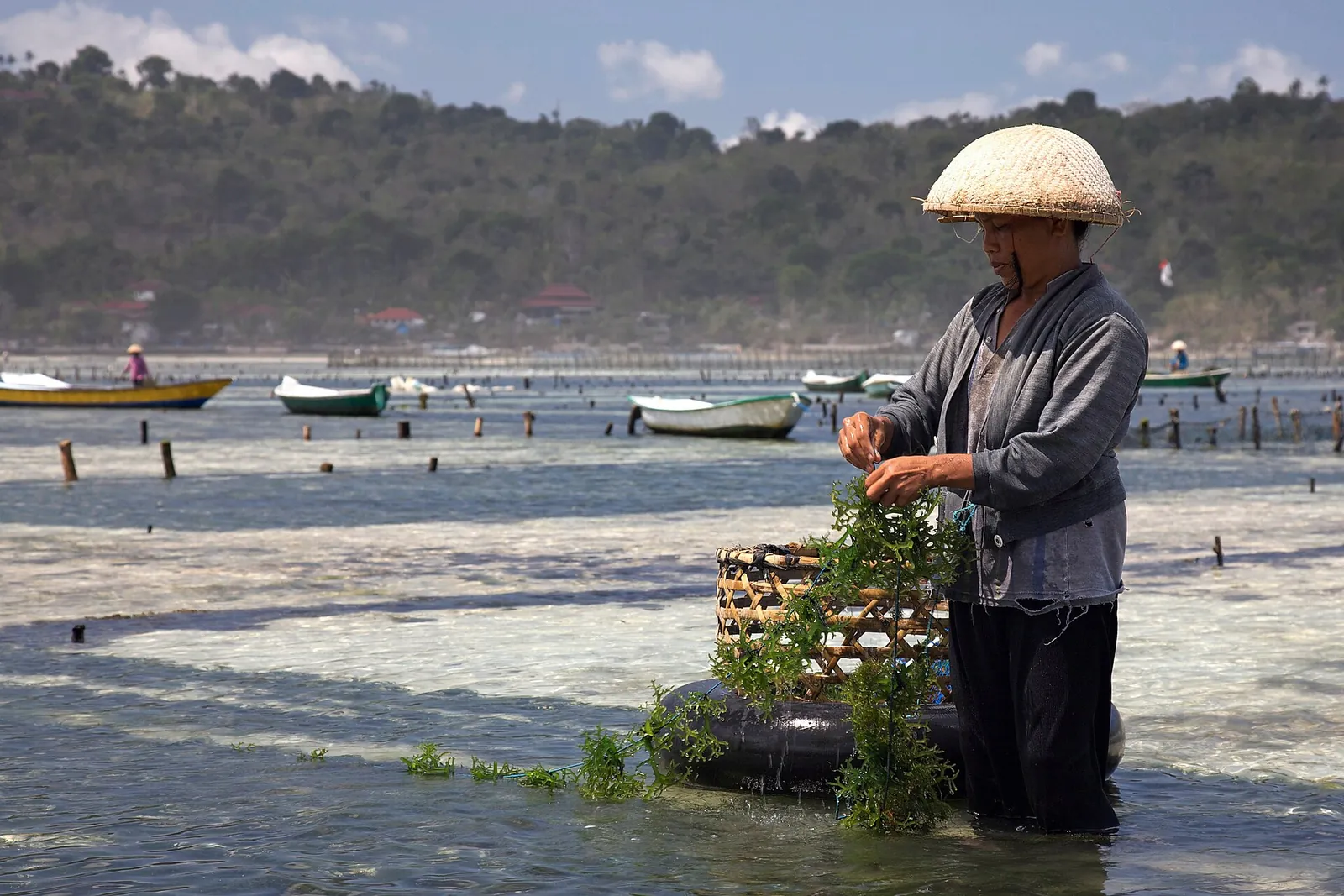
The other face of the island is its seaweed farms. Plots of seaweed line the shallows of the south-east and the channel between Lembongan and Ceningan, where, according to Wikipedia, farming began in the mid-1980s and remains a major source of work on Ceningan. On Lembongan it had become unviable by about 2015 because of tourism and pollution, and islanders returned to it in 2020–2021, after the pandemic emptied the hotels. Wikivoyage suggests simply heading to the shore on the southern side of Lembongan Village and watching the farmers at work. Be discreet with cameras: this is someone's workplace, and the plots are fragile.
Both habitats sit inside the marine park's zoning, which the Coral Triangle Center says covers tourism, fisheries, seaweed farming and the protection of sacred sites, and recognises Nyepi Segara, a Balinese day on which all activity at sea pauses.
Make time for the local food
What to eat and where to look
Ikan bakar (grilled fish)
Fish grilled over coals and served with rice and sambal. On an island whose waters are zoned for fishing as well as tourism, it is the obvious dinner, and some small warungs change the menu with the day's catch.
- Where to look
- Beach warungs along Jungutbatu and on the north beach beyond it, and the small restaurants at Mushroom Bay.
- Fit it into your day
- Dinner after sunset on the Jungutbatu beachfront.
If fish is sold by weight, agree the price before it goes on the grill.
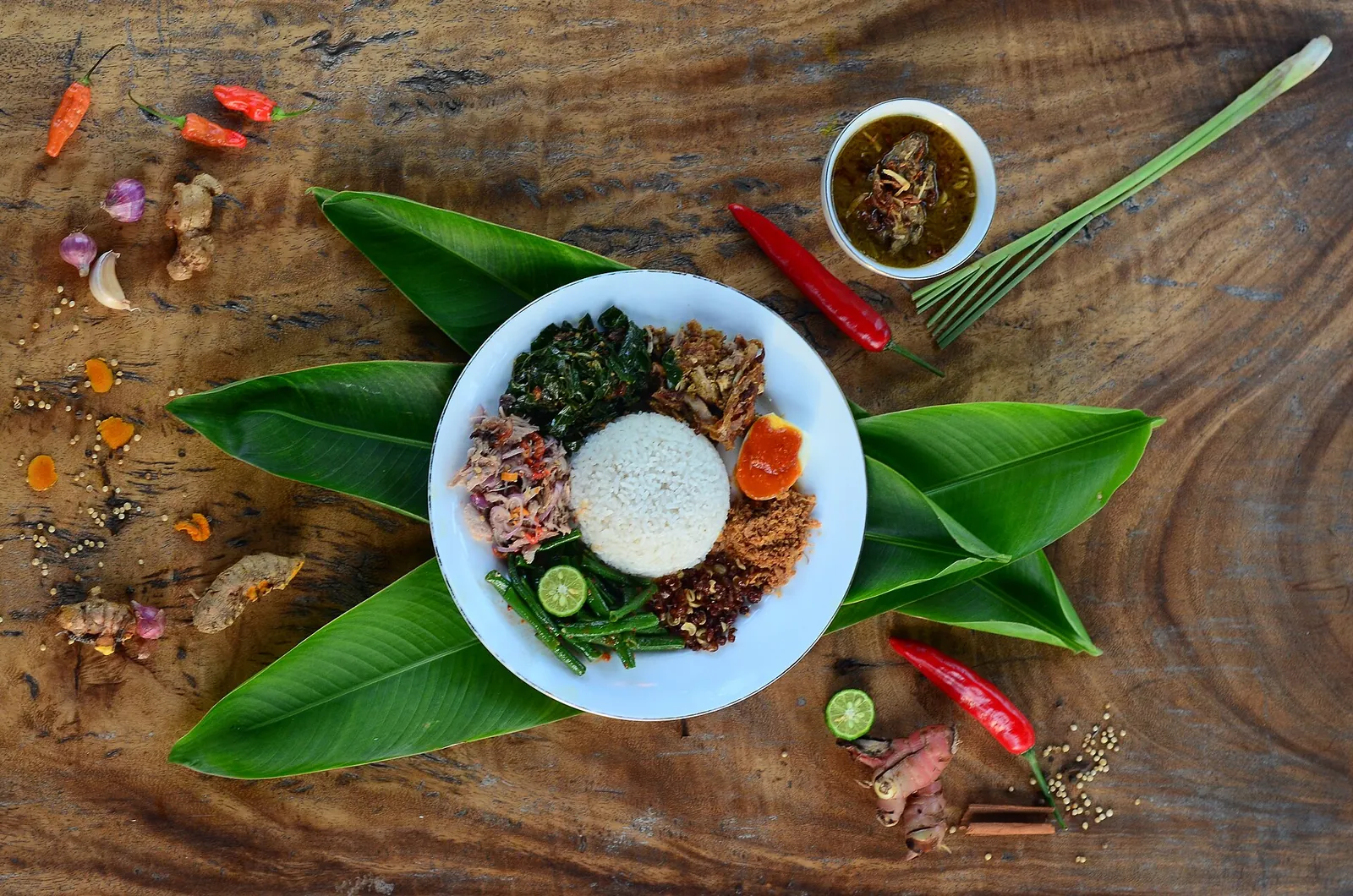
Nasi campur
Rice with small portions of several dishes — vegetables, meat or fish, egg, peanuts and sambal — chosen from what the kitchen has cooked that day.
- Where to look
- Local warungs in the lanes off the main road in Jungutbatu and in Lembongan Village.
- Fit it into your day
- A quick lunch between the morning boat trip and an afternoon on the bridge and Ceningan.
Balinese nasi campur often includes pork; ask what is on the plate and ask for the sambal on the side.
Sate lilit
Balinese satay of minced, spiced fish, chicken or pork wrapped around a lemongrass stalk or bamboo stick and grilled.
- Where to look
- Warungs serving Balinese food in Jungutbatu and Lembongan Village; often part of a mixed plate.
- Fit it into your day
- A snack or side dish at lunch.
Ask which meat is used if you avoid pork.
Snorkelling and diving: mangroves, reefs and mantas
Indonesia's Ministry of Tourism lists the main snorkelling spots around Lembongan as Mangrove Point in the north, where it describes the water as very clear and the currents as calm; Crystal Bay, across the channel on Nusa Penida's west coast; and Manta Bay and Manta Point for swimming with manta rays. Mangrove Point is the beginner's option. The offshore manta sites are a different trip: Wikivoyage notes that the ride to Manta Point takes about 45 minutes by boat and can be bumpy, and that time in the water there may be short when it is crowded or the sea is rough.
According to the Coral Triangle Center, more than 600 reef manta rays have been identified in the marine park since 2004 and they are present year-round, while mola-mola come to cleaning stations mainly between July and October. Diving is centred on Jungutbatu, and Wikivoyage notes that the more challenging drift dives are off Nusa Penida, visited only when conditions are safe. Book with an operator that follows the manta and mola-mola codes of conduct developed with the Lembongan Marine Association, or that holds Green Fins certification; both are promoted in the park.
Do not walk in over the reef to snorkel from the shore at low tide: Wikivoyage warns that the inshore spot by the mangroves is only reachable for about an hour either side of high tide, and that walking in damages coral and mangrove. The ministry also asks snorkellers to use reef-safe sunscreen.
Around the island: Devil's Tear, Dream Beach and Ceningan
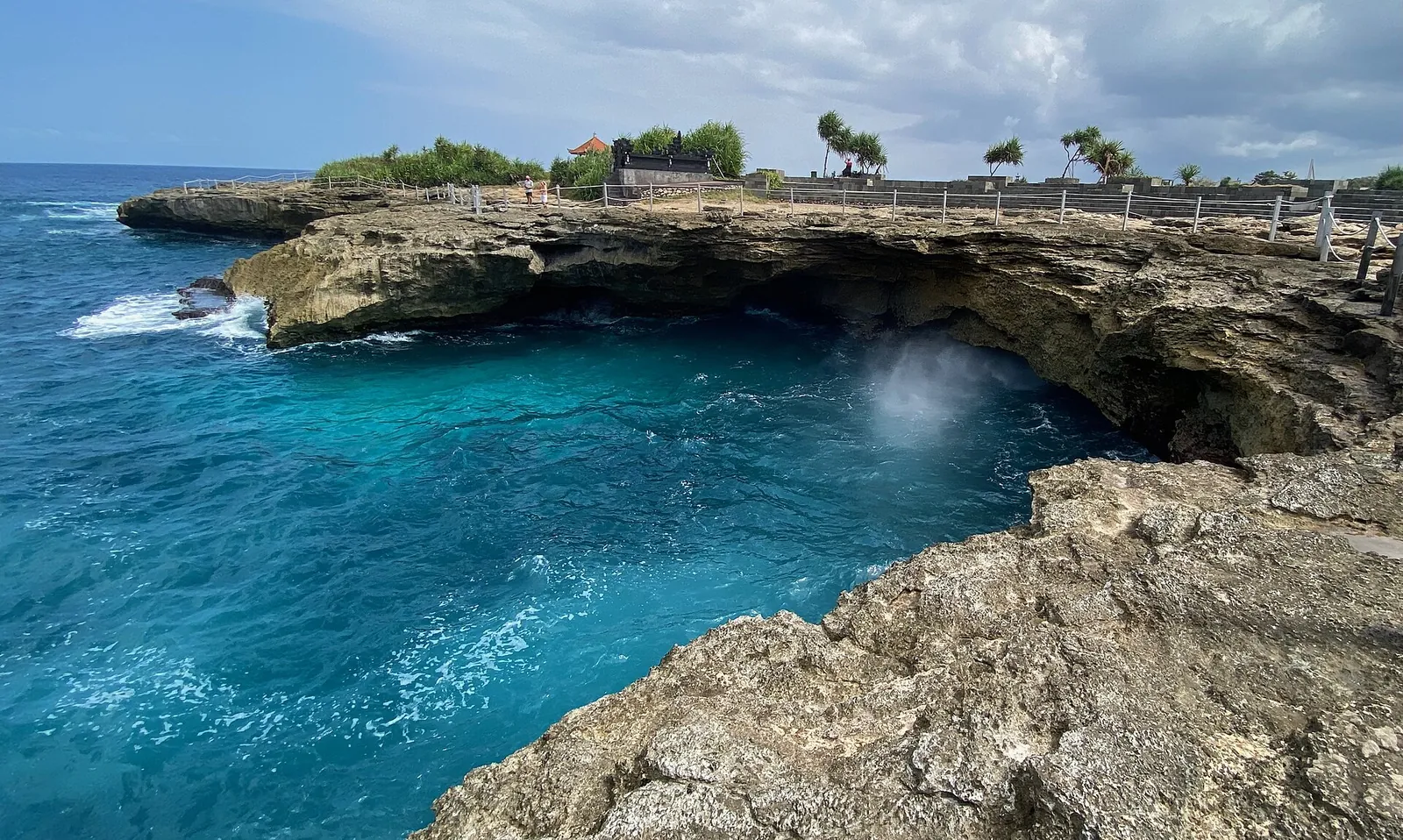
The south-west coast is low limestone cliff, with Dream Beach, Sandy Bay (Sunset Beach) and the Devil's Tear outcrop between them, where waves explode into a rocky inlet. Wikivoyage is blunt about the risks: rips at Dream Beach can be fierce, so only strong swimmers should go in, and at Devil's Tear many tourists have fallen to their deaths; stay behind the rope barriers. A cliff path runs north from Dream Beach over Devil's Tear to Sandy Bay and beyond, with views across the strait to Bali.
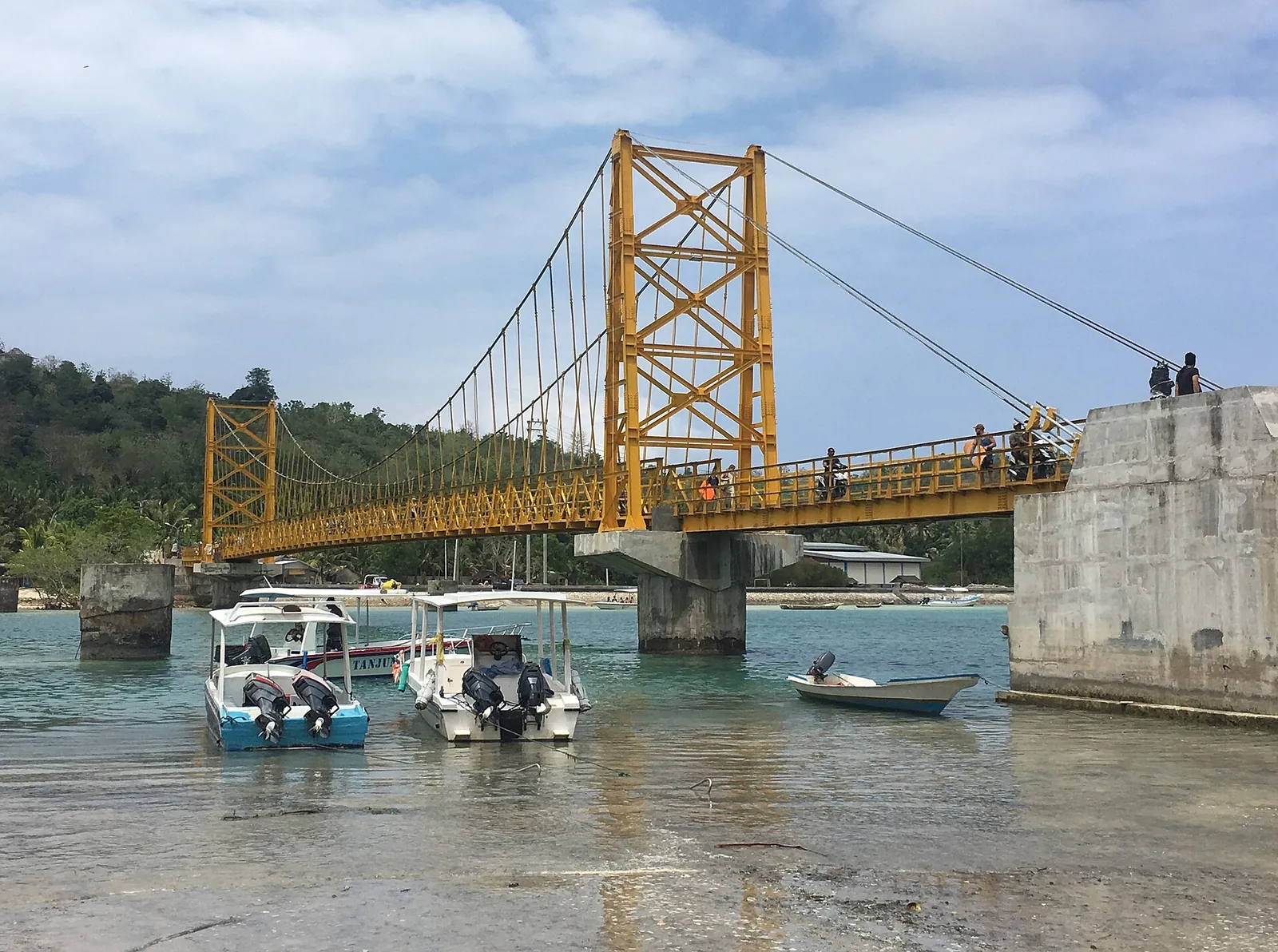
The yellow bridge to Nusa Ceningan opened in 2017, replacing a wooden bridge that collapsed during a religious procession in 2016 and killed eight people, as Wikipedia records. It carries pedestrians and motorbikes only. On Ceningan, the Blue Lagoon is a cliff-edged cove that Wikivoyage describes as similar to Devil's Tear but without barriers, so keep well back from the edge. The island's central ridge is the place for sunset over Bali, and it has a surf break that draws surfers away from Lembongan's crowded reefs.
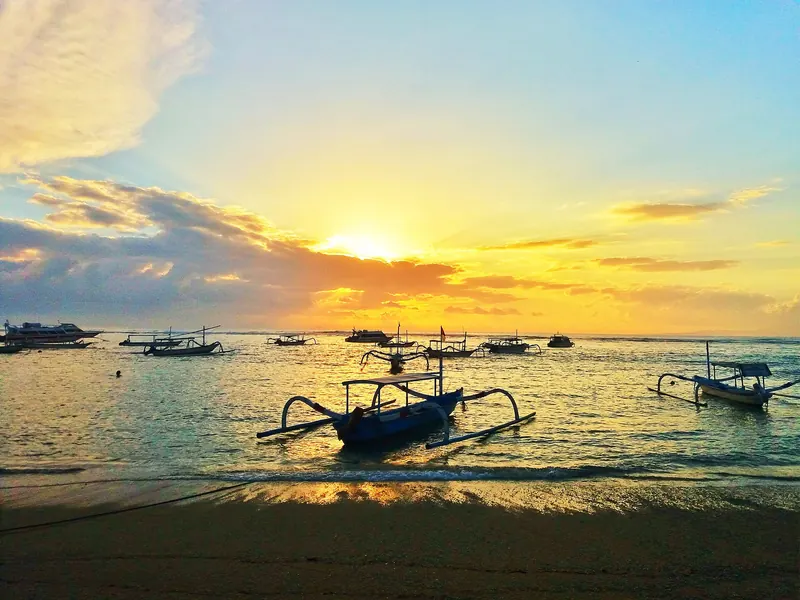
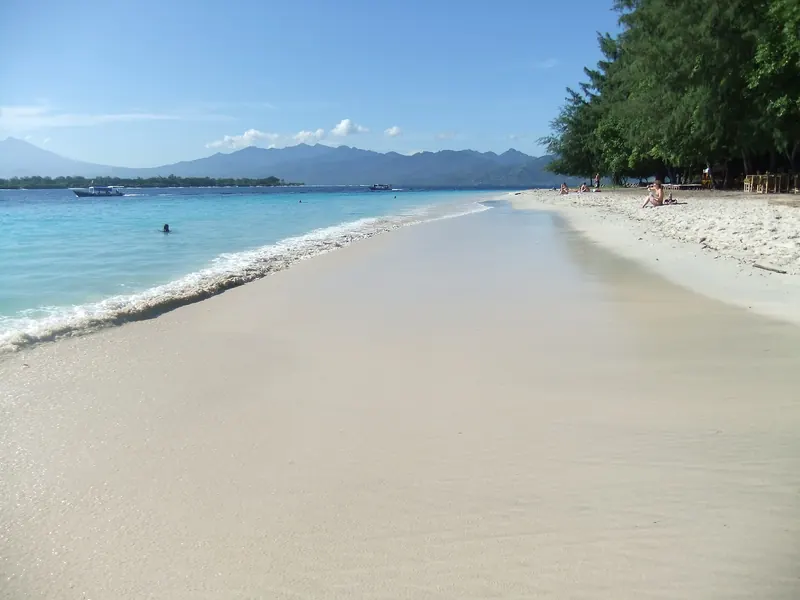
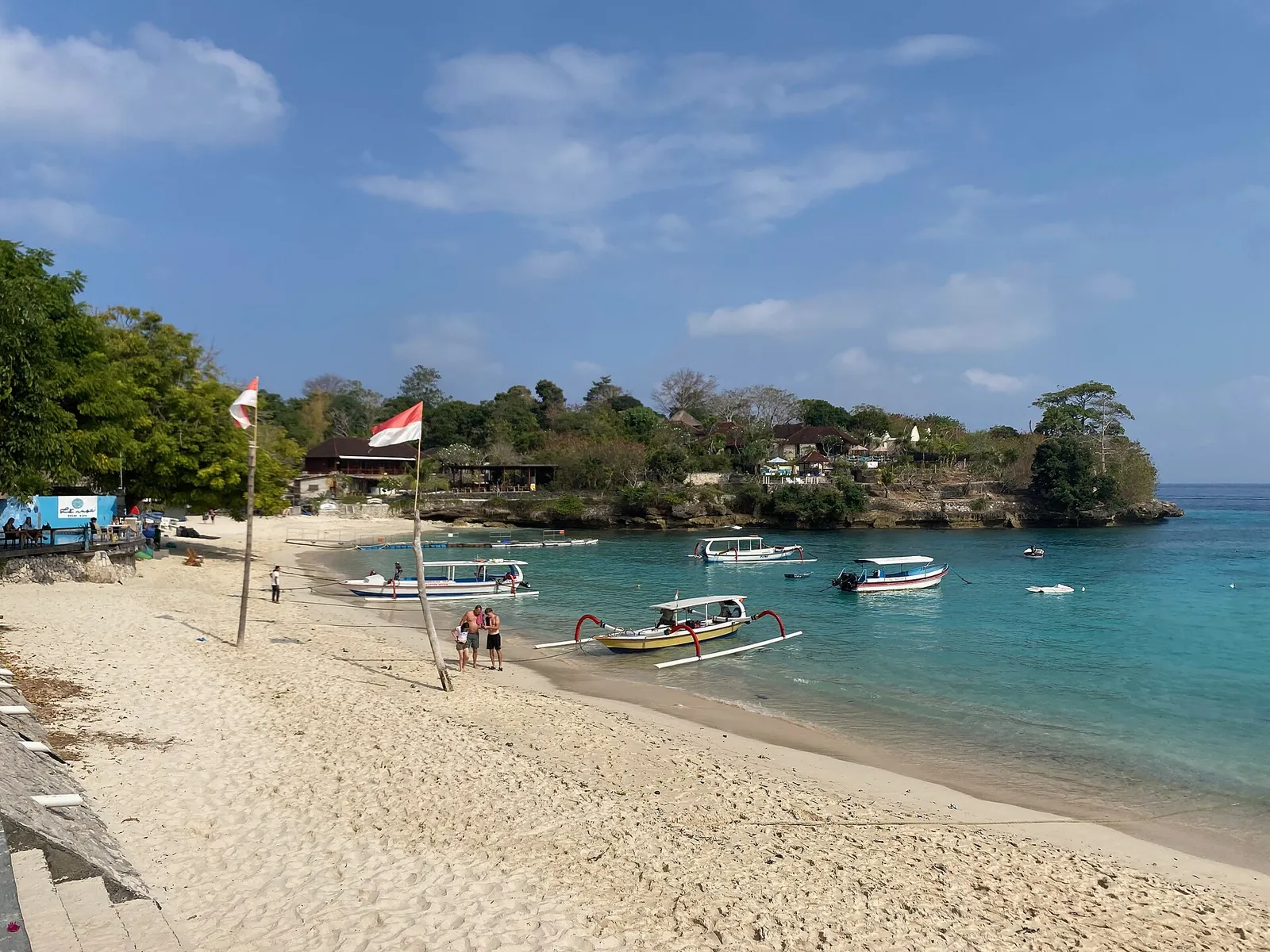
Back on Lembongan, the Ministry of Tourism suggests Panorama Point for a view over the island and Mushroom Bay for a calm sunset; Wikivoyage adds that Mushroom Bay is at its nicest after 15:00, when the day-trippers have gone back to Bali, and that the Jungutbatu beachfront is the island's classic sunset spot.
- Arrival day: morning boat from Sanur, check in, swim at Mushroom Bay or Jungutbatu and stay out for sunset.
- Day 2: boat snorkelling trip in the morning (mangroves, reef, Manta Point if the sea allows), then the cliff walk from Dream Beach to Sandy Bay in the late afternoon.
- Day 3: the seaweed farms, the yellow bridge and Nusa Ceningan, a jukung trip into the mangroves, and an afternoon boat back — or a hop to Nusa Penida.
Getting there and getting around
The Ministry of Tourism gives 30 to 45 minutes for the fast-boat crossing from Sanur, and 60 to 90 minutes on a slower traditional boat; it also lists Serangan, Benoa and Banjar Bias at Kusamba as departure ports. When we checked on 2026-10-03, the ministry's article said online fast-boat tickets started from IDR 85,000 one way and IDR 165,000 return; treat that as a floor and check the operator's own fare. Wikivoyage reports more than 20 fast-boat operators with widely varying standards, and warns that most crossings involve wading ashore, often up to the knees, so pack a dry bag.
Boats land mainly at Jungutbatu beach, with some larger services using pontoons off Mushroom Bay or near the yellow bridge. Once ashore, many guesthouses and restaurants are linked by coastal paths; Wikivoyage puts the walk from the end of Jungutbatu beach to Mushroom Bay at about 35 minutes. For longer hops or heavy bags, hire one of the island's pick-up trucks. Scooters are widely rented, but the roads are narrow and hilly with blind corners; ride only if you are experienced.
Lembongan is part of Bali province, so the Bali tourist levy applies. When we checked on 2026-10-03, the official Love Bali site listed it at IDR 150,000 for international tourists; the Ministry of Tourism describes it as a one-time payment per stay, made cashless through Love Bali or at counters at Ngurah Rai airport and Benoa port. Wikivoyage reports ATMs on the island but advises bringing rupiah, and notes that many businesses add a 3 to 5 percent card fee.
Practical questions
How long does the boat to Nusa Lembongan take?
The Ministry of Tourism gives 30 to 45 minutes by fast boat from Sanur and 60 to 90 minutes by traditional boat. Most boats land on the beach, so expect to wade ashore.
Should I visit Nusa Lembongan or Nusa Penida?
Lembongan for a relaxed base with walkable beaches, snorkelling and sunsets; Penida for the big clifftop viewpoints, which need more road time on hilly, partly rocky roads. Many travellers stay on both, hopping between them by local boat.
Can I walk or drive to Nusa Ceningan?
Yes. The yellow suspension bridge, opened in 2017, links Lembongan and Ceningan for pedestrians and motorbikes only; there are no cars on it.
Can I see manta rays from Nusa Lembongan?
Boat snorkelling and dive trips go to Manta Bay and Manta Point. The Coral Triangle Center says reef mantas are present all year, but sightings depend on the sea and are never guaranteed, and the ride can be bumpy.
Is Devil's Tear safe?
Only from behind the barriers. Wikivoyage reports that many tourists have fallen to their deaths there. The Blue Lagoon on Ceningan has no barriers at all, so keep well back from the edge.
Do I pay the Bali tourist levy for Nusa Lembongan?
Lembongan is part of Bali province, and the levy is a one-time payment per stay. When we checked on 2026-10-03, the Love Bali site listed it at IDR 150,000 for international tourists.
Sources and checks before you travel
Reference sources for the version dated 3 October 2026. Confirm opening times, access, transport and conditions for your travel dates.
- Indonesia Travel (Ministry of Tourism): Snorkeling Nusa Lembongan (Indonesian) ↗ — opens in a new tab
- Indonesia Travel (Ministry of Tourism): Sanur ↗ — opens in a new tab
- Indonesia Travel (Ministry of Tourism): Nusa Penida ↗ — opens in a new tab
- Coral Triangle Center: Nusa Penida MPA ↗ — opens in a new tab
- Love Bali (Bali Provincial Government): tourist levy ↗ — opens in a new tab
- Indonesia Travel (Ministry of Tourism): Bali regulations ↗ — opens in a new tab
- Love Bali (Bali Provincial Government): Nusa Penida, Bali's golden egg ↗ — opens in a new tab
- Wikipedia: Nusa Lembongan ↗ — opens in a new tab
- Wikipedia: Nusa Ceningan ↗ — opens in a new tab
- Wikivoyage: Nusa Lembongan ↗ — opens in a new tab
Does this experience fit your route?
Staying on the island? Book a small-group snorkelling trip for your first full morning, so a rough-sea day still leaves you a second chance at Manta Point.
Browse relevant experiences on Viator ↗ — opens in a new tabAffiliate link · Book with ViatorPhoto credits
The shallow channel between Nusa Lembongan and Nusa Ceningan, with moored boats and seaweed plots
Photograph: rheins — opens in a new tab · CC BY 3.0 — opens in a new tab
Changes: Resized and converted to WebP; displayed with responsive crops. · Original photograph and licence details ↗ — opens in a new tab
The yellow suspension bridge links Lembongan and Ceningan for walkers and motorbikes
Photograph: Juxlos — opens in a new tab · CC BY-SA 4.0 — opens in a new tab
Changes: Resized and converted to WebP; displayed with responsive crops. · Original photograph and licence details ↗ — opens in a new tab
A mangrove creek on Nusa Lembongan, explored by jukung outrigger
Photograph: rheins — opens in a new tab · CC BY 3.0 — opens in a new tab
Changes: Resized and converted to WebP; displayed with responsive crops. · Original photograph and licence details ↗ — opens in a new tab
Harvesting seaweed in the shallows off Nusa Lembongan (2009)
Photograph: Jean-Marie Hullot on flickr and Jmhullot on commons; Papa Lima Whiskey Original upload and image description written by User:Snowmanradio. — opens in a new tab · CC BY-SA 2.0 — opens in a new tab
Changes: Resized and converted to WebP; displayed with responsive crops. · Original photograph and licence details ↗ — opens in a new tab
Devil's Tear on the south-west coast of Nusa Lembongan; stay behind the barriers
Photograph: Sgroey — opens in a new tab · CC BY-SA 4.0 — opens in a new tab
Changes: Resized and converted to WebP; displayed with responsive crops. · Original photograph and licence details ↗ — opens in a new tab
Mushroom Bay on the west coast of Nusa Lembongan
Photograph: Sgroey — opens in a new tab · CC BY-SA 4.0 — opens in a new tab
Changes: Resized and converted to WebP; displayed with responsive crops. · Original photograph and licence details ↗ — opens in a new tab
Nasi campur Bali: rice with small portions of several dishes and sambal
Photograph: Komang arie — opens in a new tab · CC BY-SA 3.0 — opens in a new tab
Changes: Resized and converted to WebP; displayed with responsive crops. · Original photograph and licence details ↗ — opens in a new tab