Java · Jakarta
Kota Tua and Glodok, Jakarta: old Batavia, Chinatown food and Sunda Kelapa
Kota Tua is what remains of Batavia, the walled Dutch port that became Jakarta: a paved square ringed by colonial buildings, a working harbour of wooden cargo ships to the north and, just south, Glodok, the Chinatown the Dutch pushed outside the walls in 1741. The three sit within one compact corner of North and West Jakarta, so they make a single, slow day on foot — far from the malls and towers where most visitors sleep. Plan it around museum days and the heat, and let a Glodok lunch or coffee set the pace.
- Suggested time
- Half day to 1 day
- Where to stay
- Central Jakarta on the Blok M–Kota busway for most trips; Kota or Jalan Hayam Wuruk to be on the doorstep
- Season and timing
- Java's dry season is roughly April to October and the wet season November to March, with high humidity all year. Walk in the morning or late afternoon and keep the museums for the midday heat or a downpour.
The short answer
Give it a half day for Fatahillah Square and one museum, or a full day if you add Glodok's temples and food streets and the harbour at Sunda Kelapa. Most people stay in central Jakarta and come in by KRL commuter train or the Blok M–Kota Transjakarta busway, both of which end at Kota; sleep in Kota or along Jalan Hayam Wuruk only if the old town is your main reason for being in Jakarta. Avoid Mondays, when the museums close, and start early or come in the late afternoon.
Treat it as a day out from your Jakarta hotel
Kota Tua sits at the northern end of Jakarta, in the old Batavia area that the tourism ministry describes as about 1.3 square kilometres spread across North and West Jakarta. Its sights are close together and the ministry recommends exploring on foot, but the area is a long way from the business districts, so for most travellers it is a day trip within a Jakarta stay rather than a place to base yourself.
The deciding factor is the calendar. The museums around Fatahillah Square close on Mondays, and the ministry notes that weekdays are quieter while weekends bring more street performers and crowds. Arrive early or in the late afternoon, when the ministry says the weather is cooler and the light better, and keep a museum for the hottest part of the day.
Sleeping in Kota itself or along Jalan Hayam Wuruk and Jalan Gajah Mada, the avenue that runs south past Glodok, makes sense only if the old town is the point of your trip or you want it at first light. Otherwise pick a hotel near a stop on the Blok M–Kota Transjakarta route in central Jakarta and ride in.
Fatahillah Square and the museums around it
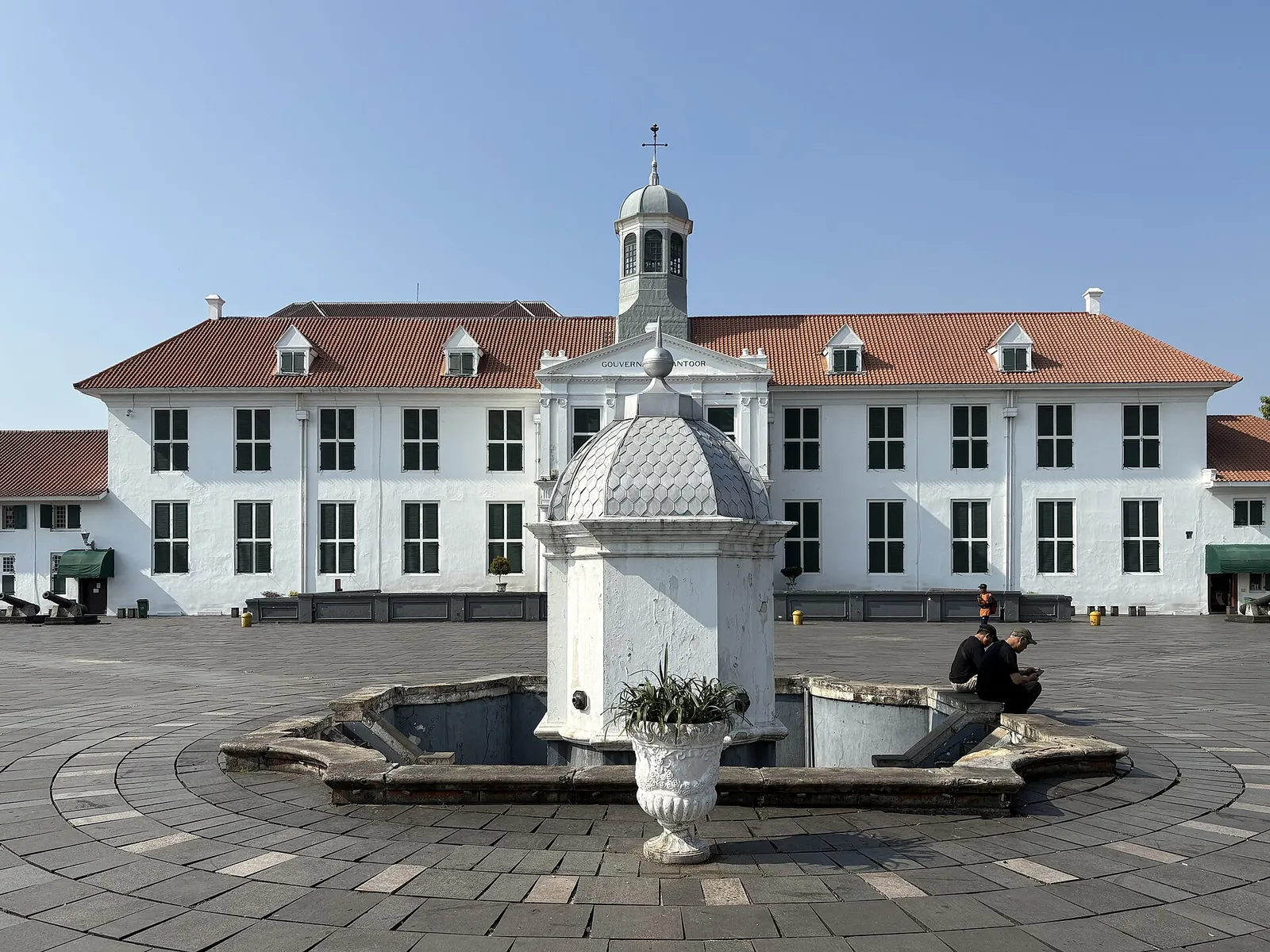
Fatahillah Square was the centre of the Dutch East India Company's Batavia. Its south side is filled by the Stadhuis, the city hall built between 1707 and 1710, which opened as the Jakarta History Museum (also called the Fatahillah Museum) in 1974. Beyond its maps, furniture and archaeological finds, the ministry singles out the underground prison cells, where heavy iron balls were used to shackle prisoners and slaves.
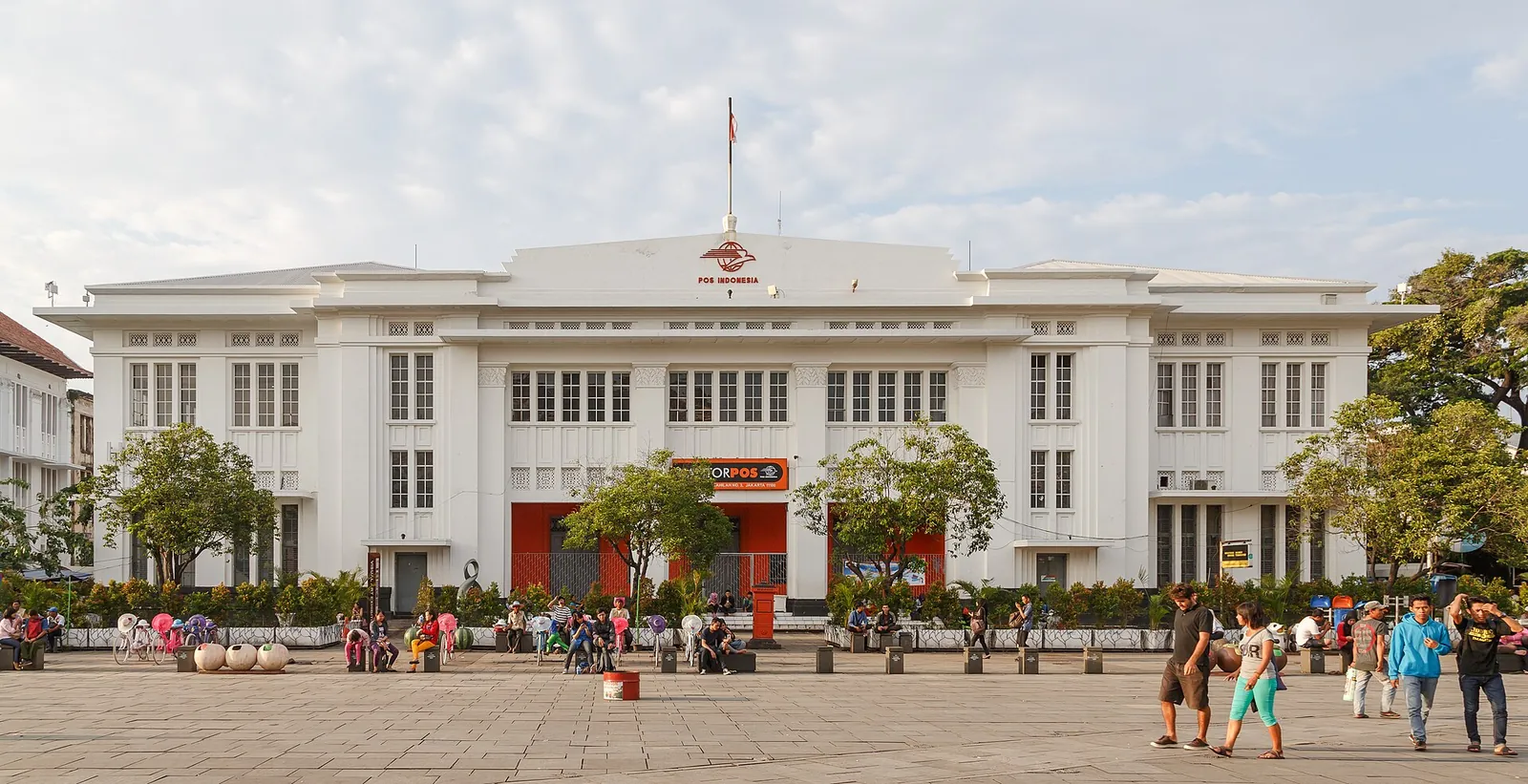
Around the square stand the Fine Arts and Ceramics Museum in the former Court of Justice, with paintings by Raden Saleh and Affandi and ceramics from across Asia; the Wayang Museum of puppetry; the old Kota post office; and Cafe Batavia, a restored colonial building with high ceilings and ceiling fans overlooking the square. A short walk away, the Bank Indonesia Museum occupies the former De Javasche Bank building and the Bank Mandiri Museum an old banking complex with its vaults.
Opening times have been changing, so check them before you go. The ministry's Old Batavia page lists the Jakarta History Museum as open Tuesday to Sunday, 09:00–16:00, and closed on Mondays and public holidays. A TribunJakarta report of 22 July 2026, quoting the Jakarta tourism office's official social media, gave 09:00–15:00 on Tuesday to Friday and 09:00–20:00 at weekends for the History, Wayang and Fine Arts and Ceramics museums, with a ticket of Rp 50,000 for foreign visitors, and said every museum in Kota Tua closes on Mondays. Bring small cash as well as a card, as the ministry advises.
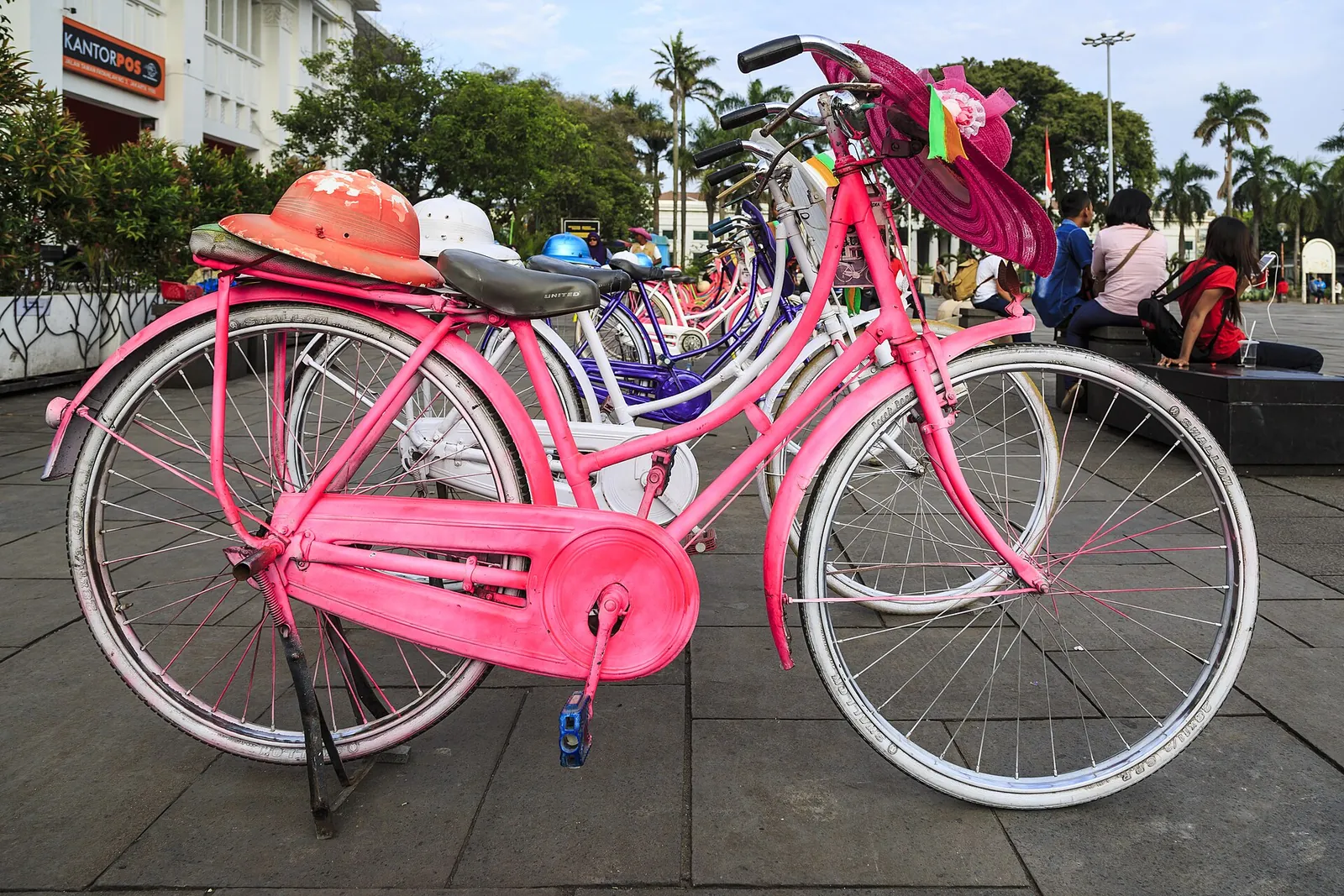
The square's pastel bicycles are the other classic. Old-style ontel bikes with matching hats are rented out on the square for a slow ride around the area; agree the price and the time before you set off.
Make time for the local food
What to eat and where to look
Kopi es (iced coffee) at an old Glodok coffee shop
Strong black coffee or coffee with milk, hot or iced, served in the plain style of Jakarta's Chinese-Indonesian coffee shops. The ministry names Kopi Es Tak Kie, founded in 1927 by Liong Kwie Tjong, as the place to try it; it also serves food.
- Where to look
- Kopi Es Tak Kie, Jalan Pintu Besar Selatan III No. 4–6, Glodok.
- Fit it into your day
- A mid-morning break when you walk from Fatahillah Square into Glodok.
Jalan Pintu Besar Selatan is affected by MRT works until at least January 2027, so access may be diverted. Iced versions are sweet; ask for less sugar.
Ketupat cap go meh
Compressed rice cakes in coconut-milk broth with pumpkin, boiled egg, chicken and potato, served with sambal petai — a dish that blends Chinese and Javanese traditions and is linked to the end of the Chinese New Year season.
- Where to look
- Ketupat Gloria 65 in Gang Gloria, Glodok, named by the ministry; other Chinese-Indonesian stalls nearby.
- Fit it into your day
- A filling lunch in Glodok; one plate is enough before an afternoon of walking.
Rich with coconut milk; the petai (stink bean) sambal is pungent, so ask for it on the side.
Curry with rice vermicelli (kari)
Chicken curry in a savoury Medan-style coconut broth with springy rice vermicelli and shredded free-range chicken. The ministry singles out Kari Lam, a Gang Gloria stall running since 1973.
- Where to look
- Kari Lam in Gang Gloria, Glodok.
- Fit it into your day
- Share a bowl with a ketupat plate as a two-dish Glodok lunch.
Coconut-based and can be spicy; ask about the level of chilli.
Rujak Shanghai
Not the usual fruit salad: this Glodok rujak combines water spinach, radish and cucumber with boiled squid and jellyfish under a sauce.
- Where to look
- Rujak Shanghai Encim on Jalan Pancoran, Glodok, as named by the ministry.
- Fit it into your day
- A snack between the temples and the market streets.
Contains seafood, including jellyfish; not for shellfish or seafood allergies.
Kerak telor
Jakarta's Betawi street snack: glutinous rice and egg cooked in a small wok over charcoal, which the vendor flips upside down to toast the top, then finished with grated coconut, fried shallots and dried shrimp.
- Where to look
- Street vendors in Kota Tua, which the ministry lists among the places the dish is still widely sold.
- Fit it into your day
- An afternoon snack on the square, eaten hot straight from the wok.
Contains egg and dried shrimp (ebi).
Glodok: Chinatown temples, coffee and lunch
Glodok, in Taman Sari district just south of the old town, is described by the ministry as the largest Chinatown in Indonesia. Its history is a hard one: after the 1740 massacre of ethnic Chinese in Batavia, the survivors were settled outside the city walls here the following year. Today it is also Jakarta's electronics market, and the older streets around Jalan Pancoran and the Petak Sembilan area hold the temples and the food.
Vihara Dharma Bhakti (Jin De Yuan, or Kim Tek Ie), at Jalan Kemenangan III No. 13, is the city's oldest Chinese temple: first built in 1650, destroyed in 1740 and rebuilt in 1755. It is busiest on the first and fifteenth days of the lunar month and at Chinese New Year, when the courtyard fills with incense smoke. The lane to the gate is narrow and lined with parked motorbikes. Vihara Dharma Jaya (Toasebio) and Vihara Tanda Bhakti are within walking distance. These are working places of worship: move quietly, keep out of the way of people praying and ask before photographing anyone.
Come hungry. The ministry's guide to Glodok food names Kopi Es Tak Kie on Jalan Pintu Besar Selatan III, a coffee shop founded in 1927, the Pantjoran Tea House on Jalan Pancoran by the Chinatown gate, and the noodle and ketupat stalls of Gang Gloria. Many Glodok kitchens cook pork; if you eat halal, ask before you order.
Construction is part of the scene for now. When we checked on 2026-10-03, a West Jakarta city press release of 5 August 2026 described MRT Phase 2 works at the future Glodok and Kota stations, with traffic diverted on Jalan Pintu Besar Selatan and at the Asemka junction until 15 January 2027 and contraflow on Jalan Gajah Mada and Jalan Hayam Wuruk into 2027. Expect hoardings and narrowed pavements between the square and Glodok.
North to Sunda Kelapa and the Maritime Museum
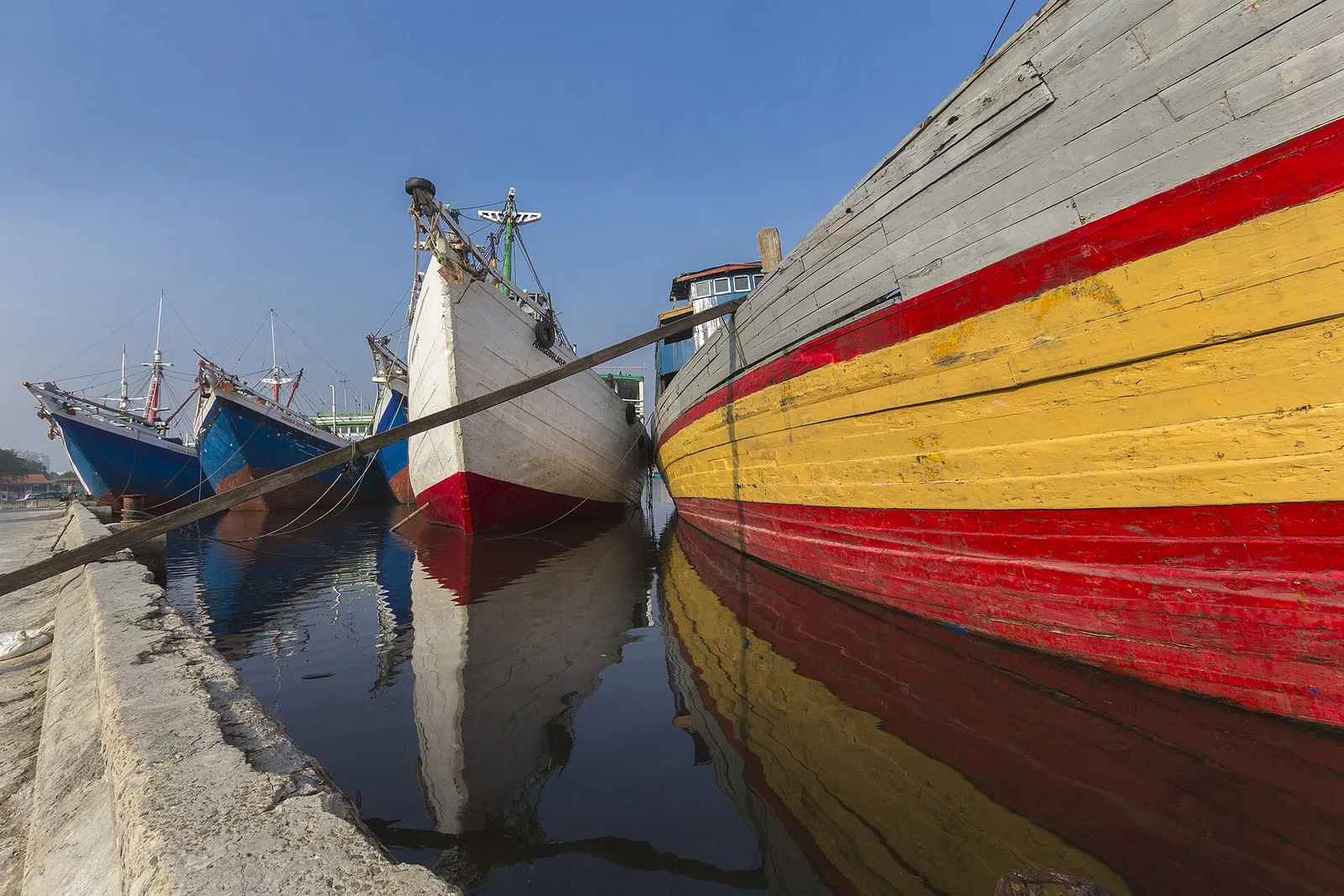
Sunda Kelapa is where Jakarta began: the harbour of the Sunda kingdom, renamed Jayakarta by Prince Fatahillah in 1527 — the date the city still counts as its founding — and later the port of Batavia. It is still an inter-island harbour, and the long row of wooden pinisi cargo ships moored along the quay is the reason to come. Treat it as a working port: stay clear of loading, ropes and gangplanks, and ask before boarding or photographing crews close up.
Next to the harbour, the Maritime Museum (Museum Bahari) fills VOC warehouses built in stages between 1718 and 1774 to store and pack spices, with models of Dutch ships and boats from across the archipelago. The Syahbandar Tower, an 1839 harbour-master's lookout, belongs to the same complex; North Jakarta's tourism office notes the view over the coast and the traditional ships from the top. A TribunJakarta report of July 2026 gave the Maritime Museum's hours as 08:00–15:00 on Tuesday to Friday and 08:00–20:00 at weekends, closed on Mondays.
The ministry describes the harbour and museum as slightly away from the main square and quieter than it. The same area keeps reminders of the canal city, such as the Kota Intan drawbridge, and Sion Church, built in 1695 and still in use. In the heat, a bajaj or a ride-hailing motorbike is a fair choice for one leg of the trip, with the walk saved for the return in the cooler late afternoon.
Getting there: commuter train, busway and the walk
Jakarta Kota station, the old station locals still call Beos, remains in use and serves the old town on the KRL Commuter Line; the ministry names the commuter line and Transjakarta as the ways in. On Transjakarta, the Blok M–Kota route is the useful one, running up from South and Central Jakarta to the old town. The MRT does not yet reach Kota: its Glodok and Kota stations are under construction.
Transjakarta, the MRT and the commuter trains are cashless: the ministry's commuting guide describes bank e-money cards and JakLingko cards, tapped at the gate. Taxis and ride-hailing cars work too, but the roads into the old town are often congested, and the Glodok works add delays. From Kota station, Glodok is close enough to walk, or take any bus heading towards Tanah Abang and get off at Glodok.
A workable day in the old town
This is an editorial suggestion, not a timetable. Check museum days and hours for the date you choose.
- Morning — the square: arrive by commuter train or busway at Kota, walk around Fatahillah Square before the heat, then one museum: the Jakarta History Museum for the city's story, or the Wayang Museum for puppets.
- Midday — Glodok: walk south for coffee at a Glodok coffee shop and lunch around Jalan Pancoran and Gang Gloria, then the incense halls of Vihara Dharma Bhakti.
- Afternoon — the harbour: head north to the pinisi ships at Sunda Kelapa and the Maritime Museum, or keep it simple with the Bank Indonesia Museum near the square.
- Late afternoon: back on the square as the light softens, a drink at Cafe Batavia or a ride on a rented bicycle, then home by train or busway before the evening rush.
Practical questions
How much time do I need for Kota Tua and Glodok?
Half a day covers Fatahillah Square and one museum. A full day lets you add Glodok's temples and a long lunch, and the pinisi ships and Maritime Museum at Sunda Kelapa, without rushing.
Are the Kota Tua museums open on Mondays?
No. The ministry's Old Batavia page lists the Jakarta History Museum as closed on Mondays and public holidays, and a July 2026 report quoting Jakarta's tourism office said all museums in Kota Tua close on Mondays. Check current hours before you go.
How do I get to Kota Tua from central Jakarta?
Take the KRL Commuter Line to Jakarta Kota station, beside the old town, or the Blok M–Kota Transjakarta route. Both are cashless, so carry a bank e-money card or a JakLingko card. The MRT does not reach Kota yet.
Should I stay in Kota Tua?
Only if the old town is your main reason for visiting Jakarta. Most travellers stay in central Jakarta, near a stop on the Blok M–Kota busway, and come in for the day.
Is the food in Glodok halal?
Not all of it. Glodok is Jakarta's Chinatown and many kitchens cook pork, so ask before ordering if you eat halal. Kerak telor and the coffee shops are easy choices for most diets.
Is Sunda Kelapa worth the detour?
Yes, if you are interested in boats and the city's origins: it is still a working inter-island harbour lined with wooden pinisi cargo ships, with the Maritime Museum in old VOC spice warehouses next to it.
Sources and checks before you travel
Reference sources for the version dated 3 October 2026. Confirm opening times, access, transport and conditions for your travel dates.
- Indonesia Travel (Ministry of Tourism): Kota Tua, best places to visit ↗ — opens in a new tab
- Indonesia Travel: Old Batavia, the Jewel of Asia ↗ — opens in a new tab
- Indonesia Travel: Jakarta History Museum ↗ — opens in a new tab
- Indonesia Travel: Glodok, Jakarta's historic Chinatown ↗ — opens in a new tab
- Indonesia Travel: Vihara Dharma Bhakti (Jin De Yuan) ↗ — opens in a new tab
- Indonesia Travel: Chinese New Year food in Jakarta (Glodok) ↗ — opens in a new tab
- Indonesia Travel: kerak telor ↗ — opens in a new tab
- Bank Indonesia: BI Museum ↗ — opens in a new tab
- Yayasan Mitra Museum Jakarta: Museum Bahari ↗ — opens in a new tab
- North Jakarta Tourism and Creative Economy Office: Sunda Kelapa ↗ — opens in a new tab
- TribunJakarta: Kota Tua museum hours and tickets (22 July 2026) ↗ — opens in a new tab
- West Jakarta city government: MRT Phase 2 works at Glodok and Kota (5 August 2026) ↗ — opens in a new tab
- Transjakarta: routes ↗ — opens in a new tab
- Indonesia Travel: commuting options around Jakarta ↗ — opens in a new tab
- KAI (Kereta Api Indonesia) ↗ — opens in a new tab
- Indonesia Travel: weather, climate and seasons ↗ — opens in a new tab
Does this experience fit your route?
A guided walk is the easiest way to understand what you are looking at in old Batavia. Check the start time, the museums included and the day of the week before you book.
Check dates and details on Viator ↗ — opens in a new tabAffiliate link · Book with ViatorPhoto credits
The former Batavia City Hall, home of the Jakarta History Museum, on Fatahillah Square
Photograph: Chainwit. — opens in a new tab · CC BY 4.0 — opens in a new tab
Changes: Resized and converted to WebP; displayed with responsive crops. · Original photograph and licence details ↗ — opens in a new tab
Rental bicycles and hats waiting for visitors on Fatahillah Square
Photograph: CEphoto, Uwe Aranas — opens in a new tab · CC BY-SA 3.0 — opens in a new tab
Changes: Resized and converted to WebP; displayed with responsive crops. · Original photograph and licence details ↗ — opens in a new tab
Pinisi ships moored at Sunda Kelapa, the old harbour north of Kota Tua
Photograph: Herusutimbul — opens in a new tab · CC BY-SA 4.0 — opens in a new tab
Changes: Resized and converted to WebP; displayed with responsive crops. · Original photograph and licence details ↗ — opens in a new tab
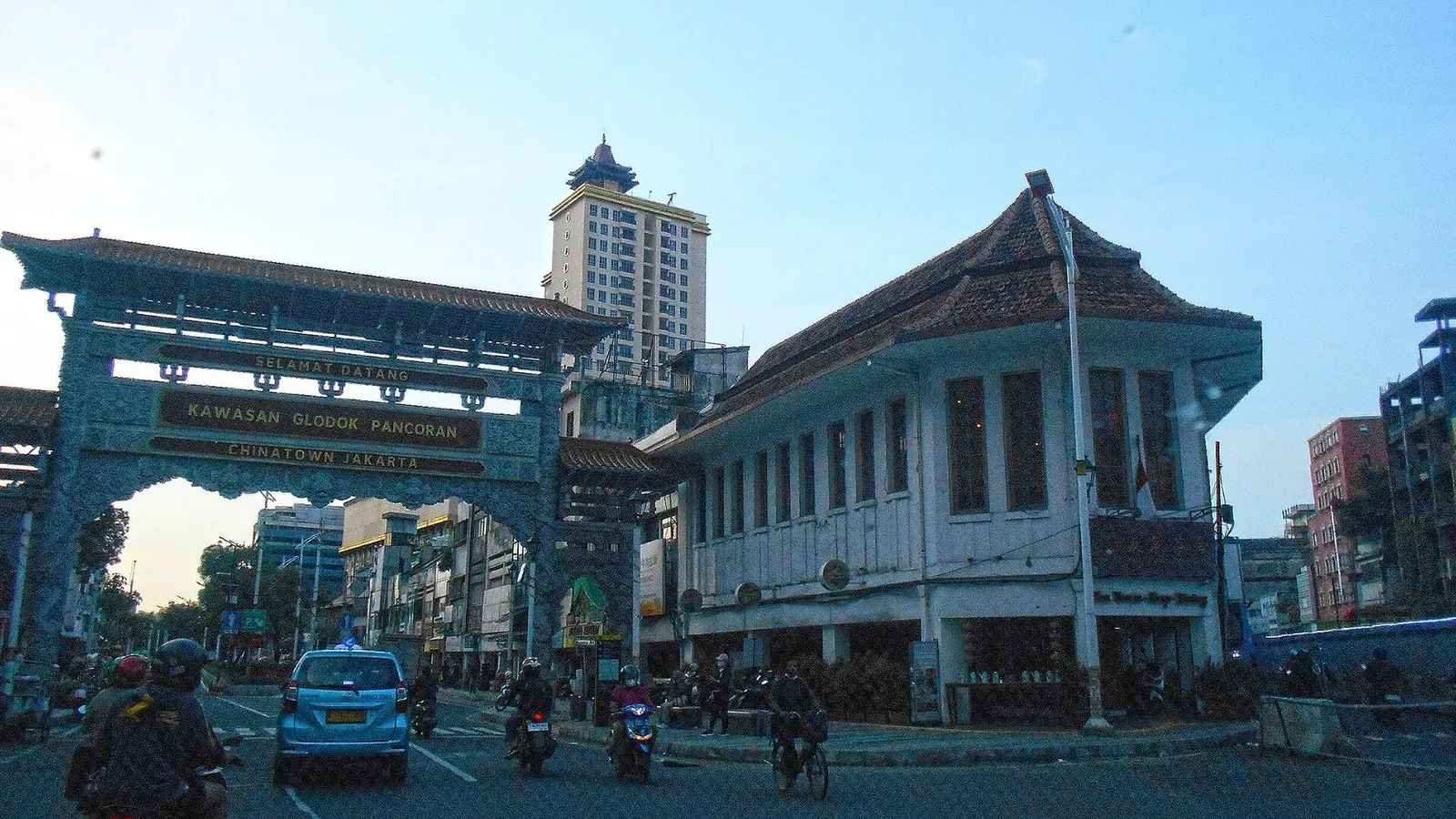
The Glodok gate and Pantjoran Tea House on Jalan Pancoran
Photograph: Firzafp — opens in a new tab · CC BY 4.0 — opens in a new tab
Changes: Resized and converted to WebP; displayed with responsive crops. · Original photograph and licence details ↗ — opens in a new tab
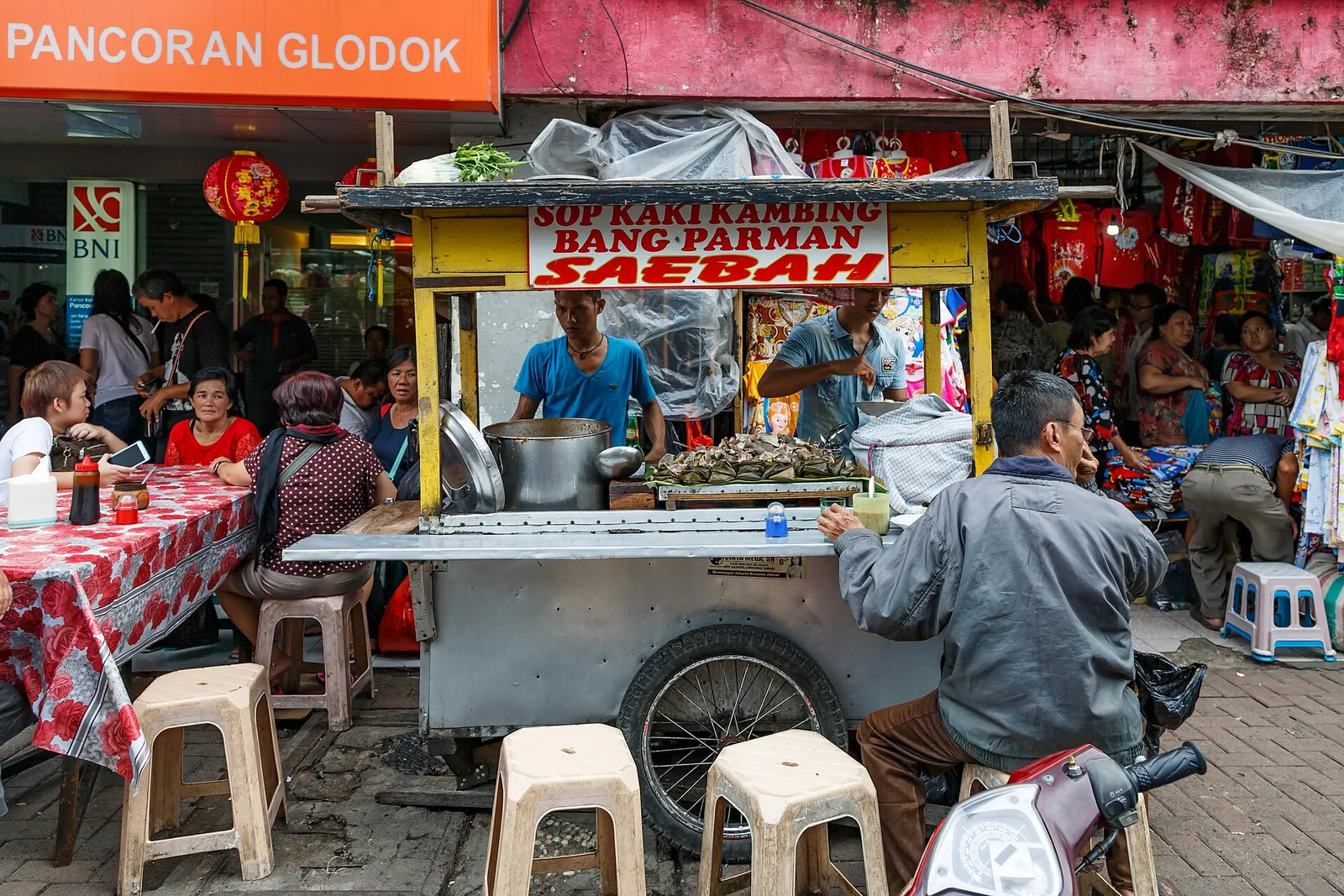
A soup stall with stools on the pavement in Glodok, Jakarta's Chinatown
Photograph: CEphoto, Uwe Aranas — opens in a new tab · CC BY-SA 3.0 — opens in a new tab
Changes: Resized and converted to WebP; displayed with responsive crops. · Original photograph and licence details ↗ — opens in a new tab
The old Kota post office on Fatahillah Square
Photograph: CEphoto, Uwe Aranas — opens in a new tab · CC BY-SA 3.0 — opens in a new tab
Changes: Resized and converted to WebP; displayed with responsive crops. · Original photograph and licence details ↗ — opens in a new tab