Jeolla · South Jeolla
Cheongsando and Wando travel guide: slow roads, ferries and abalone
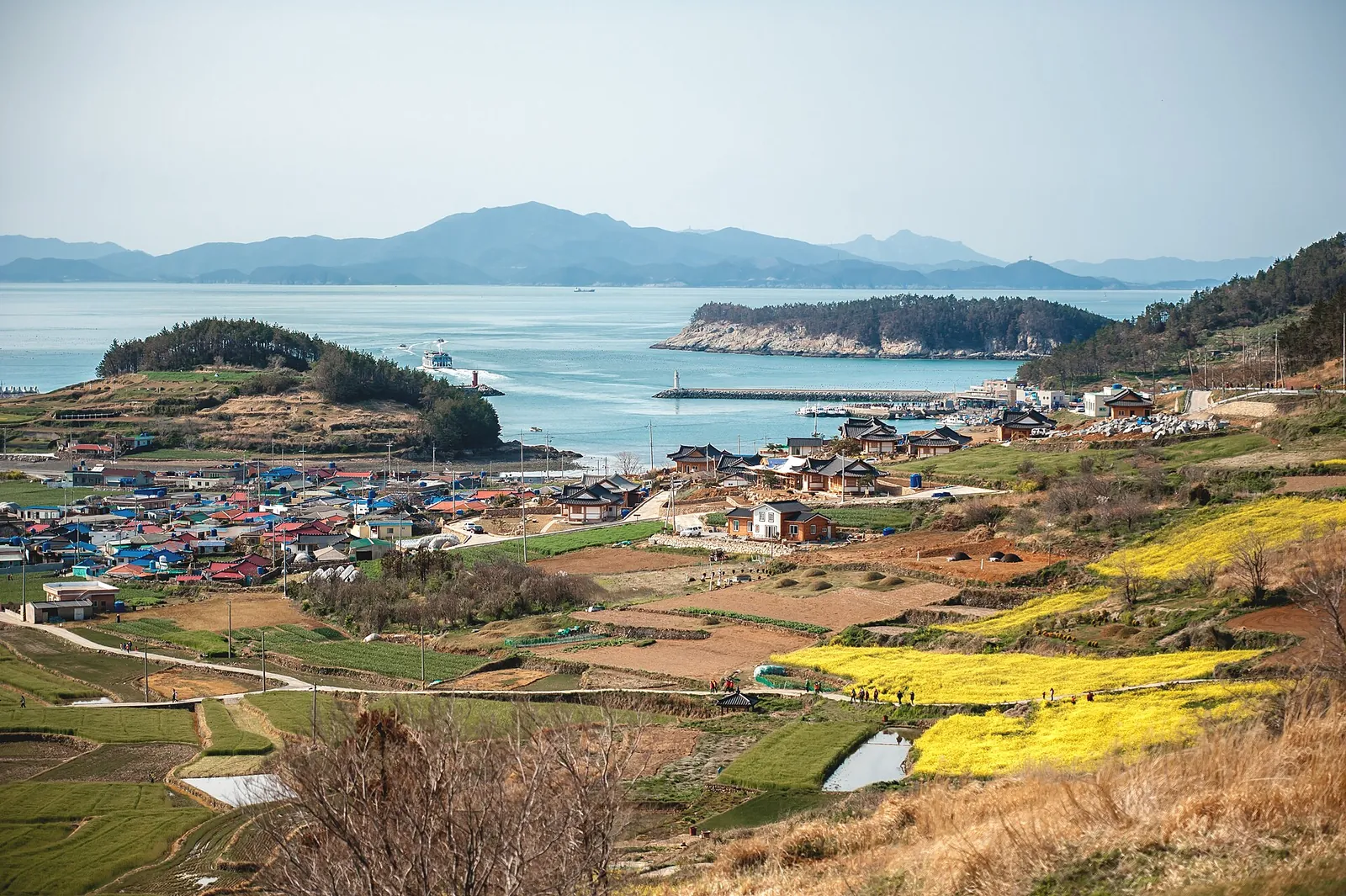
Cheongsando is the reason most travellers come this far south. It is a small island 19.2 kilometres off Wando, part of Dadohaehaesang National Park since 1981 and, in 2007, the first place in Asia to be named a Cittaslow 'slow city'. What it offers is not a single sight but a landscape: stone walls, terraced paddies known as gudeuljang-non, fishing villages and a network of old footpaths between them. Wando-eup, the county town on Wando itself, is where you sleep, eat abalone and catch the boat.
- Suggested time
- 2–3 nights (at least one full day on Cheongsando)
- Where to stay
- Wando-eup near the bus terminal and port; Docheong-ri on Cheongsando for a slower second night
- Season and timing
- April is the classic month: canola and barley are out and Wando County holds the Cheongsando Slow Walking Festival. Summer suits the beaches at Jiri and Sinji Myeongsasimni. Ferries and national-park facilities can stop at short notice in bad weather, so keep a spare half-day.
The short answer
Give it two nights. Arrive in Wando-eup by bus, have dinner near the port and stay the first night in town. Take a morning ferry to Docheong Port on Cheongsando (about 40 to 50 minutes) and spend the day walking one or two Slow Road sections — the Dang-ri hill road and Hwarangpo-gil are the classic start. Either come back on an afternoon boat or, better, sleep on the island and walk to Beombawi the next morning before returning. Book the ferry ahead in April, when the Slow Walking Festival fills the boats.
Where to stay: Wando-eup first, the island second
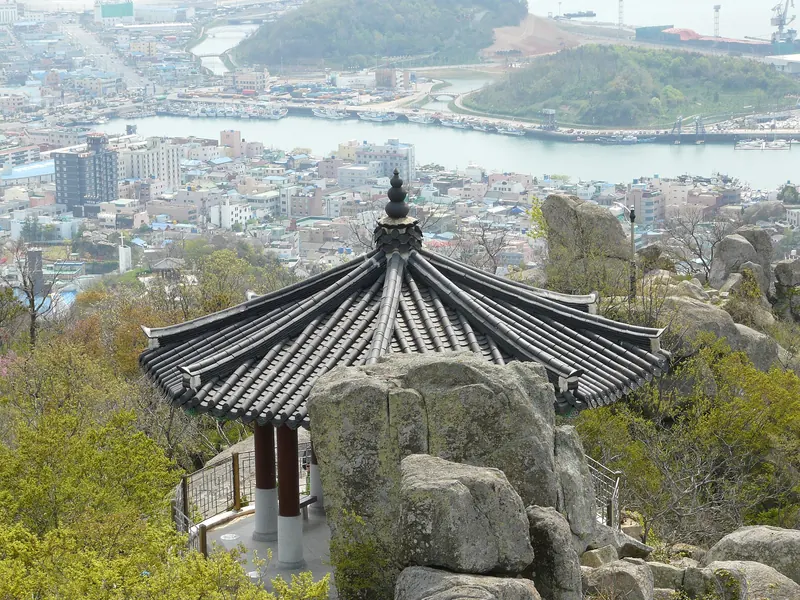
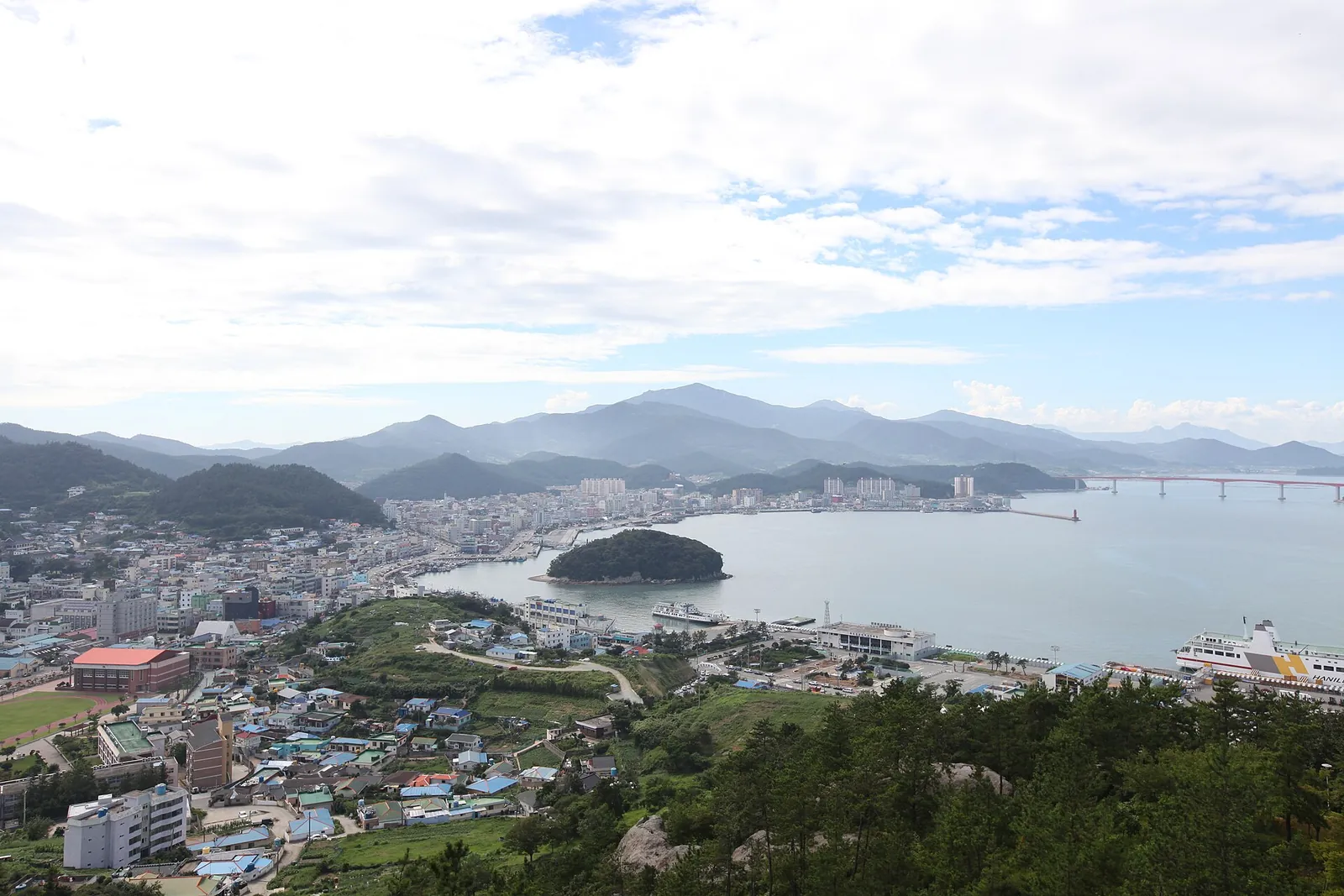
Wando-eup, the county town, is the practical first base. The intercity bus terminal, Wando Port and the restaurants around the traditional market are all close together: VisitKorea describes one hotel on Gaepo-ro as about eight minutes' walk from Wando Public Bus Terminal and five minutes by car from the port. Sleeping here means you can be on an early boat without rushing, and eat abalone or raw fish the evening you arrive.
Docheong-ri on Cheongsando is where the ferry lands, and VisitKorea lists a ferry terminal, restaurants, a convenience store and accommodation on the island. A night on the island is the difference between a rushed loop and actually slowing down: you get the paths in the evening and early-morning light, after the day visitors have gone. Wando County's tourism site keeps separate restaurant and accommodation lists for Cheongsando, which are worth checking before you book.
Sinjido, the island facing Wando-eup across a narrow channel, is the beach option: VisitKorea describes Sinji Myeongsasimni Beach as a four-kilometre stretch of silver sand, 150 metres wide, with a gentle slope into shallow water and a camping site. It makes sense in summer or if you want the Wando Marine Healing Center, which uses seawater from the beach in front of it; it adds a drive to every ferry morning.
The ferry from Wando to Cheongsando
Boats for Cheongsando leave Wando Port and arrive at Docheong Port (도청항) on the island. VisitKorea gives the crossing as about 40 minutes and Wando County's own Cheongsando page as 50 minutes by sea; plan on the longer figure. We did not find an official timetable or fare we could read, so we give none here: check sailings on the Korea Shipping Association's booking site, which lists Cheongsando as a destination and has a real-time operation page, or ask at the terminal.
In April, when the Slow Walking Festival runs and the canola is in flower, book the outbound and return boats before you travel and treat the last boat back as fixed. Carry your passport: VisitKorea notes that ID is checked when boarding the ferries from Wando to Jeju, and you should expect the same at a coastal ticket desk. If the weather is poor, check the operation page in the morning before you check out of your hotel.
Make time for the local food
What to eat and where to look
Abalone (jeonbok), every way
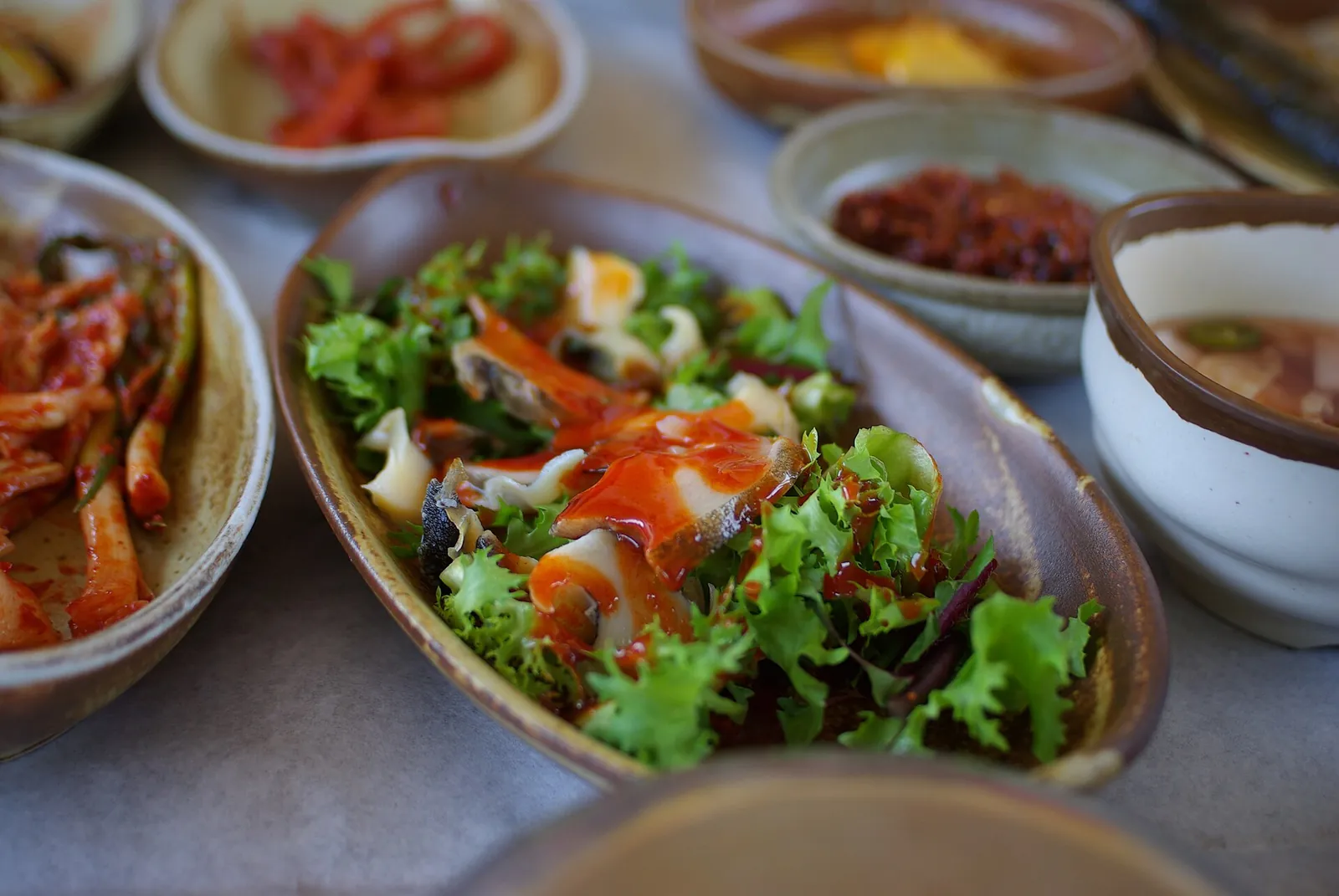
Wando is one of Korea's main abalone coasts. Myeongpum Jeonbokgung, which VisitKorea says runs its own abalone farm, serves a set called jeonbok hansang that covers abalone porridge, sliced raw abalone, steamed and stir-fried abalone and deep-fried abalone in sweet-and-sour sauce on one table, alongside jeonbokjuk (porridge) and jeonbok mulhoe (cold raw abalone soup).
- Where to look
- Myeongpum Jeonbokgung inside the Wando Traditional Market, 34-1 Gaepo-ro, Wando-eup. When we checked on 2026-10-03, VisitKorea listed it as closed on Wednesdays, with shorter lunch-only hours on Sunday to Tuesday.
- Fit it into your day
- Lunch or an early dinner in Wando-eup; plan around the Wednesday closure.
Shellfish allergy. A full abalone set is meant for sharing; check the price per person on the menu before ordering.
Jeonbok galbitang (abalone and beef-rib soup)
A clear soup of beef short ribs simmered with whole abalone. VisitKorea's food guide notes that abalone mainly comes from the southern coasts of Wando, Haenam and Gangjin, and that it was once a luxury ordinary people rarely tasted until farming made it common.
- Where to look
- Seafood and Korean restaurants around Wando-eup; look for 전복갈비탕 on the menu.
- Fit it into your day
- A warming lunch on a cool or windy day, especially after a morning on the boat.
Contains beef and shellfish.
Samchi hoe (raw Spanish mackerel)
Sliced raw samchi is the speciality VisitKorea highlights at Cheongsil Hoetjib, which serves fish caught off Wando. It is eaten wrapped: a slice of fish on aged kimchi on a sheet of laver (gim), rolled together. Sea bream, sea bass and rockfish are the other raw-fish standbys.
- Where to look
- Cheongsil Hoetjib, 51-1 Haebyeongongwon-ro, Wando-eup, and other raw-fish houses along the waterfront.
- Fit it into your day
- Dinner in Wando-eup, ideally on the night before or after the island.
Raw fish; ask what is in season, since the menu depends on the catch.
Haemultang (spicy seafood stew)
A big spicy pot of abalone, clams, crab and octopus from Wando waters. VisitKorea notes that Wando Haemultang also serves a single-portion seafood hot pot (haemul ttukbaegi) for solo diners, and haesintang (chicken and seafood soup), which must be ordered at least three hours ahead.
- Where to look
- Wando Haemultang, 256-1 Jangbogo-daero, Wando-eup (no on-site parking, according to VisitKorea).
- Fit it into your day
- A group dinner; solo travellers can order the ttukbaegi.
Very spicy and contains shellfish; it is sized for sharing.
Marine healing set meal (haeyang chiyu bapsang)
A set menu Wando County developed in 2021 around local seafood and seaweeds — abalone innards, hijiki, green sea fingers, kelp and seaweed stems. Wando Moraetteul serves it with grilled galbi patties mixed with abalone and seaweed and a seafood hot-stone rice pot.
- Where to look
- Wando Moraetteul, 74 Myeongsasimni-gil, Sinji-myeon, near Myeongsasimni Beach. When we checked, VisitKorea listed it as closed on Tuesdays with an afternoon break.
- Fit it into your day
- Lunch on a Sinjido beach or healing-center day.
Check the break time before driving over; seaweed-heavy dishes are an acquired taste for some.
Walking the Slow Road
The Cheongsando Slow Road is made of paths that islanders once used to walk between villages. Wando County says the full network of 11 courses (17 routes) and 42.195 kilometres opened in 2010, and that Cittaslow International certified it in 2011 as the world's first official 'slow road'. You do not need to walk it all; VisitKorea suggests about six hours for a visit, which is enough for two or three sections at an easy pace.
For a first day, walk out from Docheong Port. VisitKorea singles out the hill road at Dang-ri, a film location and the island's best-known view, and the stone walls of Sangseo Village. Wando County's description of the hiking route looks down from Goseongsan over the whole stretch from Docheong Port past the set of the drama *Spring Waltz* to Hwarangpo-gil, the path where the festival is centred. Course 11, the Miro-gil ('maze road'), starts in Docheong-ri itself, near the NH building on the harbour road.
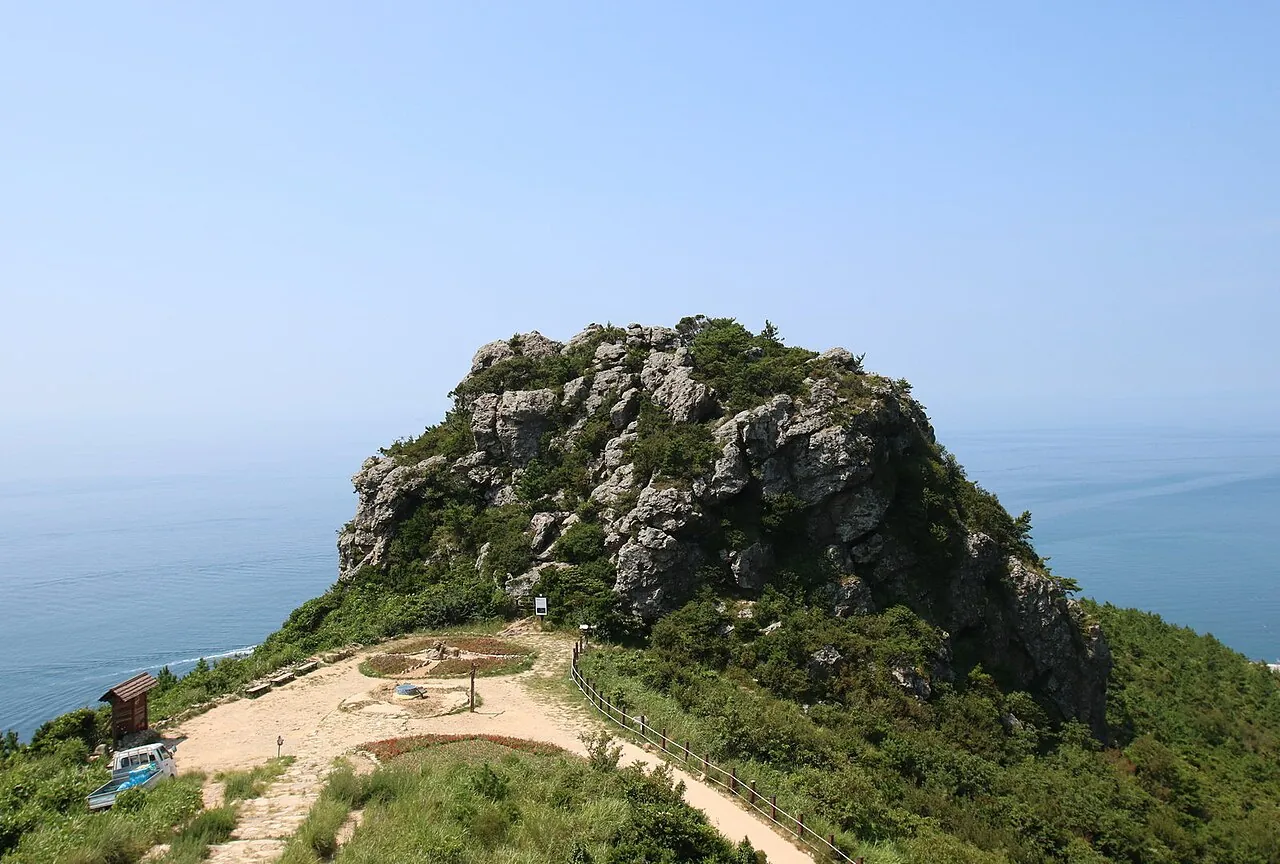
Beombawi (Tiger Rock) is the island's main viewpoint over the southern sea, reached on Slow Road course 5. Wando County notes a local legend that ships' compasses spin near the rock, and that visitors come to 'take in its strong energy'. Take it as folklore and go for the view. Bring water and snacks for any longer section: away from Docheong-ri, the paths run through farmland and small villages rather than past shops.
A climb across the island: hiking course 1-A
If you want a proper hike rather than village paths, Wando County publishes four mountain routes on Cheongsando. The longest, course 1-A, is 9 kilometres and takes about 4 hours 30 minutes by the county's estimate: from Docheong-ri past the Seoneum spring, over Daeseonsan, Goseongsan and Boseoksan to the Beombawi viewpoint, then down the Beombawi road (Slow Road course 5) to Gwondeok-ri.
The trail starts beside the painted wall at the Docheong-ri trailhead, a few minutes from the port; the county describes stone steps, a rocky path and a summit ringed with old stone walls on Goseongsan. Start in the morning, and know how you will get back from Gwondeok-ri on the other side of the island before you set out.
A day in and around Wando-eup
On the evening you arrive or the day you leave, Wando Tower is the obvious hour: a 76-metre observatory on Dongmangsan above the town, with views over Cheongsando, Bogildo, Nohwado, Sinjido and, on clear days, Jeju and Geomundo. When we checked on 2026-10-03, VisitKorea listed opening from 09:00 to 21:00 from October to April (to 22:00 from May to September), last entry 30 minutes before closing, and adult admission of 2,000 won. The beacon next to the tower is the start of a walking path round the hill.
Below the town, Jeongdo-ri Gugyedeung is a pebble beach in the national park where the stones have been rounded by the waves; VisitKorea describes the sound of the surf rolling them. The Cheonghaepogu Filming Set, a seaside set built for historical films and dramas such as *The Admiral: Roaring Currents* and *The Slave Hunters*, is on the shore outside Wando-eup. Further out, Bogildo, about 12 kilometres from Wando Port, is a separate island trip for the gardens of the Joseon poet Yun Seon-do, who settled there and built Seyeonjeong and other pavilions — a second island for a third day, not something to squeeze into the Cheongsando day.
A workable two- or three-night plan
This is an editorial suggestion, not a timetable. Confirm the bus and ferry times for your dates before you commit.
- Day 1 — To Wando: bus from Seoul or elsewhere in Jeolla to Wando-eup, Wando Tower near sunset, seafood dinner by the port.
- Day 2 — Cheongsando: morning ferry to Docheong Port, the Dang-ri hill road and Hwarangpo-gil, lunch in Docheong-ri; stay overnight on the island or take an afternoon boat back.
- Day 3 — Beombawi or the mountains: an early walk to Beombawi, or hiking course 1-A if you are fit, then the ferry back and onward travel.
- Optional extra day: Sinji Myeongsasimni Beach and the Marine Healing Center, or Bogildo for Yun Seon-do's garden.
Practical questions
How long does the ferry from Wando to Cheongsando take?
VisitKorea gives about 40 minutes and Wando County about 50 minutes. Boats leave Wando Port and arrive at Docheong Port on the island. Check current sailings on the Korea Shipping Association's booking site before you travel.
Can I visit Cheongsando as a day trip?
Yes, from Wando-eup: VisitKorea suggests about six hours on the island, enough for two or three Slow Road sections. An overnight stay is better if you want Beombawi or a longer hike as well, and it removes the pressure of the last boat.
How long is the Cheongsando Slow Road?
Wando County lists 11 courses (17 routes) totalling 42.195 kilometres, opened in 2010 and certified by Cittaslow International in 2011 as the world's first official slow road. Most visitors walk only a few sections.
When is the Cheongsando Slow Walking Festival?
Every April, when the canola and barley are out. Wando County held the 2025 edition on Hwarangpo-gil, with walks, night walks and a low-plastic campaign; check the county's tourism site for the next year's dates.
How do I get to Wando from Seoul?
By express bus from Seoul's Central City Terminal at Express Bus Terminal station. VisitKorea lists Wando among its routes; one VisitKorea feature gives three departures a day and about five hours on the road. Confirm times on kobus.co.kr.
Can I go on to Jeju from Wando?
Yes. VisitKorea lists daily ferries from Wando to Jeju operated by Hanil Express from the Wando Yeonan Ferry Terminal, about five minutes by taxi from the bus terminal. Passport or ID is required at boarding.
Sources and checks before you travel
Reference sources for the version dated 3 October 2026. Confirm opening times, access, transport and conditions for your travel dates.
- VisitKorea: Wando-gun, Cheongsando Island [Slow City] ↗ — opens in a new tab
- VisitKorea: Jeonnam Wando Cheongsando Island (Cittaslow) ↗ — opens in a new tab
- Wando County tourism: Slow City Cheongsando (Korean) ↗ — opens in a new tab
- Wando County tourism: Cheongsando hiking course 1-A (Korean) ↗ — opens in a new tab
- Wando County tourism: Cheongsando Slow Walking Festival (Korean) ↗ — opens in a new tab
- VisitKorea: Cheongsando Slow Walking Festival ↗ — opens in a new tab
- VisitKorea: Wando Marine Healing Center (feature) ↗ — opens in a new tab
- VisitKorea: Wando Tower ↗ — opens in a new tab
- VisitKorea: Wando Jeongdo-ri Gugyedeung Pebble Beach ↗ — opens in a new tab
- VisitKorea: Sinji Myeongsasimni Beach ↗ — opens in a new tab
- VisitKorea: Bogildo Island ↗ — opens in a new tab
- VisitKorea: HallyuWiki Top 40 Courses (Cheonghaepogu Filming Set) ↗ — opens in a new tab
- VisitKorea: Koner Residence Hotel ↗ — opens in a new tab
- VisitKorea: Myeongpum Jeonbokgung ↗ — opens in a new tab
- VisitKorea: Abalone and Galbi Soup ↗ — opens in a new tab
- VisitKorea: Cheongsil Hoetjib ↗ — opens in a new tab
- VisitKorea: Wando Haemultang ↗ — opens in a new tab
- VisitKorea: Wando Moraetteul ↗ — opens in a new tab
- VisitKorea: Getting to Jeju Island ↗ — opens in a new tab
- VisitKorea: Express Bus & Intercity Bus ↗ — opens in a new tab
- Korea Shipping Association: coastal ferry booking (Korean) ↗ — opens in a new tab
Does this experience fit your route?
Cheongsando is easy to do on your own with a bus and a ferry ticket. If you prefer a guided trip through the southwest, check exactly which islands and towns it includes before you book.
Browse relevant experiences on Viator ↗ — opens in a new tabAffiliate link · Book with ViatorPhoto credits
Canola in flower above a village on Cheongsando in spring
Photograph: 라성민 — opens in a new tab · CC BY-SA 3.0 — opens in a new tab
Changes: Resized and converted to WebP; displayed with responsive crops. · Original photograph and licence details ↗ — opens in a new tab
Beombawi (Tiger Rock), Cheongsando's main viewpoint over the southern sea
Photograph: 김은아89 — opens in a new tab · CC BY-SA 3.0 — opens in a new tab
Changes: Resized and converted to WebP; displayed with responsive crops. · Original photograph and licence details ↗ — opens in a new tab
Wando-eup and its harbour, where the ferries for Cheongsando leave
Photograph: 정동완 — opens in a new tab · CC BY-SA 4.0 — opens in a new tab
Changes: Resized and converted to WebP; displayed with responsive crops. · Original photograph and licence details ↗ — opens in a new tab
Jeonbok hoe, sliced raw abalone with chogochujang sauce
Photograph: egg (Hong, Yun Seon) — opens in a new tab · CC BY 2.0 — opens in a new tab
Changes: Resized and converted to WebP; displayed with responsive crops. · Original photograph and licence details ↗ — opens in a new tab
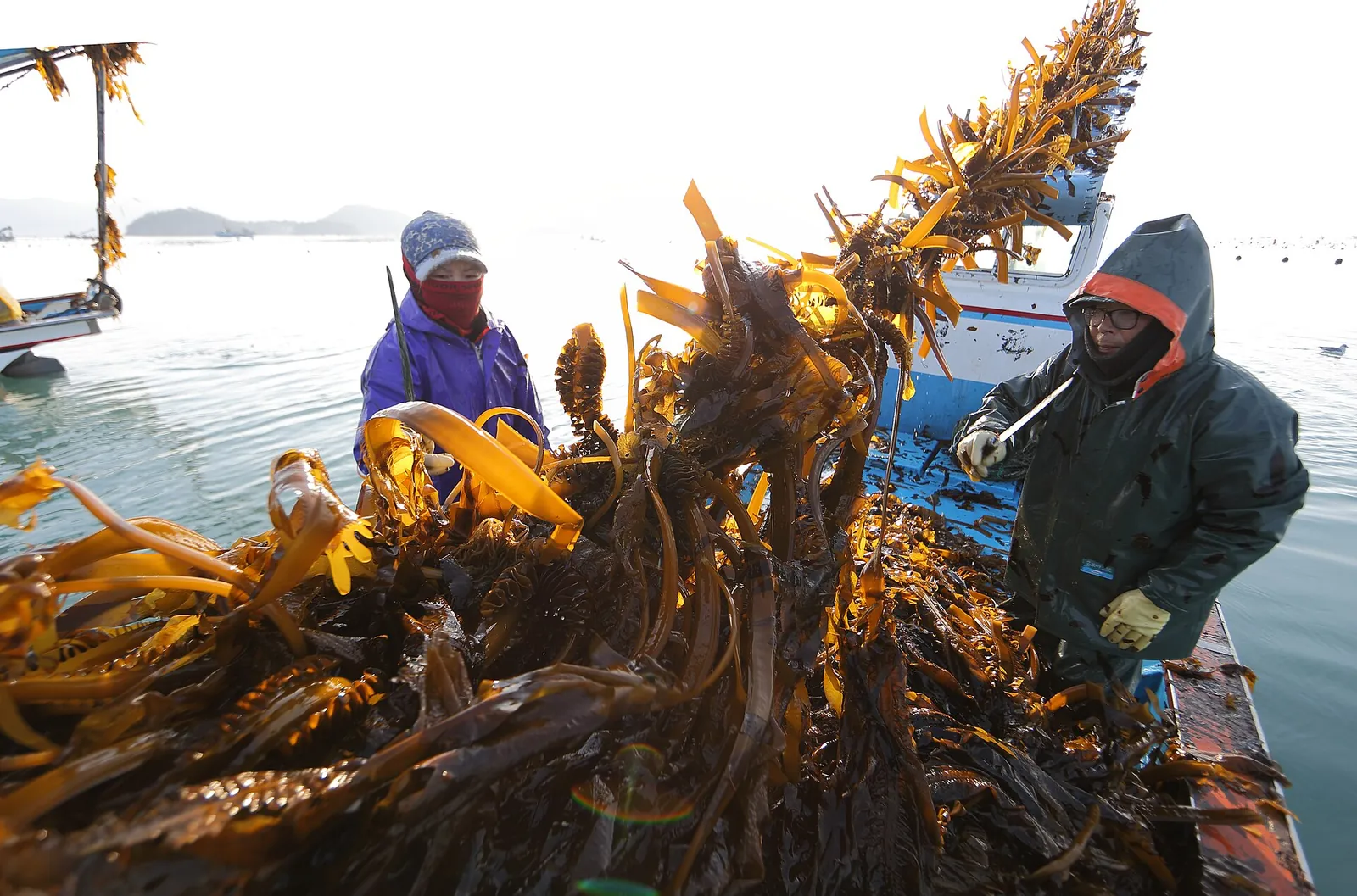
Harvesting miyeok (sea mustard) in the waters off Wando
Photograph: 정동완 — opens in a new tab · CC BY-SA 4.0 — opens in a new tab
Changes: Resized and converted to WebP; displayed with responsive crops. · Original photograph and licence details ↗ — opens in a new tab