Kansai · Kyoto
Kurama and Kibune: choosing a mountain day near Kyoto
The mountains north of Kyoto offer a day with a different atmosphere from the central city. Choose a village and shrine visit, or a prepared mountain walk, before trying to connect everything.
- Suggested time
- An editorial starting point: one focused day or an overnight stay
- Where to stay
- Kurama and Kibune
- Season and timing
- Match current local conditions and activity availability
The short answer
Make Kurama and Kibune a focused part of the trip: select the main experience first, then arrange access, a meal and a realistic return. The route ideas below are editorial suggestions to adapt to your interests and mobility, rather than a fixed timetable.
Choose the experience that gives the day its shape
Kurama-dera and Kifune Shrine provide distinct religious anchors. A mountain crossing between the areas is a walk that needs its own route and conditions check, not simply a shortcut between two stations. Visitors who prefer less climbing can focus on one village and keep the other optional.
Give the main stop enough time to notice details, read interpretation and pause when something interests you. Keep one optional extension, and add it only if it leaves enough time for the experience you came for.
Build the route around arrival and return
Use Kyoto’s official access guidance to compare the actual connection from your accommodation. Kibuneguchi and the shrine are different places; include the last bus or walk. Confirm the return leg before arranging a meal, particularly if you plan to finish on the opposite side of the mountain.
Make time for the local food
What to eat and where to look
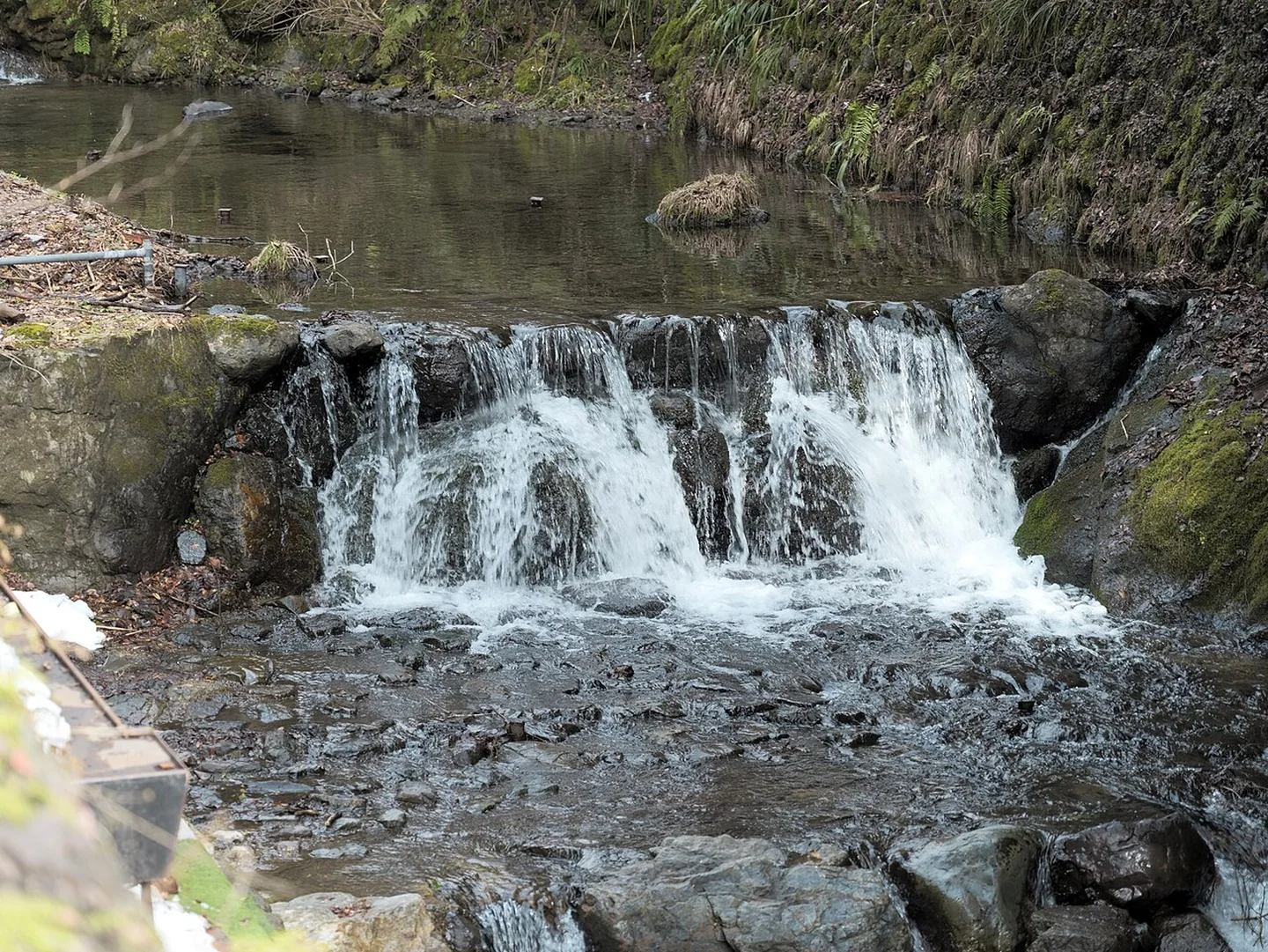
A Kibune restaurant meal
Select the exact restaurant and season; any riverside-platform arrangement needs advance confirmation.
Make room for a locally connected meal
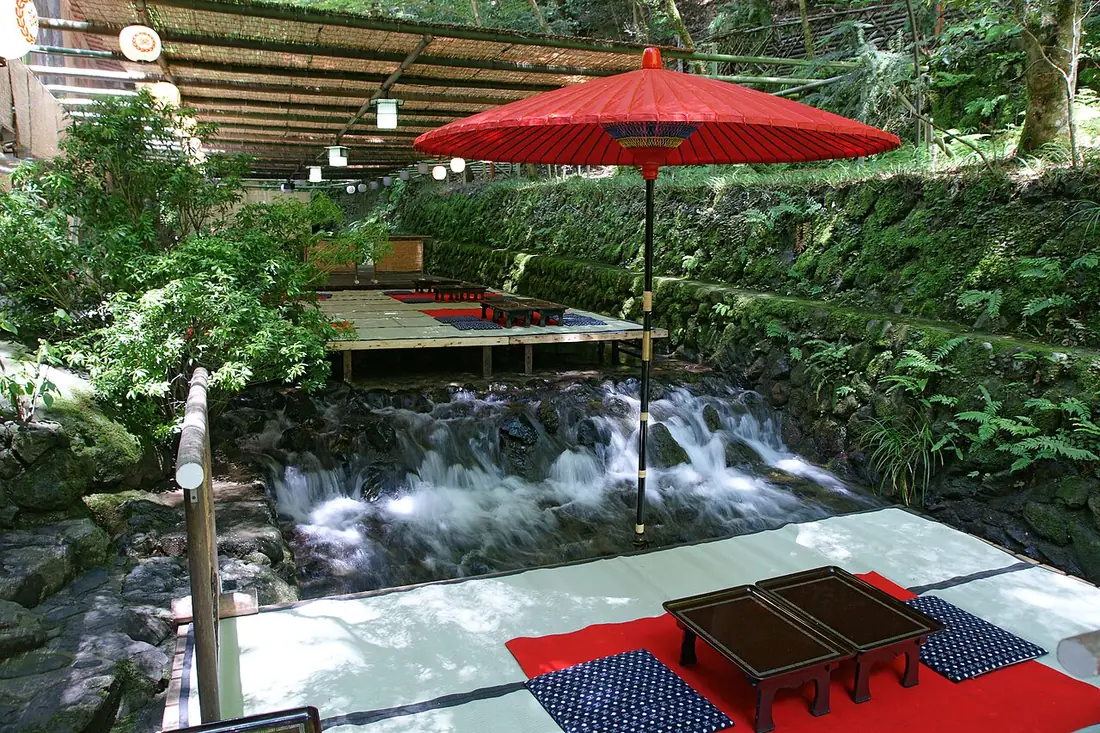
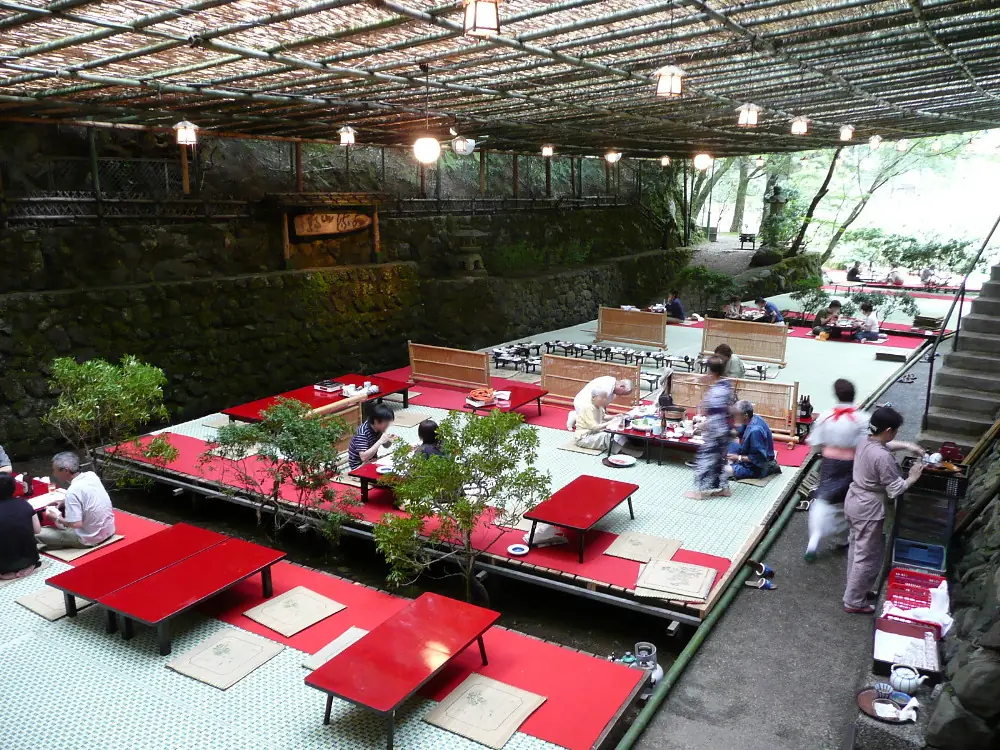
Kibune dining can be an important part of the outing, but select the specific restaurant and season. A riverside-platform meal needs confirmation of dates, conditions, reservation and menu. Avoid assuming that a scenic summer dining photograph represents an option available in winter or to walk-in visitors.
Match the visit to the current conditions
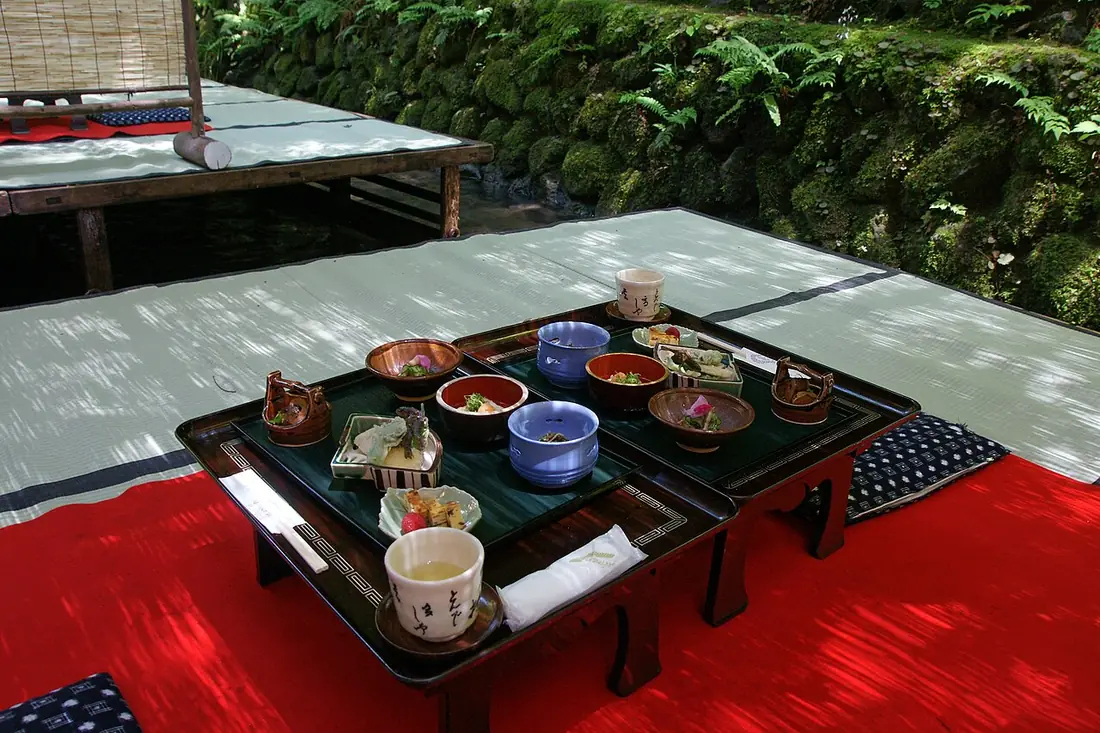
Wet steps, roots and snow or ice can change the mountain route. Check temple and local notices before deciding to cross, and follow closure instructions. Festival travel requires a separate crowd and transport plan; ordinary daytime arrangements should not be assumed to hold during a major event.
When a guided experience adds value
A guided mountain walk can add heritage context and help choose a suitable route. Compare ascent, surface, pace and where the walk finishes. A shrine-focused day is a better fit than a hiking listing for someone who prefers minimal climbing.
Practical questions
How much time should I give Kurama and Kibune?
Use the suggested route as a starting point, then add the actual travel time and a meal. Staying nearby can make a slower visit possible; the right duration depends on the experiences you choose.
What should I confirm before booking?
Wet steps, roots and snow or ice can change the mountain route. Check the relevant official notice for your visit date.
Is a guided experience worthwhile?
A guided mountain walk can add heritage context and help choose a suitable route. Confirm the listing’s route and inclusions before booking.
Sources and checks before you travel
Reference sources for the version dated 30 September 2026. Confirm opening times, access, transport and conditions for your travel dates.
Does this experience fit your route?
Explore related tours and experiences
Check dates and details on Viator ↗ — opens in a new tabAffiliate link · Book with Viator