Northern Thailand · Kamphaeng Phet
Kamphaeng Phet travel guide: laterite temples in the forest
Kamphaeng Phet — the 'diamond wall' — guarded the southern edge of the Sukhothai kingdom on the banks of the Ping River. Its historical park is one of the least visited in Thailand. The Ministry of Tourism and Sports' directory highlights two things: the skilful use of laterite as a building stone, and temples set in dense forest that keep the atmosphere of the old forest-dwelling monasteries.
- Suggested time
- 1 day
- Where to stay
- Kamphaeng Phet town
- Season and timing
- November to February is most comfortable; the forest zone gives some shade.
The short answer
Spend one day, or break the journey between Sukhothai and Bangkok here. See Wat Phra Kaeo and Wat Phra That inside the walls in the morning, the national museum (Wednesday to Sunday), then the forest temples north of the city, including Wat Chang Rob, in the afternoon. Walk, cycle or ask about the electric tram. Kamphaeng Phet has no airport; it is reached by road.
Inside the walls
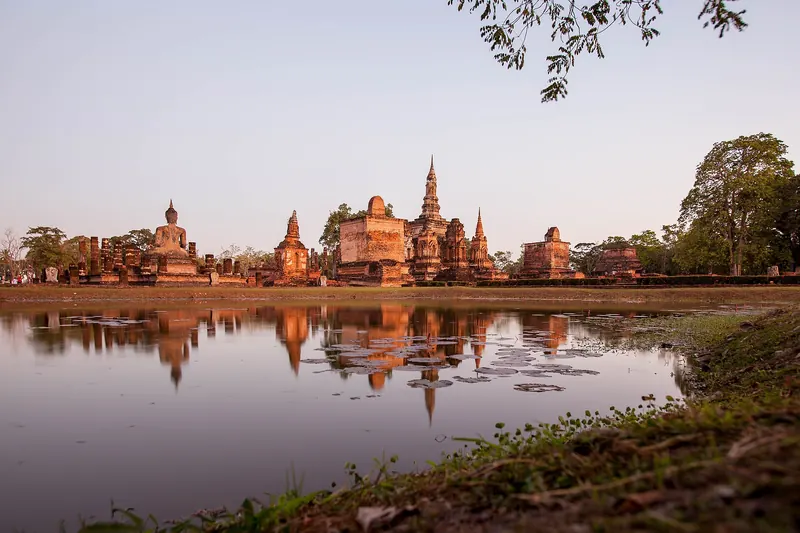
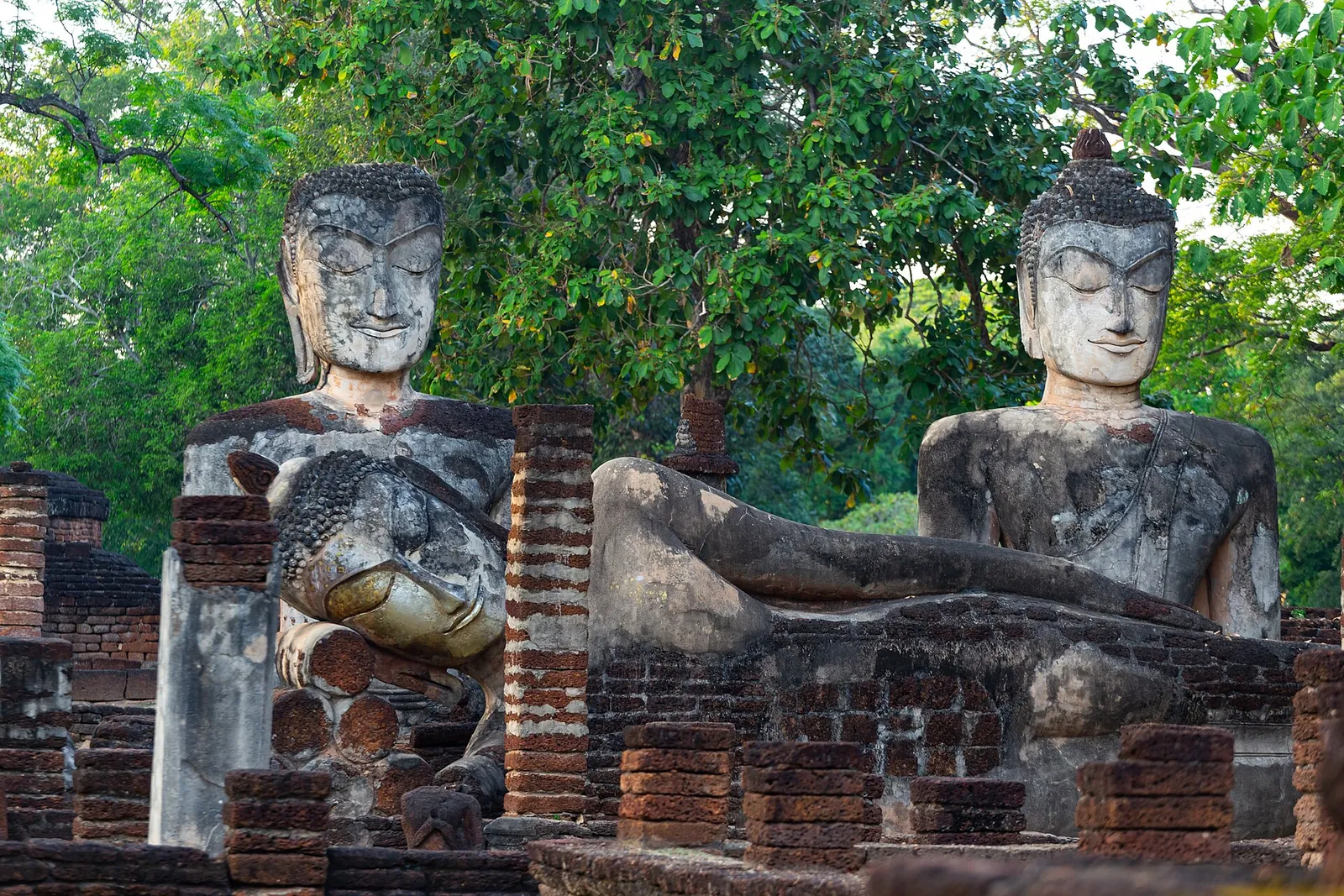
The Fine Arts Department opened the historical park in 1991, the same year it was inscribed as a World Heritage site together with Sukhothai and Si Satchanalai. The old city is a trapezoid parallel to the Ping River, enclosed by a laterite rampart. The directory describes it as an ancient city with at least 500 years of history, its temples mostly in the Sri Lankan-influenced Theravada tradition. At the centre, Wat Phra Kaeo was a royal temple with no monks' quarters, alongside Wat Phra That.
Look for the weathered laterite Buddha images, softened by centuries of rain, and the thick city walls that give the town its name.
The forest temples
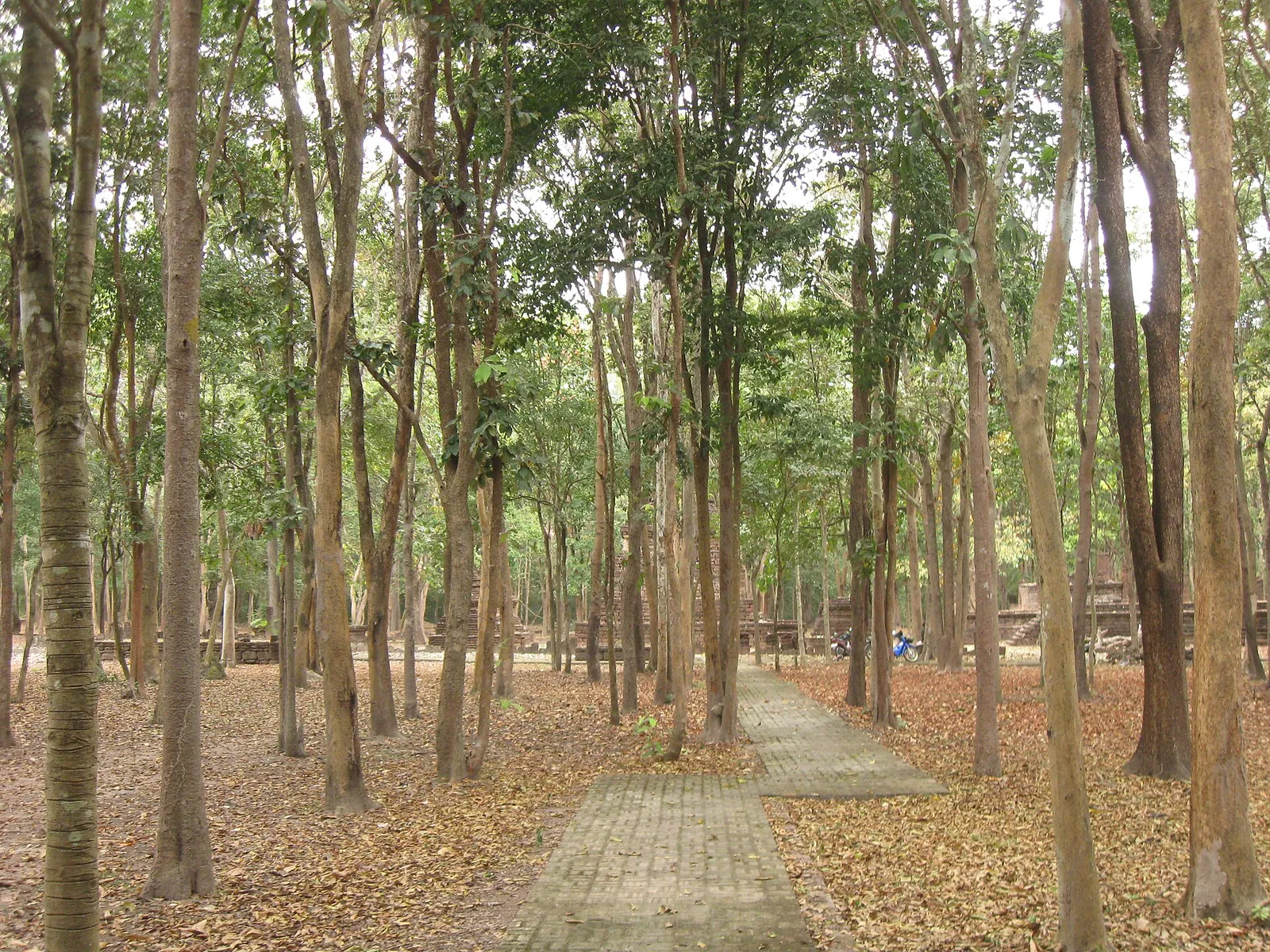
North of the walls, on a gravel hill, the Aranyik zone covers about 2.6 square kilometres, according to the Fine Arts Department, with temples among tall trees built for monks who lived in the forest. Here the directory's 'atmosphere of the Buddhist place in Aranyawasi' is easy to feel: few people, birdsong and laterite pillars in the shade.
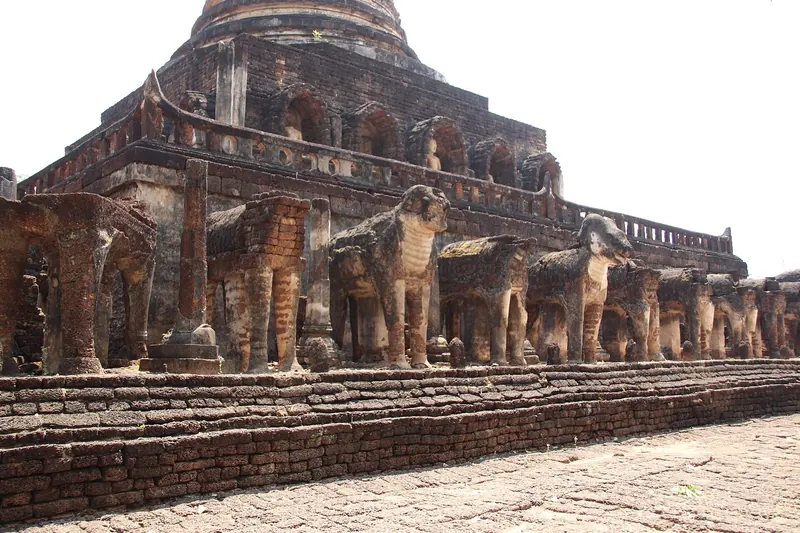
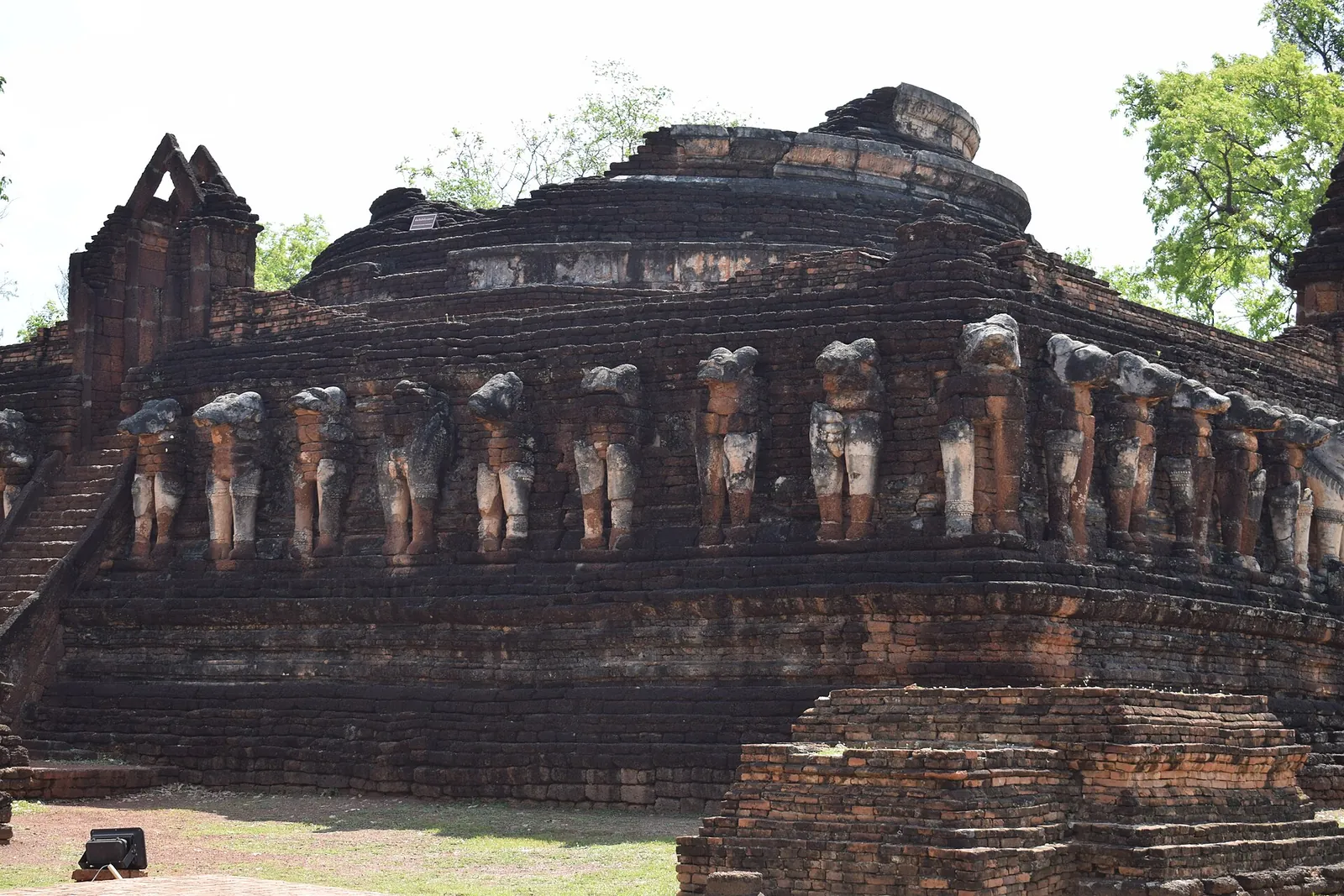
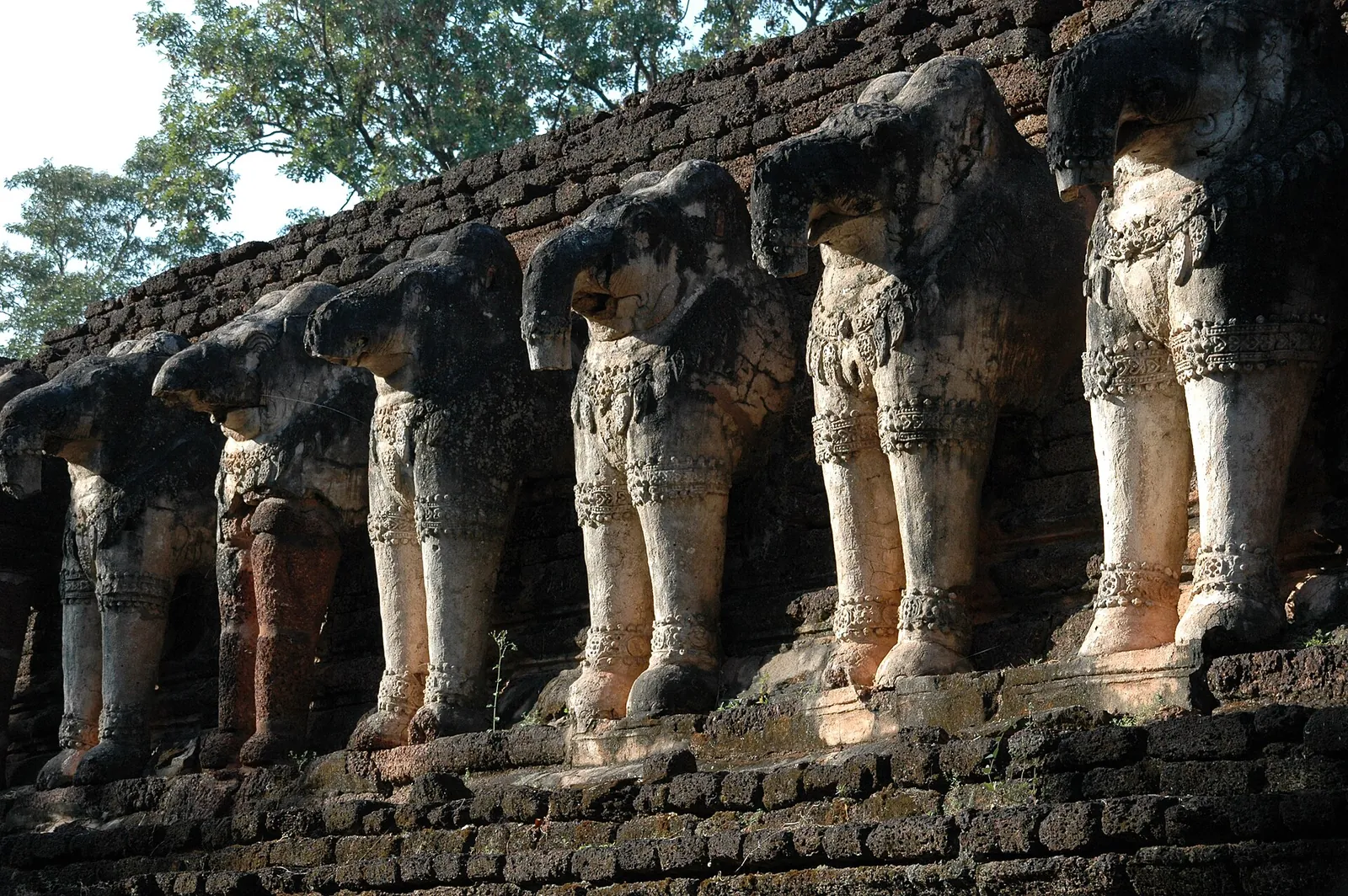
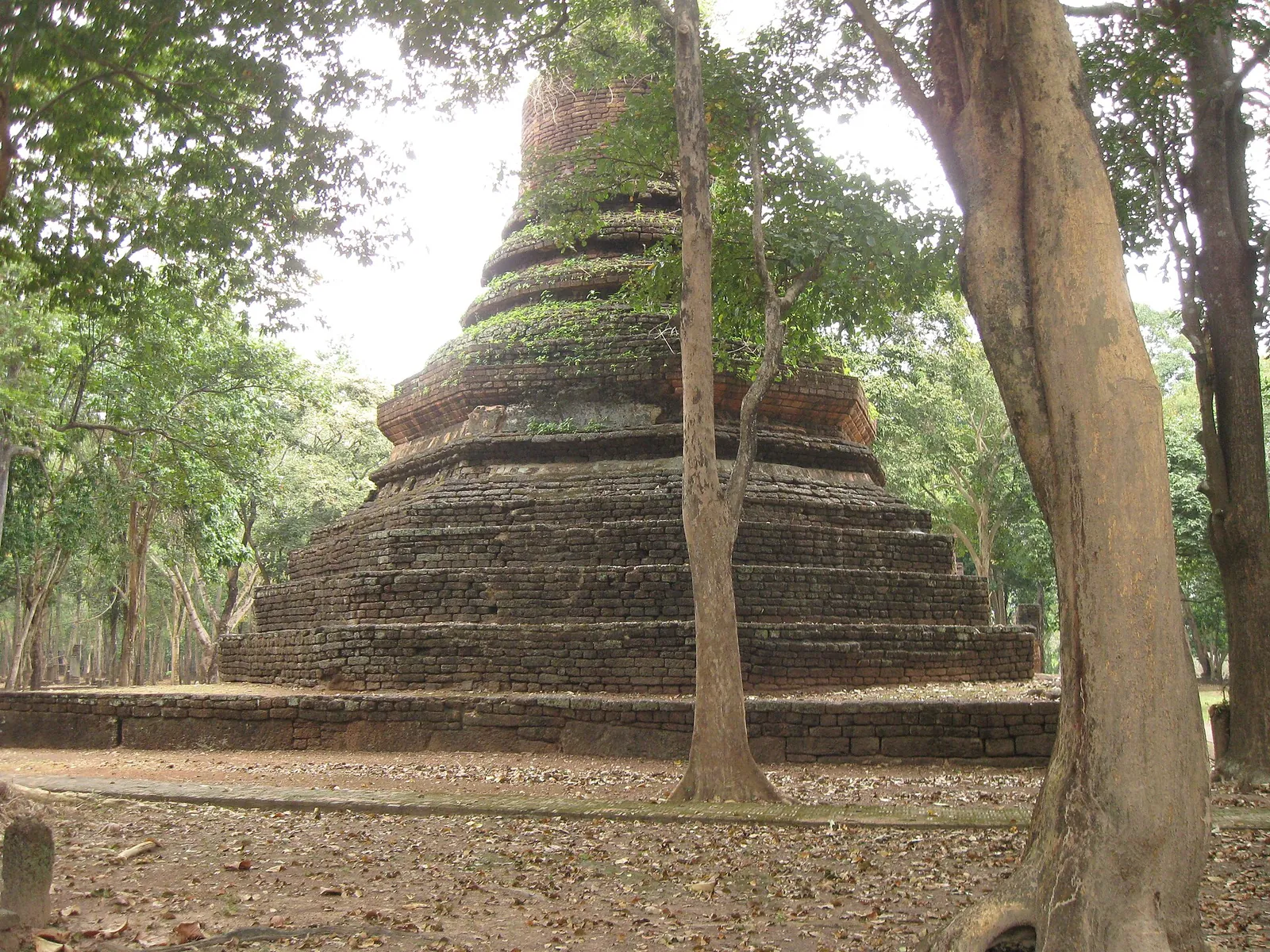
Wat Chang Rob is built of laterite from its base up, with elephant sculptures and stucco decoration around the chedi, as the Fine Arts Department describes. The department notes that the laterite for these temples was quarried nearby, leaving ponds in front of Wat Phra Non and Wat Chang Rob. Allow time to wander; the sites are linked by a loop road.
Make time for the local food
What to eat and where to look
Market snacks and fruit
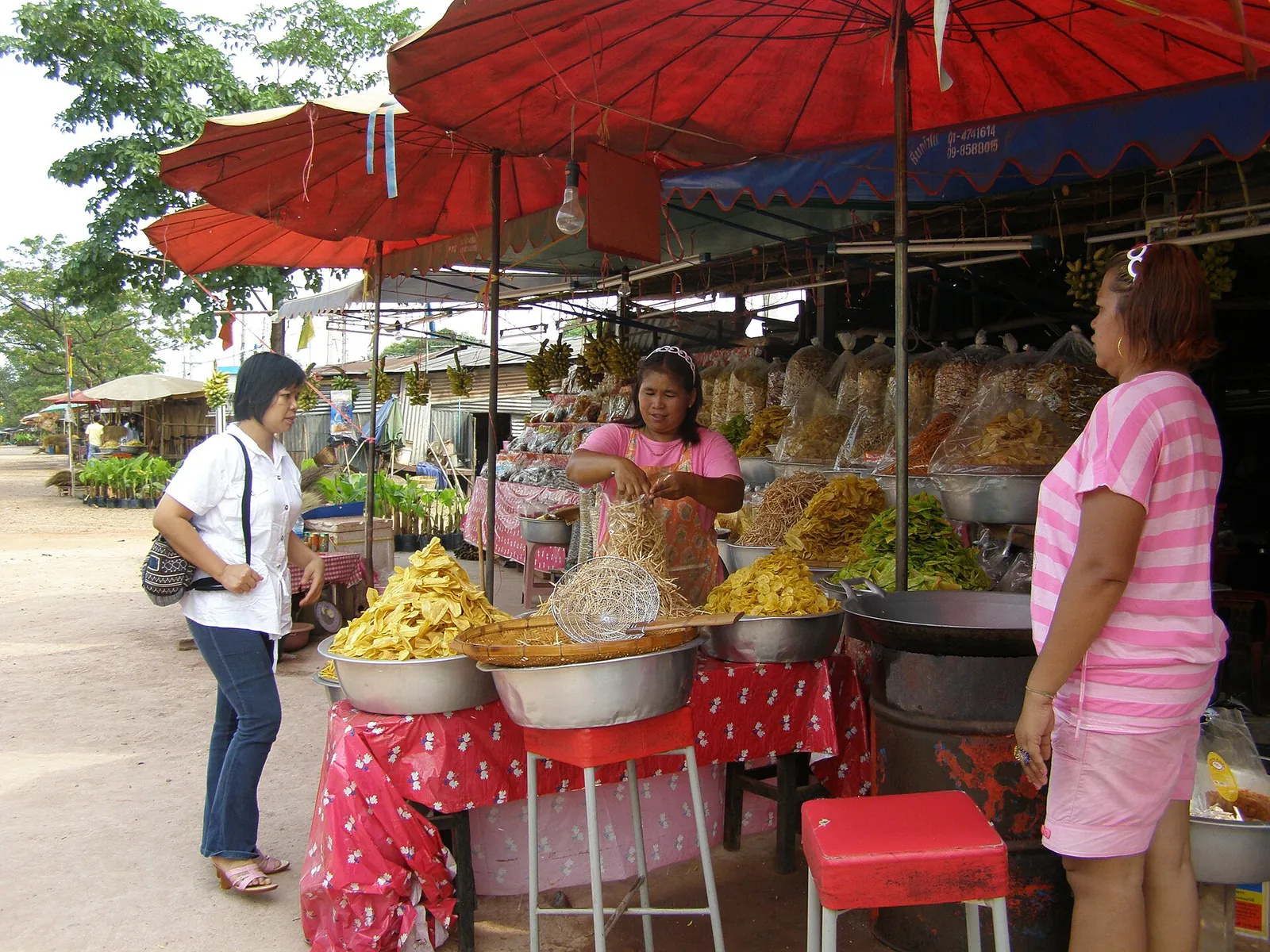
Grilled bananas, sticky-rice sweets and seasonal fruit from the town's markets.
- Where to look
- Markets in the town centre.
- Fit it into your day
- A snack between the two zones.
Stalls vary by day and season.
Riverside fish
Freshwater fish from the Ping River, grilled or in sour soups at riverside restaurants.
- Where to look
- Restaurants along the Ping in town.
- Fit it into your day
- Dinner by the river.
Fish bones; prices are often by weight.
Noodle and rice shops
Everyday Thai noodles and rice dishes in the town centre.
- Where to look
- Around the town market.
- Fit it into your day
- A quick lunch before the forest zone.
Ask about chilli.
Kamphaeng Phet National Museum
Near Wat Phra Kaeo, the Kamphaeng Phet National Museum displays finds from the province, from Dvaravati and Lopburi art to the Rattanakosin period: stucco and terracotta decoration, Buddha heads and ceramics.
The directory lists opening from Wednesday to Sunday. Plan the day around it if you want to see the collection.
Getting around the park
The directory says the park is open daily and can be visited on foot, by bicycle, motorcycle or car, or on an electric tram (booked by phone on 055-854736); the information centre and guides are available from 8:30 to 16:30.
The two zones are a short ride apart. Start inside the walls and move to the forest zone when the sun is high.
Getting there
Kamphaeng Phet lies on the main highway between Bangkok and the north, and buses stop here on routes to Sukhothai, Tak and Chiang Mai. Sukhothai lies to the north-east.
The nearest airports are Sukhothai and Phitsanulok; from either, continue by road.
Practical questions
Is Kamphaeng Phet worth visiting?
Yes, if you like quiet ruins: its forest temples and laterite Buddhas are atmospheric and rarely crowded.
What are the opening hours of Kamphaeng Phet Historical Park?
The directory says it is open daily, with the information centre staffed from 8:30 to 16:30.
When is the national museum open?
The directory lists Wednesday to Sunday.
How do I get to Kamphaeng Phet?
By bus or car on the main northern highway; the nearest airports are Sukhothai and Phitsanulok.
Sources and checks before you travel
Reference sources for the version dated 1 October 2026. Confirm opening times, access, transport and conditions for your travel dates.
- Thailand Tourism Directory: Kamphaeng Phet Historical Park ↗ — opens in a new tab
- Thailand Tourism Directory: Kamphaeng Phet National Museum ↗ — opens in a new tab
- Fine Arts Department: Kamphaeng Phet Historical Park ↗ — opens in a new tab
- Thailand Tourism Directory: Ramkhamhaeng National Museum ↗ — opens in a new tab
- Thailand.go.th: the seasons of Thailand ↗ — opens in a new tab
Photo credits
Laterite Buddha images inside the old city, Kamphaeng Phet Historical Park.
Photograph: Chainfoto — opens in a new tab · CC BY 4.0 — opens in a new tab
Changes: Resized and converted to WebP; displayed with responsive crops. · Original photograph and licence details ↗ — opens in a new tab
Wat Chang Rob in the Aranyik forest zone.
Photograph: PumpkinSky — opens in a new tab · CC BY-SA 4.0 — opens in a new tab
Changes: Resized and converted to WebP; displayed with responsive crops. · Original photograph and licence details ↗ — opens in a new tab
Elephant sculptures at Wat Chang Rob.
Photograph: Guido Johannes Joerg ( Endimione ) — opens in a new tab · CC BY-SA 3.0 — opens in a new tab
Changes: Resized and converted to WebP; displayed with responsive crops. · Original photograph and licence details ↗ — opens in a new tab
The forest setting of the Aranyik temples.
Photograph: Ruslik0 — opens in a new tab · CC BY-SA 4.0 — opens in a new tab
Changes: Resized and converted to WebP; displayed with responsive crops. · Original photograph and licence details ↗ — opens in a new tab
Wat Phra Non, Aranyik zone.
Photograph: Ruslik0 — opens in a new tab · CC BY-SA 4.0 — opens in a new tab
Changes: Resized and converted to WebP; displayed with responsive crops. · Original photograph and licence details ↗ — opens in a new tab
A banana stall by the road in Kamphaeng Phet.
Photograph: CHAMRAT CHAROENKHET — opens in a new tab · CC BY 3.0 — opens in a new tab
Changes: Resized and converted to WebP; displayed with responsive crops. · Original photograph and licence details ↗ — opens in a new tab