Southern Taiwan · Kaohsiung City
Fo Guang Shan guide: Buddha Museum, monastery and vegetarian lunch
Fo Guang Shan rewards a day that leaves room for both looking and listening. The Buddha Museum's long approach, pagodas and seated Buddha give the visit its grand scale, while the galleries and teahouses make it possible to slow down. The monastery is a separate part of the visit, not another name for the museum. Keeping that distinction in mind helps with transport, opening days and the quieter etiquette of a working religious place.
- Suggested time
- 1 full day from Kaohsiung; keep arrival and departure travel separate from the visit
- Where to stay
- Central Kaohsiung for a combined city stay, or the Zuoying HSR area for a confirmed bus connection
- Season and timing
- Choose a day suited to outdoor walking, using the covered walkways, galleries and teahouses for breaks. Check the museum calendar before choosing your date.
The short answer
Give Fo Guang Shan one full day from a Kaohsiung base: start with the Buddha Museum, pause for a vegetarian lunch, then continue to the monastery. Stay in central Kaohsiung for a wider city visit, or near Zuoying if your confirmed transport uses the high-speed rail station. The museum normally closes on Tuesdays, with announced exceptions; its 2026 notice says the monastery remains visitable on museum closure days. Check the return service before setting off.
Treat the museum and monastery as separate stops
Begin by choosing the part of Fo Guang Shan that matters most to you. The Buddha Museum at No. 1 Tongling Road combines Buddhist culture, exhibitions and monumental architecture; the monastery has its own entrance and transport information. A museum-led day can move from the main approach into the galleries, with lunch before a quieter monastery visit. Someone coming principally for religious practice may prefer a different order, confirmed with the relevant visitor service.
When checked on 2026-10-08, the museum listed free admission and a normal Tuesday closure. Its 2026 calendar names exceptions and explicitly welcomes visitors to the monastery on museum closure days. Do not infer that every shrine, exhibition or monastery space shares one timetable. The museum footer distinguishes the weekend Front Hall closing time of 19:00 from the Main Hall's 18:00; use the specific building's information rather than planning every interior visit until 19:00.
Let the architecture lead into the galleries
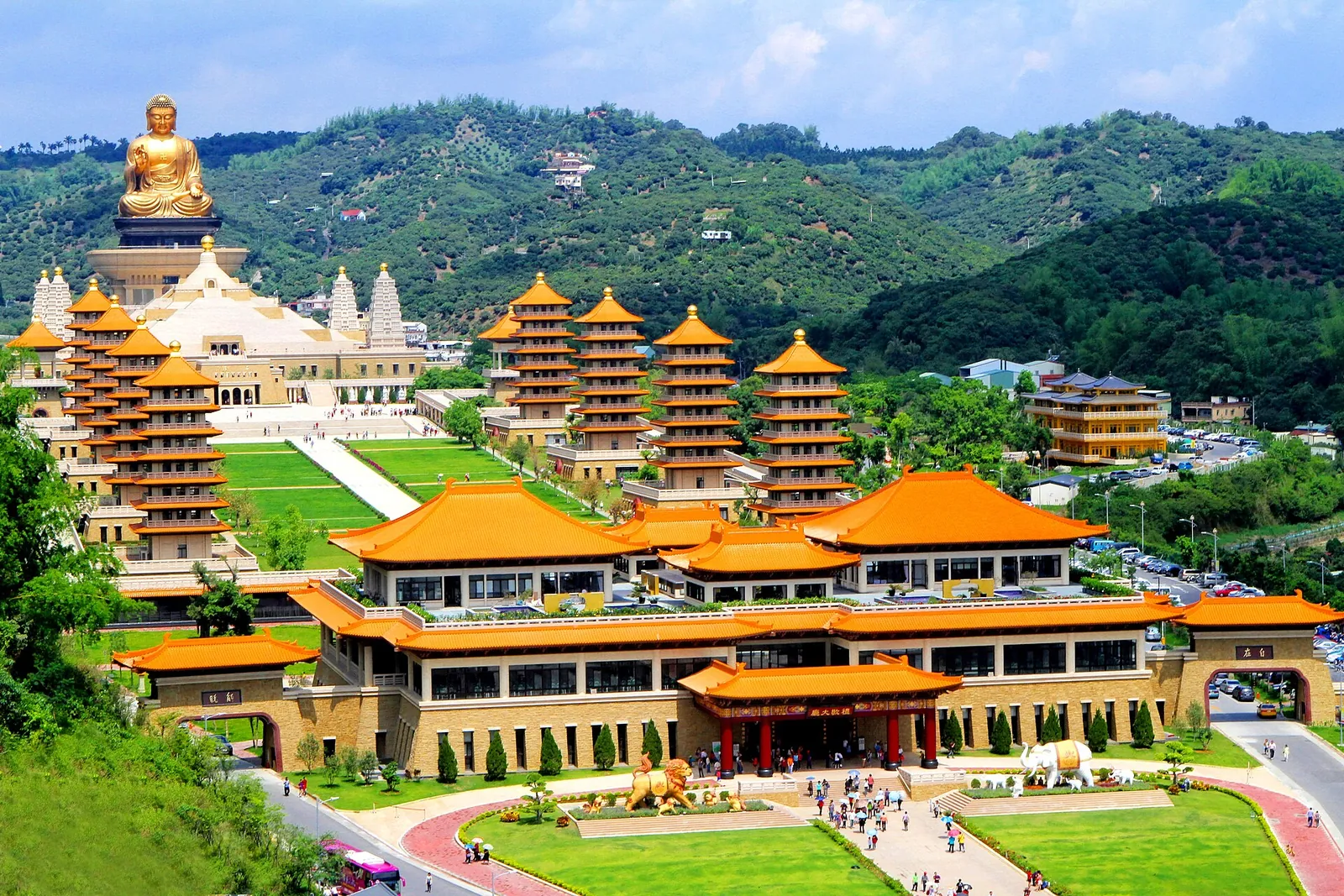
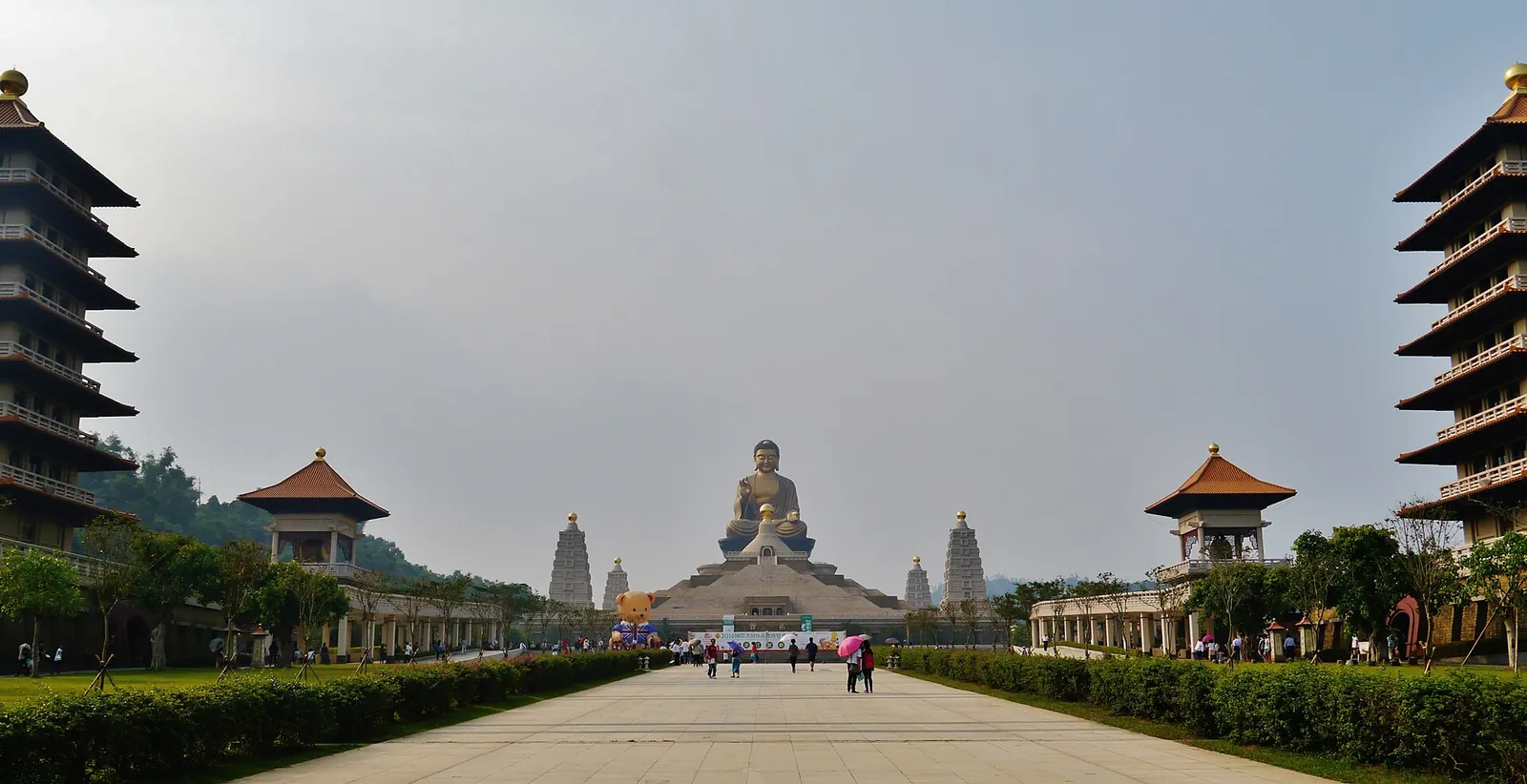
The museum's cultural route describes an architectural conversation between India and China, bringing ancient forms into a modern complex. Follow the approach towards the Main Hall, then choose galleries that give context to the buildings rather than treating the whole site as a distant-Buddha photograph. The museum identifies the Six Perfections Pagoda, the One-Stroke Calligraphy exhibition and the Avalokitesvara Shrine among its cultural-route highlights; current exhibition listings can help decide what to see first.
The museum's visitor guidance allows photography in exhibition halls without flash, but prohibits photography, filming and live streaming inside shrines. Quiet, appropriate clothing is part of the visit, and drones are not permitted. Covered walkways and places to rest make a slower circuit possible. For a guided visit or a language-specific group tour, arrange it in advance rather than assuming an English-speaking guide will be waiting when you arrive.
Make time for the local food
What to eat and where to look
Lima-bean noodle soup
The museum recommends lima-bean noodles at the Front Hall Waterdrop Teahouse; its gourmet route identifies the dish as a noodle soup. It makes a sit-down lunch within the museum visit.
- Where to look
- Front Hall Waterdrop Teahouse, checking the current menu and service hours.
- Fit it into your day
- Have it after the galleries and before continuing towards the monastery.
Ask about wheat, soy and other ingredients in the noodles and broth; vegetarian does not mean allergen-free.
Taiwanese-style cold noodles
The official dining page lists Taiwanese-style cold noodles among the Front Hall teahouse recommendations, offering a different option from a hot noodle bowl.
- Where to look
- Front Hall Waterdrop Teahouse; confirm that the dish is being served on your visit.
- Fit it into your day
- Choose it as lunch rather than ordering a second noodle meal elsewhere in the grounds.
Ask about wheat, sesame, peanuts, soy and eggs in the noodles, dressing and toppings if relevant to your diet.
Flaky scallion pancake
The museum lists flaky scallion pancake on the Twin Pavilions Waterdrop Teahouse menu, alongside noodles, rice and side dishes.
- Where to look
- Twin Pavilions Waterdrop Teahouse, where a meal can be paired with a seated break.
- Fit it into your day
- Share it as a small addition to lunch or a later pause before the return journey.
Ask about wheat, egg, dairy and cooking ingredients; a vegetarian menu does not establish a vegan recipe.
Make the vegetarian lunch a proper break
Lunch belongs naturally between the museum galleries and a monastery visit. The official dining page describes a buffet in the Front Hall and several Waterdrop Teahouses, each with its own menu. Lima-bean noodles and Taiwanese-style cold noodles are recommended at the Front Hall teahouse, while the Twin Pavilions menu includes soup noodles, fried rice and flaky scallion pancake. Pick a dining stop that fits the route instead of walking across the complex for a dish that may have finished serving.
Restaurant hours are shorter and more varied than the museum's opening hours, and the operator asks visitors to consult on-site notices for updates. Vegetarian food also does not establish that every dish is vegan or free of common allergens: the gourmet route explicitly includes mozzarella sticks. Ask about dairy, eggs, wheat, soy, nuts and sesame as relevant to your needs. The museum's rules prohibit bringing non-vegetarian food into the grounds.
Match the return bus to the right boarding point
The museum's current transport page lists the Harvard Express from Zuoying HSR station, buses from Kaohsiung railway station and connections from Jiuqutang or Fengshan. The Harvard Express operator timetable checked on 2026-10-08 distinguishes Buddha Museum and Fo Guang Shan stops. Choose the stop for your first visit and check the return boarding location; a museum arrival and a monastery departure need not use the same stop.
The museum also describes a shuttle linking the monastery's Non-duality Gate and the museum, with the latest timings posted at its stops. Use that information to connect the two parts of the day, leaving a margin before the bus back to Kaohsiung. If arriving from Kaohsiung International Airport, the airport's official site confirms an MRT connection to the city and HSR Zuoying; the museum leg remains a separate journey. A late flight arrival is better spent reaching your hotel than compressing the site into its closing hour.
Practical questions
How long should I spend at Fo Guang Shan?
One full day from Kaohsiung allows the Buddha Museum, a vegetarian lunch and a monastery visit. Plan around the actual transport and opening calendar rather than treating an airport arrival day as a full sightseeing day.
Is Fo Guang Shan closed on Tuesdays?
The Buddha Museum normally closes on Tuesdays, with exceptions in its official calendar. Its 2026 notice says visitors can tour the monastery on museum closure days. The museum and monastery are separate sites, so check the part you intend to visit.
Can I take photographs inside the museum?
The museum permits exhibition-hall photography without flash, but prohibits photography, filming and live streaming in shrines. Drones are not permitted, and commercial photography needs prior permission.
Can I visit from Kaohsiung by public transport?
The museum lists the Harvard Express from Zuoying HSR and buses from Kaohsiung railway station, with other regional connections. Confirm the current timetable, your museum or monastery stop and the return boarding point before travelling.
Sources and checks before you travel
Reference sources for the version dated 8 October 2026. Confirm opening times, access, transport and conditions for your travel dates.
- Fo Guang Shan Buddha Museum: visitor guidance ↗ — opens in a new tab
- Fo Guang Shan Buddha Museum: 2026 closure calendar ↗ — opens in a new tab
- Fo Guang Shan Buddha Museum: official home page ↗ — opens in a new tab
- Fo Guang Shan Buddha Museum: cultural route ↗ — opens in a new tab
- Fo Guang Shan Buddha Museum: services, transport and dining ↗ — opens in a new tab
- Fo Guang Shan Buddha Museum: gourmet route ↗ — opens in a new tab
- Kaohsiung Bus: Harvard Express timetable ↗ — opens in a new tab
- Kaohsiung International Airport: transport overview ↗ — opens in a new tab
- Wikipedia: Fo Guang Shan Buddha Museum map reference ↗ — opens in a new tab
Does this experience fit your route?
For the Fo Guang Shan shore excursion from Kaohsiung Port, confirm port pickup, the museum or monastery visit, language, other stops and return arrangements before booking.
Check dates and details on Viator ↗ — opens in a new tabAffiliate link · Book with ViatorPhoto credits
An elevated view of the Buddha Museum complex at Fo Guang Shan.
Photograph: Huicheng1967 — opens in a new tab · CC BY-SA 4.0 — opens in a new tab
Changes: Resized and converted to WebP; displayed with responsive crops. · Original photograph and licence details ↗ — opens in a new tab
The pagoda-lined approach leads towards the Buddha Museum Main Hall.
Photograph: Zairon — opens in a new tab · CC BY-SA 4.0 — opens in a new tab
Changes: Resized and converted to WebP; displayed with responsive crops. · Original photograph and licence details ↗ — opens in a new tab
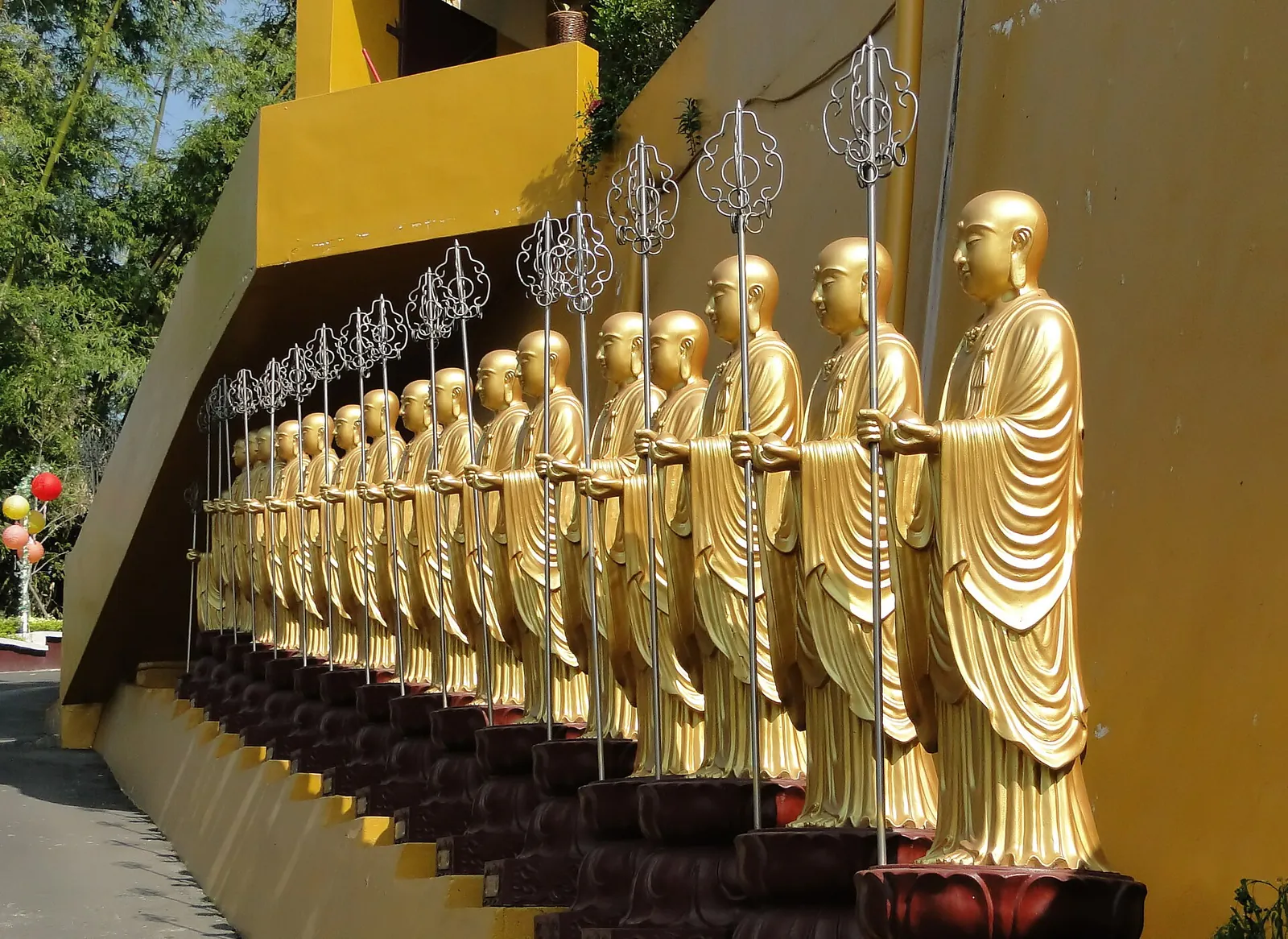
Golden statues at the monastery, a separate part of the Fo Guang Shan visit.
Photograph: Bernard Gagnon — opens in a new tab · CC BY-SA 3.0 — opens in a new tab
Changes: Resized and converted to WebP; displayed with responsive crops. · Original photograph and licence details ↗ — opens in a new tab
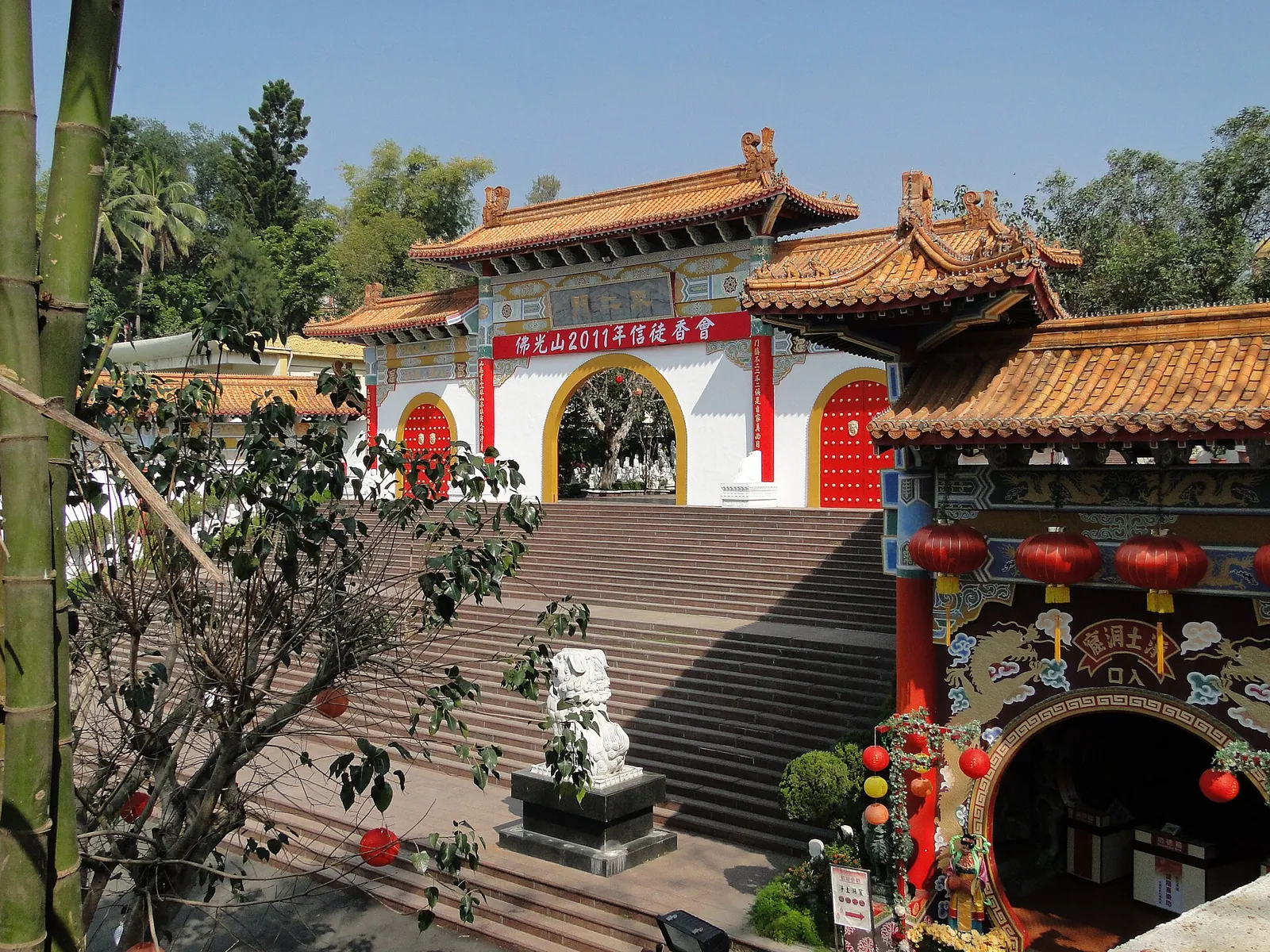
The monastery combines a religious visit with an architectural walk.
Photograph: Bernard Gagnon — opens in a new tab · CC BY-SA 3.0 — opens in a new tab
Changes: Resized and converted to WebP; displayed with responsive crops. · Original photograph and licence details ↗ — opens in a new tab