Taipei and the North · Taipei City
Dadaocheng and Dihua Street: tea shops, temple and riverfront
Dadaocheng is best approached as a neighbourhood that still trades. Dihua Street’s long, narrow buildings hold shops and storerooms, making the old port’s history tangible through the goods on display. A temple visit and tea give the walk its rhythm; the riverfront opens the afternoon out after the close-set shopfronts.
- Suggested time
- 1 full day; a half-day for a shorter Dihua Street walk
- Where to stay
- Datong around Dihua Street, or the Taipei Main Station area for a wider city stay
- Season and timing
- The pre-Lunar New Year shopping period brings particular crowds. Choose weather suitable for walking, with tea shops and indoor browsing as breaks rather than a fixed outdoor timetable.
The short answer
Give Dadaocheng a full day from a Datong or Taipei Main Station base, linking Dihua Street’s shops and Xia-Hai Temple with a tea break and the Tamsui riverfront. Start with the trading street rather than a rushed riverside photo stop, and let lunch divide the walk. Cisheng Temple offers a quieter extension north of the main route. Around Lunar New Year, the shopping streets can become especially crowded; choose another date if your priority is browsing comfortably.
Stay for the neighbourhood, or arrive from your Taipei base
A Datong address around Dihua Street puts this visit close at hand, particularly if tea shops and the older city are the reason for coming to Taipei. Check the exact hotel entrance and transport connection: the district’s appeal is its streets, and a name that sounds close to Dihua does not necessarily put you beside the stretch you want to explore.
If Taipei Main Station is already your base, there is little reason to move hotels for this one-day walk. Plan the outward and return connection from the hotel’s actual location, and keep the evening flexible. Ningxia Night Market is another Datong food outing, but a leisurely Dadaocheng lunch and tea break may be enough without adding an ambitious tasting circuit after dark.
Follow Dihua Street through the goods and the buildings
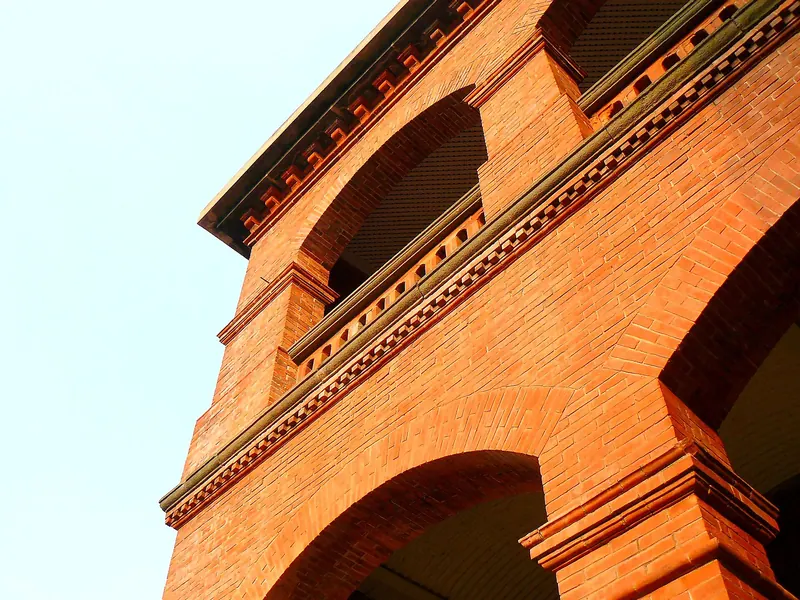
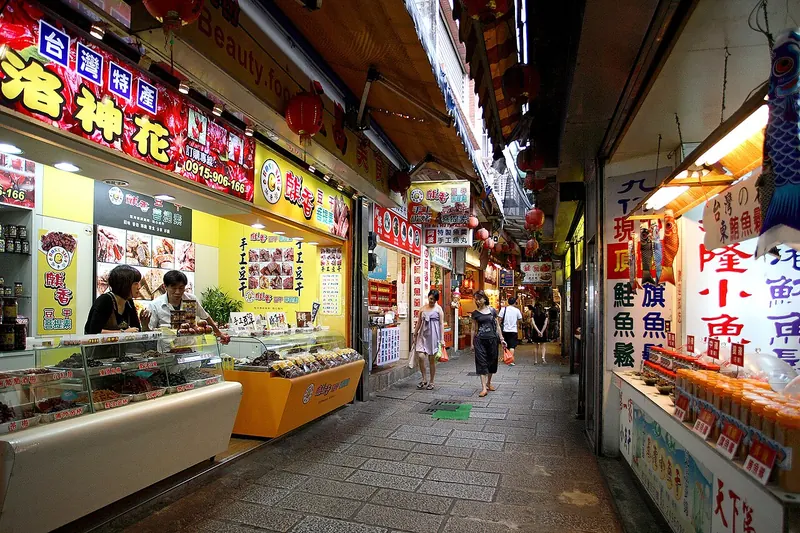
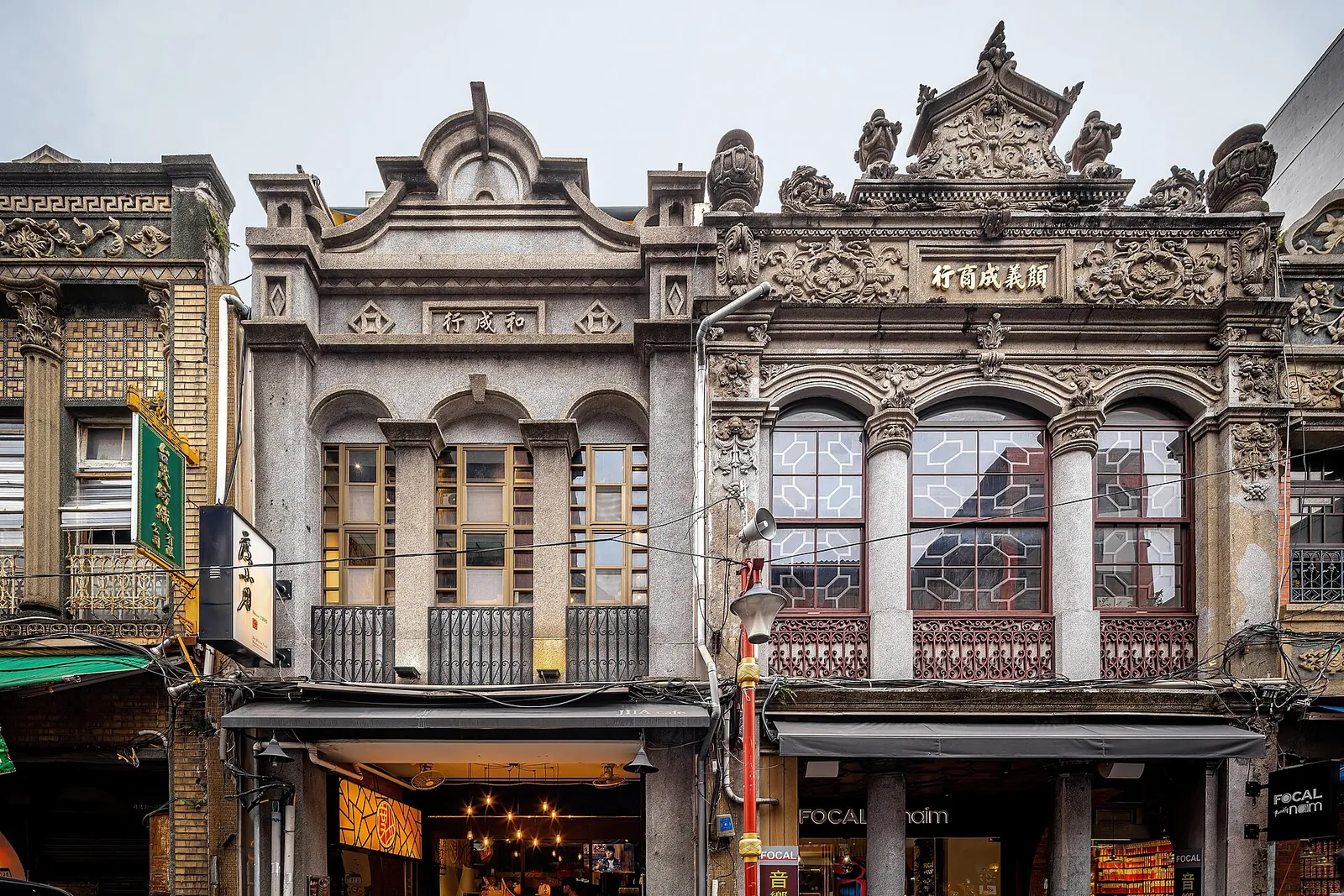
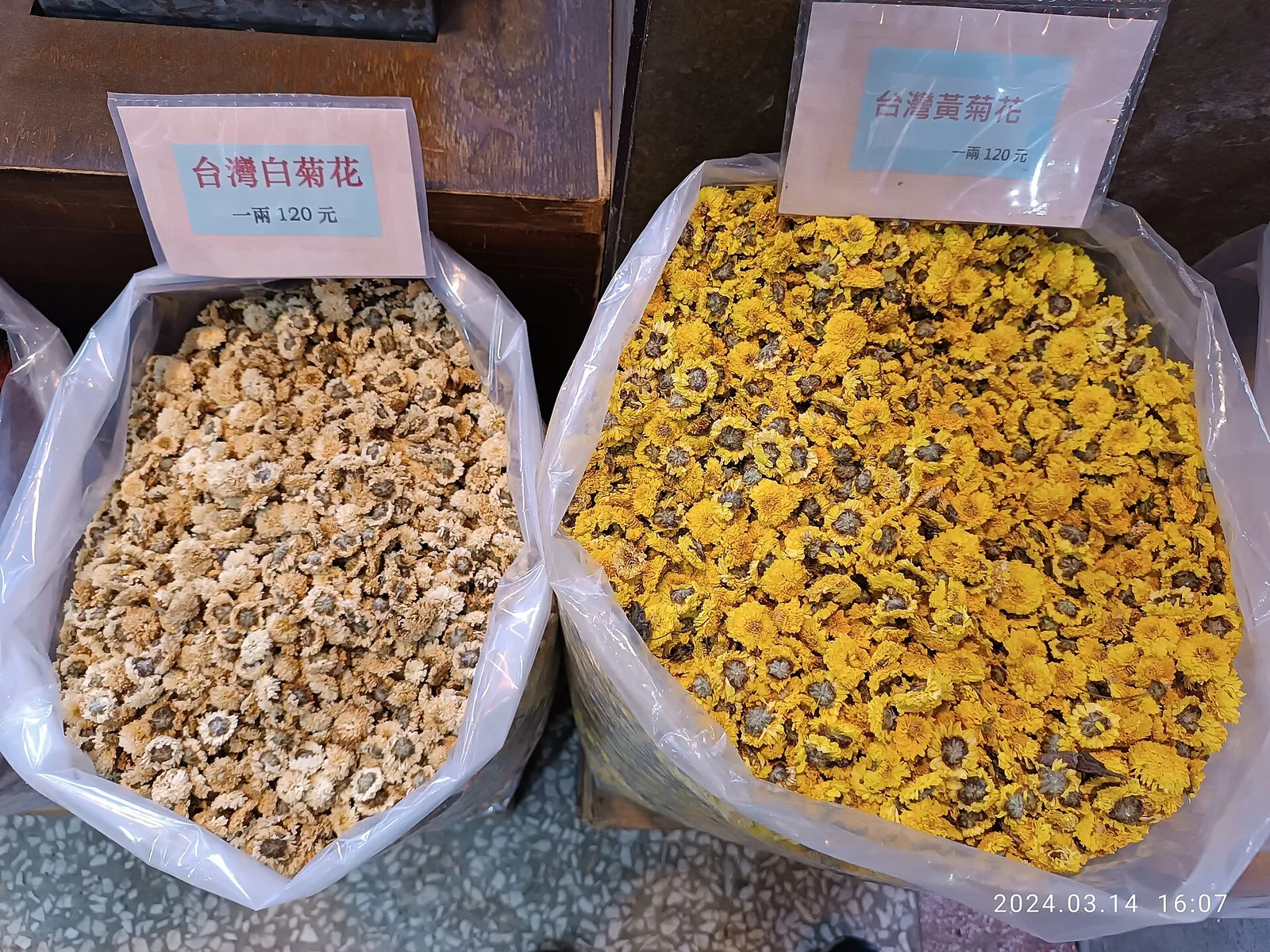
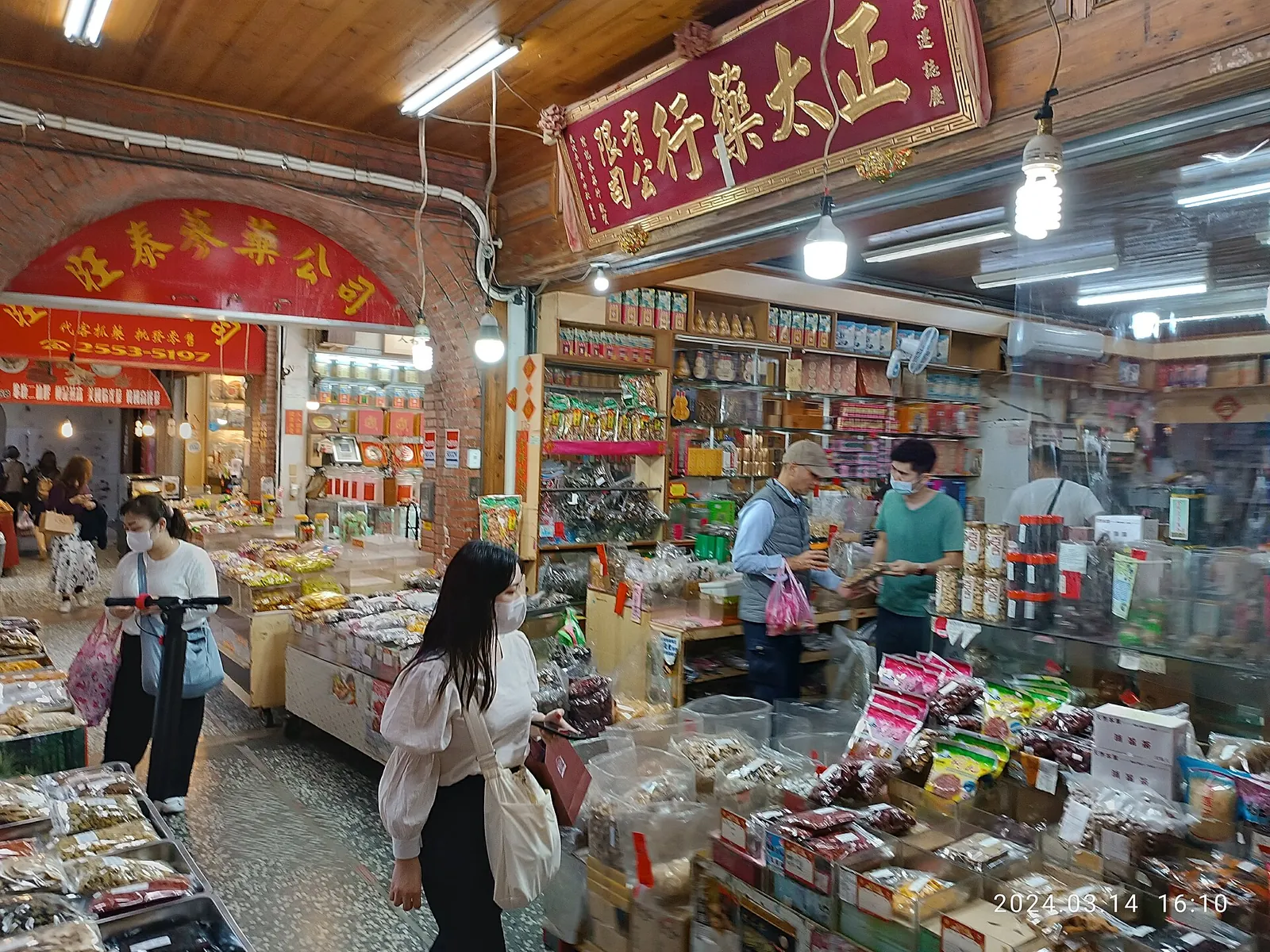
Dihua Street’s shops sell dried foods, tea, medicinal herbs and textiles, reflecting the district’s commercial past. The old buildings help explain how that business worked: decorative fronts and covered arcades lead into deep premises that could serve as shop, home and storage. Look up occasionally, then return your attention to the goods and the shopkeepers rather than treating the street as an empty architectural set.
Browsing works better with a small purpose, whether it is comparing teas, looking at fabrics or buying something you can carry home. Ask before photographing a shop interior and leave space for deliveries and customers. Some shopping carries practical limits: check packaging and your destination’s import rules before buying food or plant products, and do not treat a medicinal-herb purchase as medical advice.
Make time for the local food
What to eat and where to look
Braised pork rice
A bowl of rice topped with soy-seasoned braised pork is a straightforward Taiwanese lunch, with each kitchen choosing its own seasoning and cut.
- Where to look
- Look for it on lunch menus in and around the trading streets; no particular shop or daily availability is promised.
- Fit it into your day
- Use a rice bowl as the sit-down break between the southern Dihua Street walk and the longer afternoon.
Contains pork; sauces and additional ingredients vary, so ask if you have dietary restrictions.
Guabao
A soft steamed bun holds pork, pickled vegetables, peanut powder and coriander; it is a compact way to try a familiar Taiwanese street-food combination.
- Where to look
- Snack-shop menus around the neighbourhood, when the current menu includes it.
- Fit it into your day
- Choose one if you want a smaller lunch and more room for a tea stop.
Contains pork, wheat and peanuts; confirm the ingredients before ordering for an allergy.
Taiwanese spring roll
Fresh rolls can combine vegetables and braised pork with peanut powder; fillings are assembled by the vendor and are not uniform.
- Where to look
- Shops advertising fresh spring rolls rather than assuming every dried-goods stall serves prepared food.
- Fit it into your day
- A useful lighter option during the walk, provided the filling suits your diet.
May contain pork and peanuts; ask about the actual filling instead of assuming a vegetable-looking roll is vegetarian.
Give the temples space within the walk
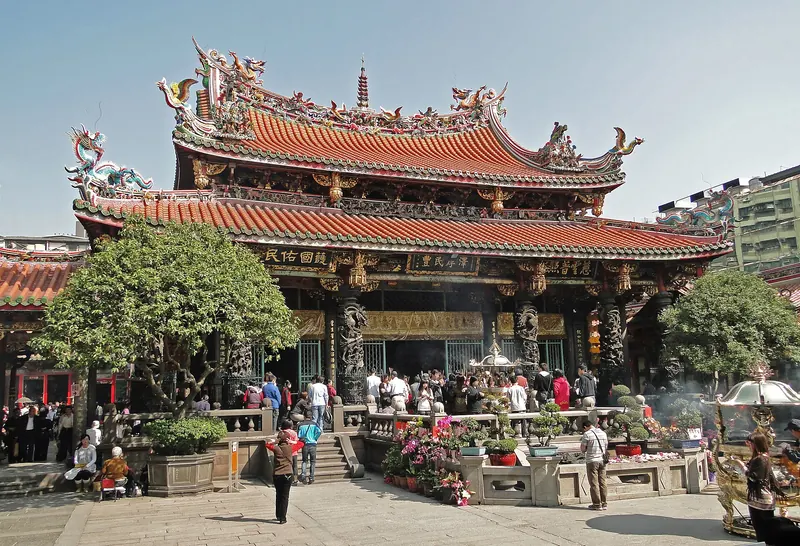
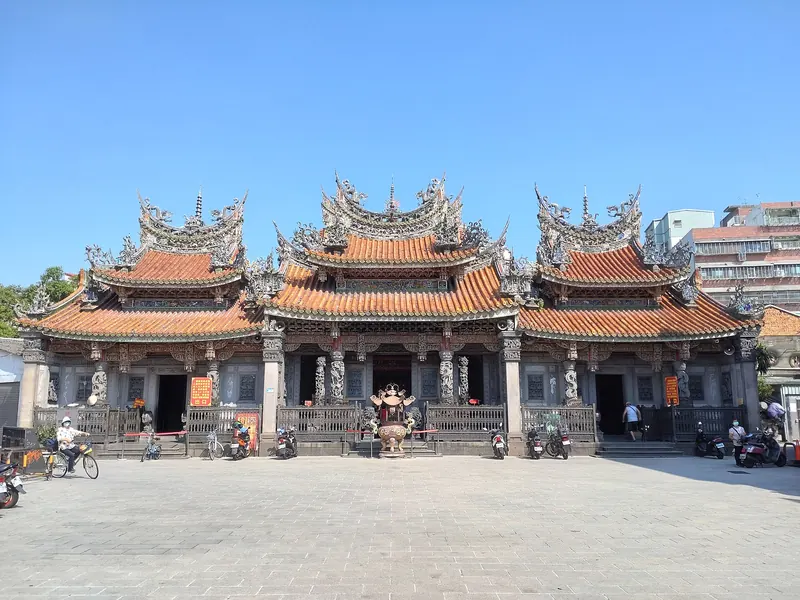
Xia-Hai City God Temple sits on Dihua Street and makes a natural stop within the shopping route. Its compact setting is part of the contrast with the commerce around it, but it remains an active religious place. Step aside for worshippers, observe what visitors are doing before entering a hall, and ask locally if you want to understand the deities or a particular ritual.
Cisheng Temple, dedicated to Mazu, adds another perspective farther north in the neighbourhood. It suits a longer walk rather than a compulsory extra stop on a short shopping visit. A heritage guide can help connect the temples, merchant buildings and old port, but check the tour’s actual route: a product called an old-town walk need not visit every place in this guide.
Use tea and the riverfront to change the pace
Tea was among the goods that linked Dadaocheng to the port, and a tea-shop pause makes more sense here than another hurried landmark. Ask what is being served and how the tasting or purchase works before settling in. A small selection, tasted attentively, provides a better introduction than buying several unfamiliar packages simply because the district is associated with tea.
Dadaocheng Wharf and the Tamsui riverfront give the afternoon a different scale after Dihua Street’s narrow shop premises. Choose the riverside walk according to the weather and how much energy remains. Boats are an optional separate activity: tides, departures and operators need current checking, so this route does not depend on a cruise or promise a fixed sailing time.
Practical questions
How long do I need for Dadaocheng?
A full day allows Dihua Street, the temple, lunch, tea and the riverfront without rushing. A half-day is enough for a shorter shopping walk with Xia-Hai Temple and one tea break.
Is Dihua Street only interesting around Lunar New Year?
No. The tea, dried-food and textile trade and the old shopfront buildings give it interest on ordinary days. The pre-holiday shopping period adds crowds and a different atmosphere rather than being the only reason to visit.
Should I change hotels to stay in Dadaocheng?
A Datong base is useful if you want several days in the older city. For one visit from a central Taipei hotel, keep your existing base and plan the connection from its exact location.
Can I include a river cruise?
Treat a cruise as an optional booking after checking the operator, tide-dependent arrangements and current departures. The walk works with the riverfront alone and does not rely on a boat running at a particular time.
Sources and checks before you travel
Reference sources for the version dated 8 October 2026. Confirm opening times, access, transport and conditions for your travel dates.
- Taiwan Tourism Administration: Dadaocheng ↗ — opens in a new tab
- Taiwan Tourism Administration: Dihua Street ↗ — opens in a new tab
- Taiwan Tourism Administration: Xia-Hai City God Temple ↗ — opens in a new tab
- Taipei Travel: old storefront buildings on Dihua Street ↗ — opens in a new tab
- Taipei Travel: Dihua Street shopping area ↗ — opens in a new tab
- Taipei Travel: Dadaocheng Cisheng Temple ↗ — opens in a new tab
- Taipei Travel: Dadaocheng Wharf ↗ — opens in a new tab
- Taiwan Tourism Administration: Taiwan Snacks ↗ — opens in a new tab
- Taoyuan Metro: Airport MRT route ↗ — opens in a new tab
- Taipei Metro: route map and timetables ↗ — opens in a new tab
Does this experience fit your route?
A Dadaocheng guide can explain the trading streets and temple context; compare the current route and meeting point before booking.
Check dates and details on Viator ↗ — opens in a new tabAffiliate link · Book with ViatorPhoto credits
Dihua Street’s old shopfronts reflect the trading neighbourhood.
Photograph: Supanut Arunoprayote — opens in a new tab · CC BY 4.0 — opens in a new tab
Changes: Resized and converted to WebP; displayed with responsive crops. · Original photograph and licence details ↗ — opens in a new tab
Dry-goods displays on Dihua Street; the photographed shop is on Section 2.
Photograph: DONGIE 829 EFUOA — opens in a new tab · CC0 — opens in a new tab
Changes: Resized and converted to WebP; displayed with responsive crops. · Original photograph and licence details ↗ — opens in a new tab
Inside a trading-street shop on Dihua Street Section 2.
Photograph: DONGIE 829 EFUOA — opens in a new tab · CC0 — opens in a new tab
Changes: Resized and converted to WebP; displayed with responsive crops. · Original photograph and licence details ↗ — opens in a new tab
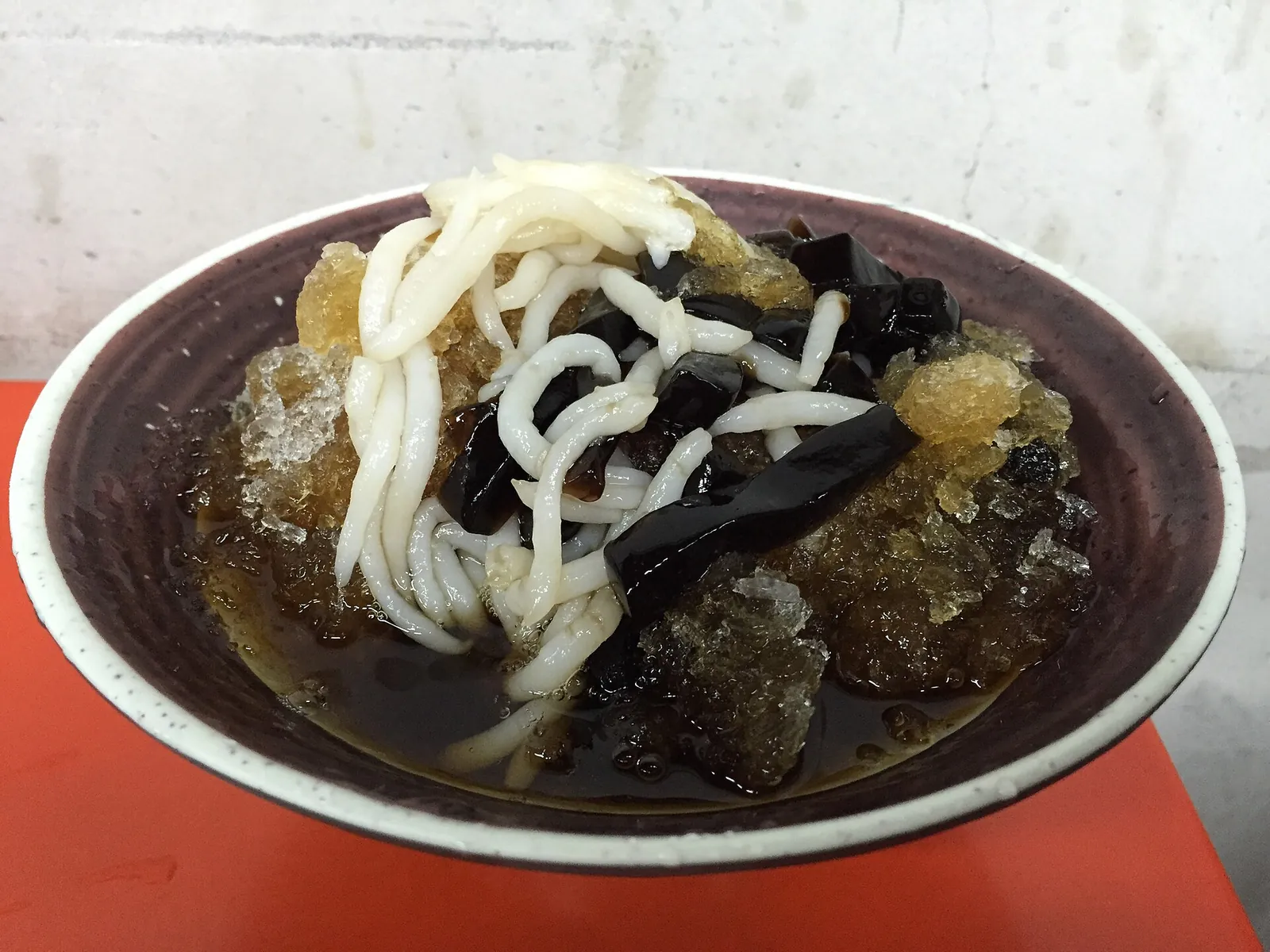
A Taipei dessert of grass jelly and rice noodles, photographed at Jia Er Zui.
Photograph: bryan... from Taipei, Taiwan — opens in a new tab · CC BY-SA 2.0 — opens in a new tab
Changes: Resized and converted to WebP; displayed with responsive crops. · Original photograph and licence details ↗ — opens in a new tab