Southern Taiwan · Kaohsiung City
Cijin travel guide: ferry, old street, fort and lighthouse
Cijin gives Kaohsiung’s harbor a different shore: a working temple near the food street, seafood restaurants, a fort and lighthouse above the water. The crossing is part of the appeal, but the best day leaves room for the island itself instead of hurrying straight from the pier to every viewpoint.
- Suggested time
- One day from Kaohsiung; no island overnight required
- Where to stay
- Kaohsiung around Hamasen or Yanchengpu for an island day trip
- Season and timing
- A calmer day suits the crossing and exposed hill viewpoints; shorten the outdoor route when weather or local notices call for it.
The short answer
Visit Cijin for one day from a Kaohsiung hotel: cross from Gushan, explore Tianhou Temple and Old Street, then choose the fort or lighthouse before a seafront walk. Staying around Hamasen or Yanchengpu keeps the island visit within a city base. Let lunch anchor the middle of the day, and leave the hill section flexible in heat, rain or strong wind. Check the current ferry boarding approach and return service before setting out, especially during work at the Gushan terminal building. A beach visit is a shore walk unless local conditions and notices support swimming.
Cross the harbor with the return in mind
The municipal shipping operator runs the Gushan-Cijin ferry route between the mainland’s Hamasen area and the island. The Gushan terminal is listed at No. 1, Binhai 2nd Road; Cijin’s terminal is at No. 10, Haian Road. Check the current boarding approach, payment and return information with the operator before leaving your hotel rather than relying on an old timetable.
The current metro map names the nearby Orange Line station O1 Hamasen, while some older ferry directions still call it Sizihwan. Hamasen is also a light-rail stop. The ferry operator’s current website carries a notice about work on the Gushan terminal building: that is a reason to verify the approach, not evidence that the route has stopped running. The island also has road access, so the ferry should not be described as its only possible entrance.
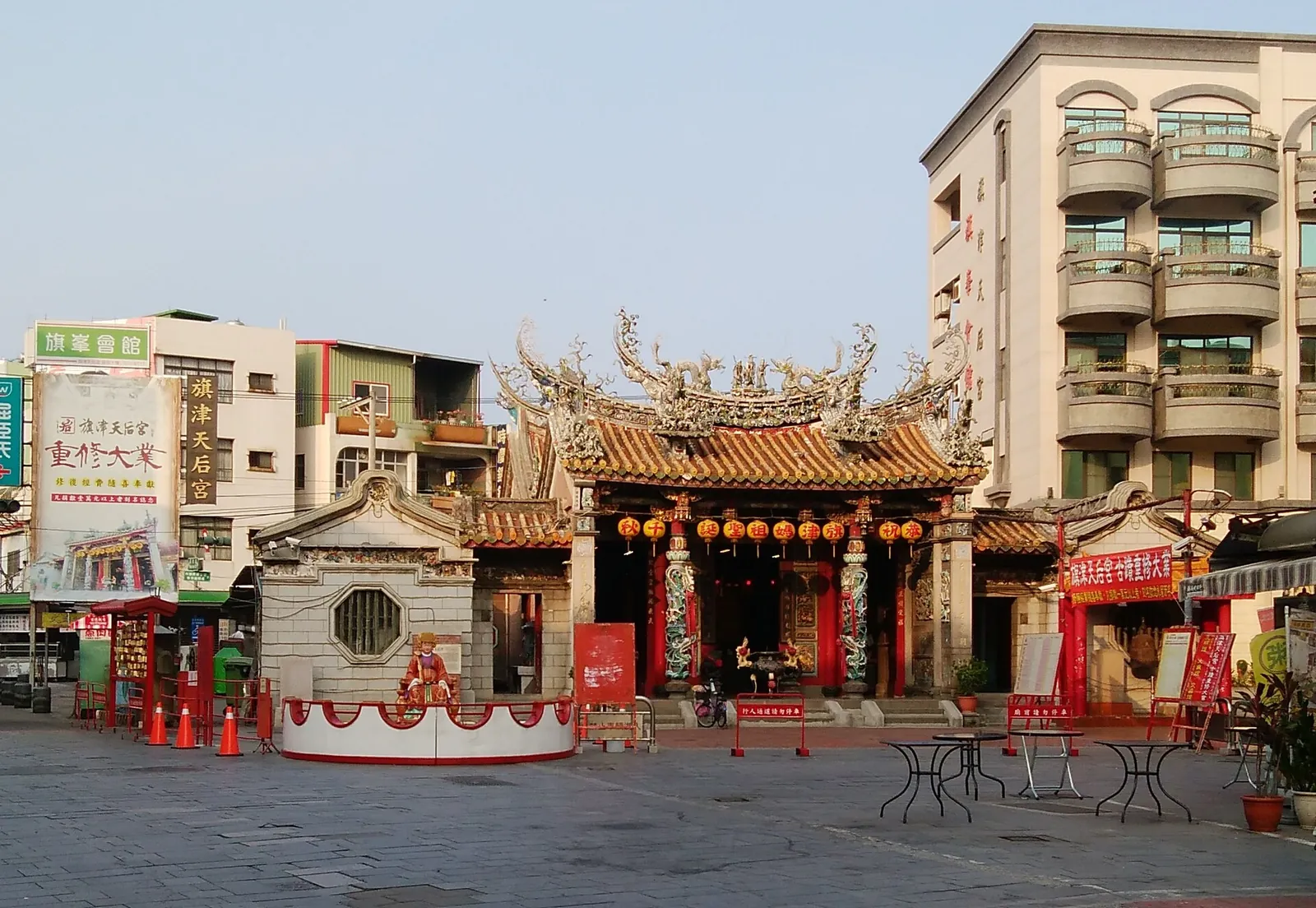
Start with the temple and the old food street
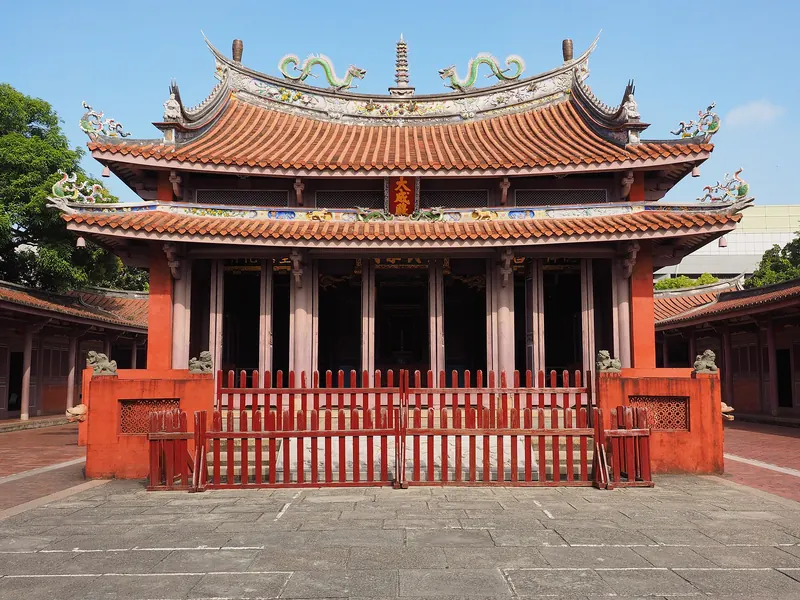
From the island landing, make the historic street area the first part of the visit. The Tourism Administration places Tianhou Temple on Miaoqian Road and describes the street’s seafood restaurants. This is a working place of worship within a lived-in neighborhood, rather than a museum set apart from everyday traffic.
Allow the temple visit and street walk to lead into lunch. Look at the actual menu, agree on the dish and any weight-based order before it is cooked, and check ingredients if you have dietary restrictions. A place’s reputation for seafood does not tell you what was landed or which dish is available that day. The public street and a particular restaurant also have different opening arrangements.
Make time for the local food
What to eat and where to look
Grilled squid
Grilled squid is explicitly named in the Cijin District Office’s official food-gallery image label.
- Where to look
- Cijin’s old-street seafood vendors, checking the current menu and preparation.
- Fit it into your day
- Choose a small savory order as part of lunch rather than assuming it is a full meal.
Squid is a mollusk. Confirm sauces and shared preparation, and ask about other seafood ingredients if relevant.
Mullet roe
Cijin’s district-government food gallery names mullet roe and a sliced mullet-roe cold plate; the city regional guide describes the salted, pressed and dried specialty.
- Where to look
- Seafood shops and restaurants around the historic streets that actually list mullet roe.
- Fit it into your day
- Consider a small shared order or a clearly labeled purchase, depending on what the shop offers.
Contains fish roe. Check accompanying ingredients and storage instructions; do not assume all packages have the same handling requirements.
Sashimi
The district-government food page explicitly labels sashimi among Cijin’s seafood choices, without specifying the fish species.
- Where to look
- Old-street seafood restaurants with sashimi on the current menu.
- Fit it into your day
- Order it only if the actual selection and handling suit you; a cooked seafood dish is another choice.
It is raw seafood. Ask which fish is used and how it is handled, and choose a cooked alternative if you cannot verify conditions you are comfortable with.
Choose a hill viewpoint without turning the day into a race
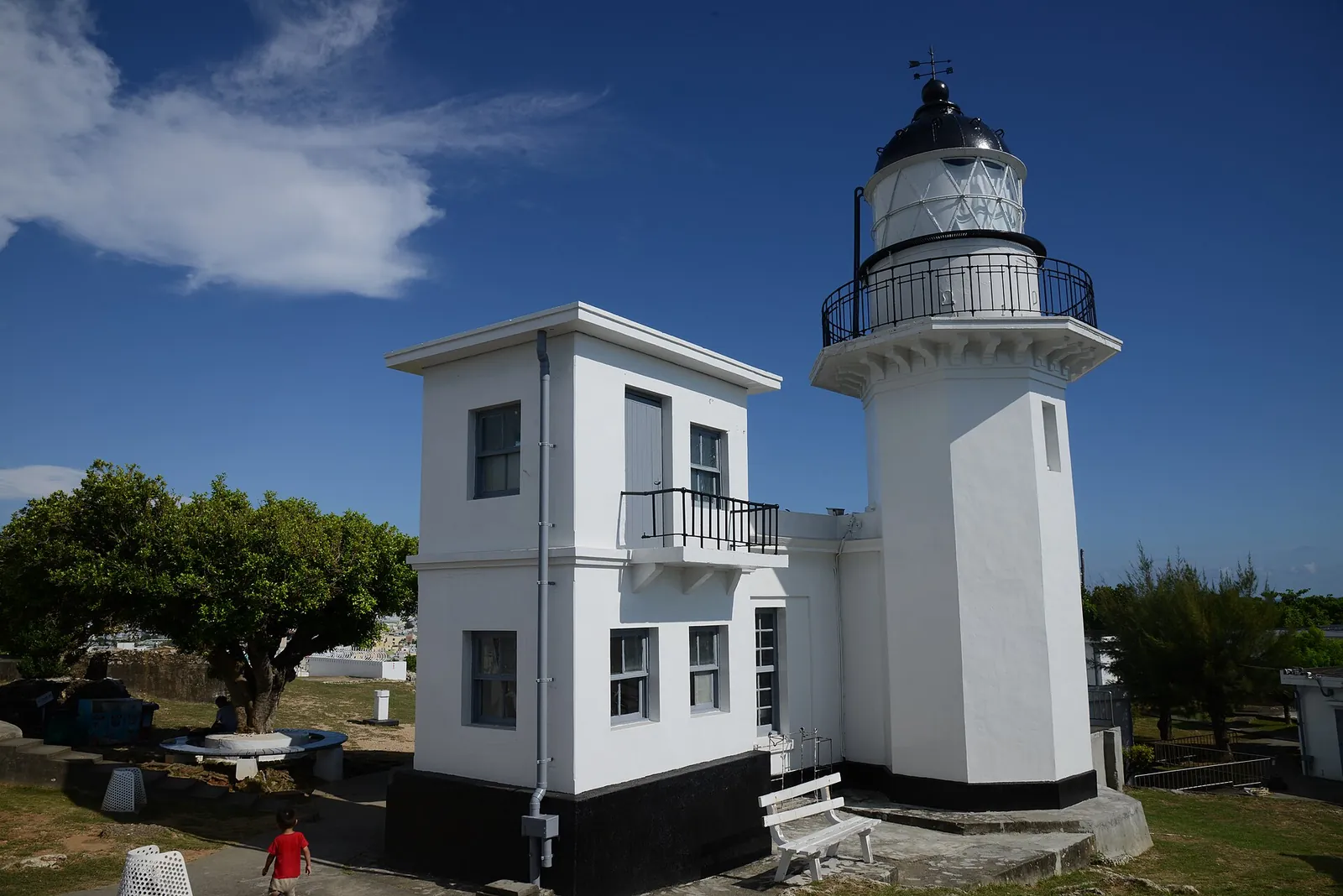
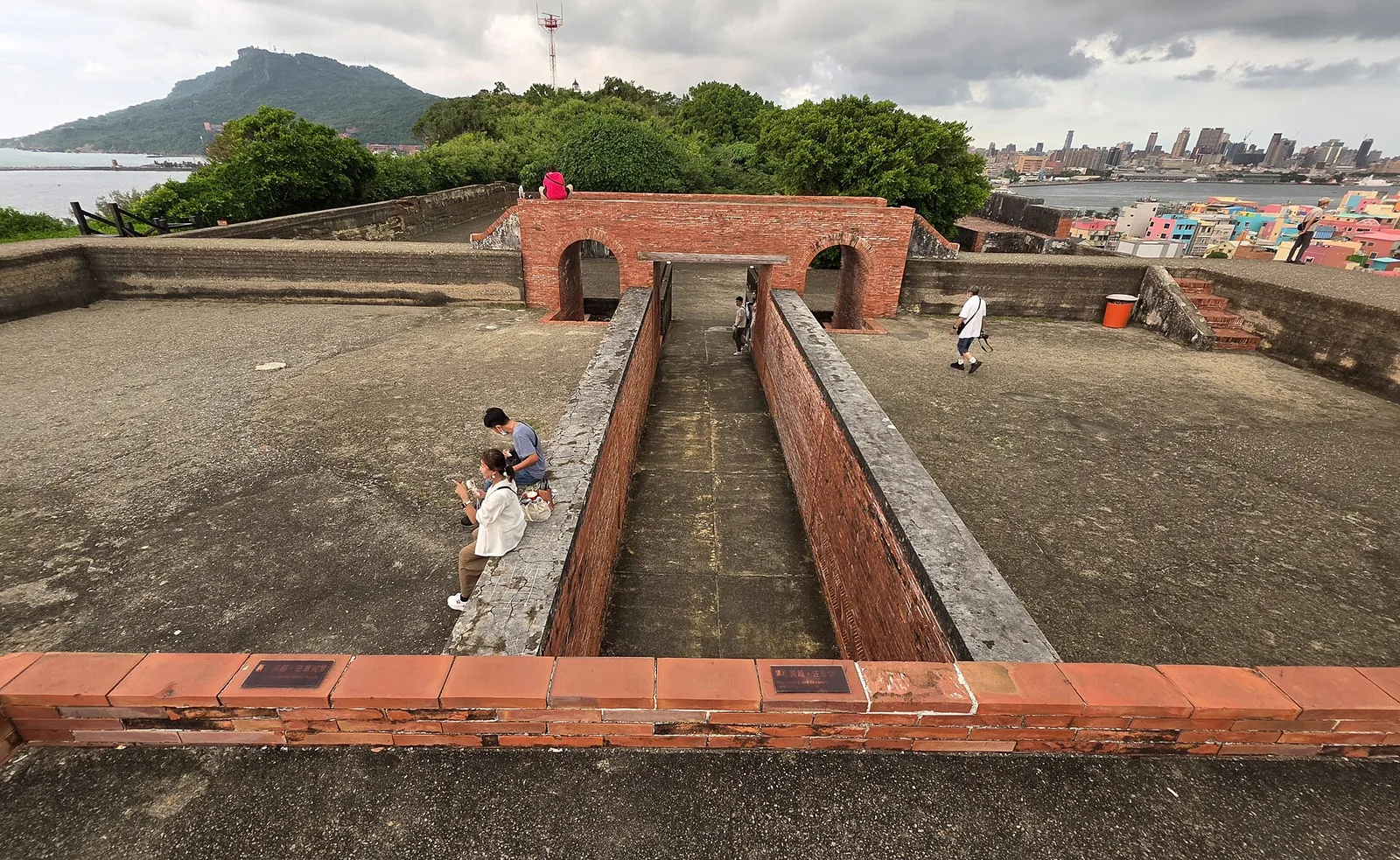
Qihou Battery, also called Cihou Fort in many visitor listings, and the lighthouse belong to the island’s hill sights. The national guide describes the fort’s Chinese-style entrance and decorative brick details, while the lighthouse has a Baroque-style lower building and an octagonal tower. They give the harbor visit a historical perspective as well as a view.
Choose the uphill section that suits your pace and the day’s conditions. In strong heat or poor weather, the temple, meal and lower seafront can be enough. Follow current access signs and do not assume that a lighthouse interior, tower stairway or every fort passage is open. A view of a landmark and admission to its interior are separate promises, and this guide only commits to the former when access permits.
Leave space for the coast, without assuming a swim
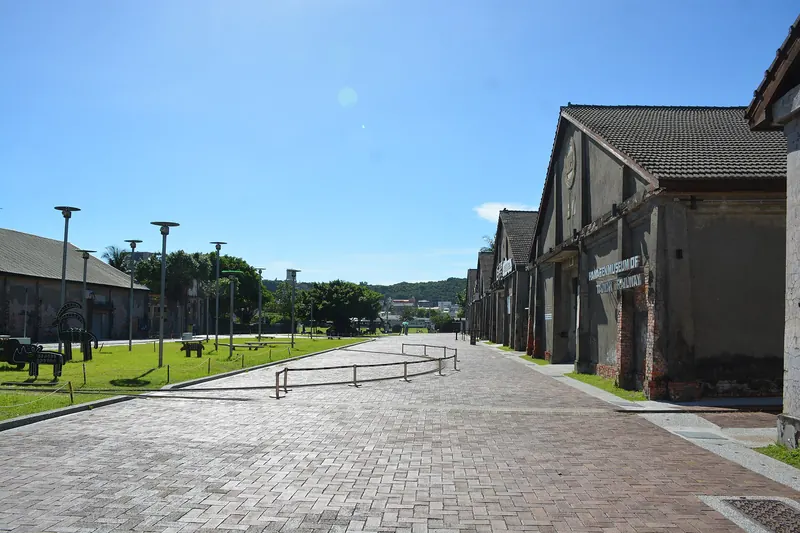
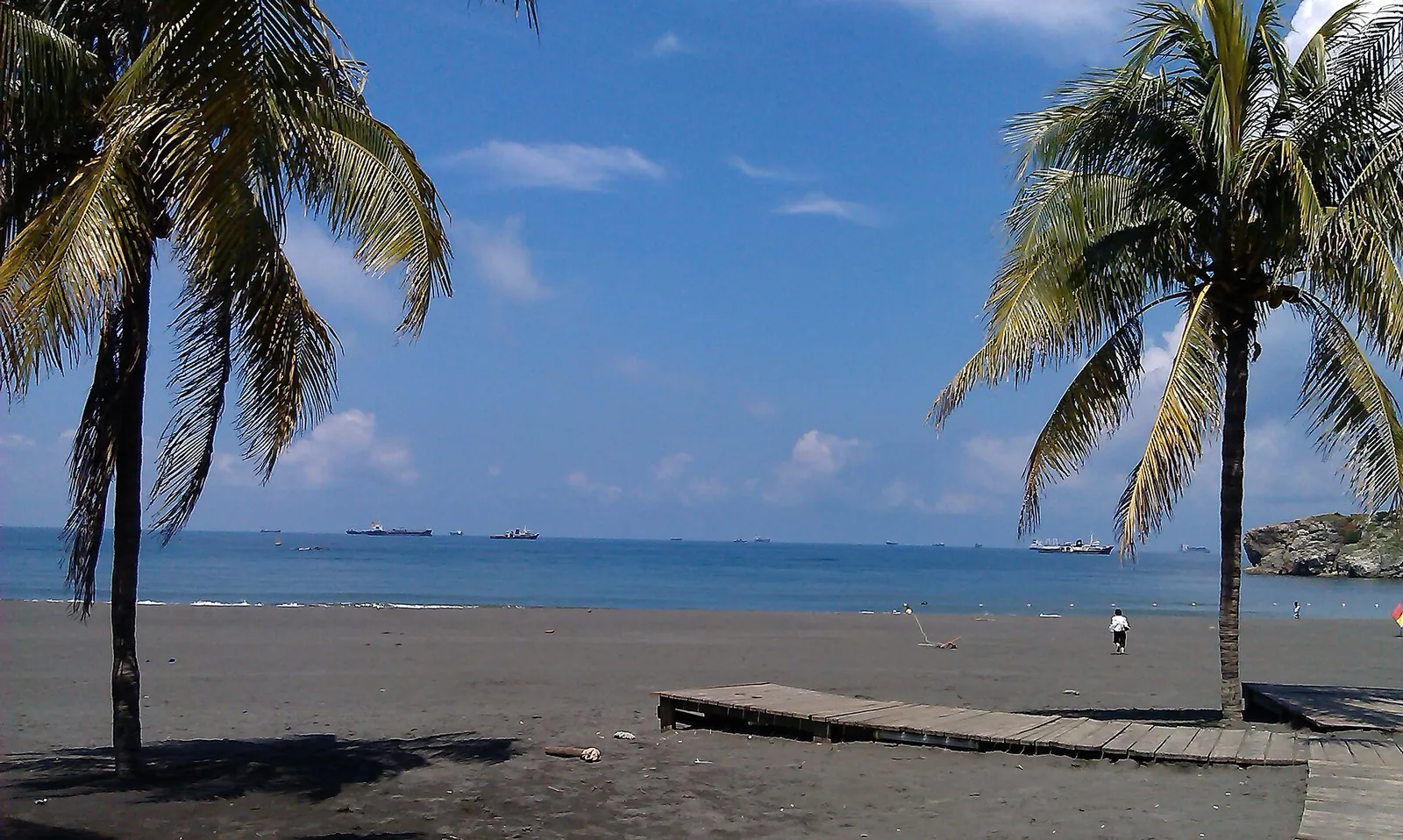
The Tourism Administration describes Cijin’s seafront park and paths beside the beach. A shore walk is a useful final change of scene after the old street and hill. Stay on public routes and keep the length flexible so that getting back to the ferry does not become the rushed end of the day.
Beach descriptions are not a substitute for current safety notices, weather information or lifeguard advice. Do not make swimming part of the default plan merely because sand appears on the map. For cycling or a longer coastal outing, check the actual rental arrangements and return route first. The island’s full coastline is a separate undertaking from this compact temple-and-hill day.
Eat the island’s seafood with clear choices
Cijin District Office’s food page names grilled squid, mullet roe and sashimi in its official food-gallery labels. These are three distinct things to look for, rather than an invented list of restaurant specialties. Choose a preparation that suits you and ask what is available; the gallery does not guarantee a particular vendor, species or menu on your visit.
Grilled squid can be a small savory order, while mullet roe is a different, concentrated seafood choice. Sashimi is raw, so choose a cooked alternative if you cannot establish handling and storage that you are comfortable with. The old street’s restaurants are the useful place to compare actual dishes, with price and ingredients clarified before ordering.
Keep your hotel on the Kaohsiung side if it suits the wider trip
An island overnight is not necessary for this route. A city hotel around Hamasen puts the mainland ferry approach within the same district, while Yanchengpu fits a stay that also includes Pier-2 and the harbor. Check the hotel’s real entrance and luggage access rather than treating an entire neighborhood as one walking distance.
From Kaohsiung International Airport, Metro Red Line station R4 connects with Formosa Boulevard for the Orange Line toward Hamasen or Yanchengpu. The ferry is a separate onward leg after the city connection. High-speed rail arrives at Zuoying, distinct from the downtown Taiwan Railways Kaohsiung Main Station. Keep the arrival day’s luggage plan separate from a leisurely island outing.
Practical questions
Can I visit Cijin without staying on the island?
Yes. A day trip from a Kaohsiung hotel around Hamasen or Yanchengpu can include the ferry, temple, meal and a hill or seafront walk. Check the return sailing before fixing the day.
Which ferry should I look for?
The municipal operator confirms the Gushan-Cijin route. Check its current mainland boarding approach and return service, especially during work at the Gushan terminal building.
Is Sizihwan the metro station name to use now?
The current KRTC map calls Orange Line O1 Hamasen. Some older ferry directions still say Sizihwan; use the current operator map when planning the connection.
Does a Cijin day include swimming?
Not by default. The beach and seafront are part of a walking route; swimming depends on current safety notices, weather and local advice.
Is the lighthouse interior guaranteed to be open?
No. Check the current visitor access before going uphill. A harbor viewpoint and entry to the building or tower are different arrangements.
Is the ferry the only way onto Cijin?
No. The national tourism guide also describes road access. The ferry is the route used for this harbor-focused day trip, with current service checked separately.
Sources and checks before you travel
Reference sources for the version dated 8 October 2026. Confirm opening times, access, transport and conditions for your travel dates.
- Taiwan Tourism Administration: Cijin ↗ — opens in a new tab
- Kaohsiung Shipping Company: Gushan-Cijin route ↗ — opens in a new tab
- Kaohsiung Shipping Company: Gushan terminal ↗ — opens in a new tab
- Kaohsiung Shipping Company: Cijin terminal ↗ — opens in a new tab
- Cijin District Office: local food ↗ — opens in a new tab
- Kaohsiung City Government: regional attractions ↗ — opens in a new tab
- Kaohsiung International Airport: official English guide ↗ — opens in a new tab
- Kaohsiung Rapid Transit Corporation: current guide map ↗ — opens in a new tab
- Viator indexed product: Private Kaohsiung Day Tour ↗ — opens in a new tab
Does this experience fit your route?
For guided transport, compare the private Kaohsiung tour with a self-guided ferry day; confirm the actual Cijin stops, pickup and access before booking.
Check dates and details on Viator ↗ — opens in a new tabAffiliate link · Book with ViatorPhoto credits
Kaohsiung Lighthouse on Cijin, viewed from outside.
Photograph: 大頭家族 — opens in a new tab · CC BY-SA 2.0 — opens in a new tab
Changes: Resized and converted to WebP; displayed with responsive crops. · Original photograph and licence details ↗ — opens in a new tab
Cihou Fort’s hilltop defenses above Kaohsiung’s harbor.
Photograph: 阿道 — opens in a new tab · CC BY-SA 4.0 — opens in a new tab
Changes: Resized and converted to WebP; displayed with responsive crops. · Original photograph and licence details ↗ — opens in a new tab
Tianhou Temple in Cijin’s historic street district.
Photograph: Mizuhara gumi ( 会話 ) — opens in a new tab · Public domain — opens in a new tab
Changes: Resized and converted to WebP; displayed with responsive crops. · Original photograph and licence details ↗ — opens in a new tab
Cijin’s seafront; the photograph does not establish current swimming conditions.
Photograph: Chi-Hung Lin — opens in a new tab · CC BY-SA 3.0 — opens in a new tab
Changes: Resized and converted to WebP; displayed with responsive crops. · Original photograph and licence details ↗ — opens in a new tab