Tohoku · Fukushima
Ouchi-juku travel guide: thatched houses, soba and Aizu connections
Ouchi-juku is more enjoyable when lunch belongs to the visit. The thatched main street gives the village its familiar image, but a bowl of soba, the post-town history and time to browse can make it more than a brief photograph. Build the day around the village and its Aizu connections.
- Suggested time
- A focused half-day visit, plus the actual transfers
- Where to stay
- Aizu-Wakamatsu or Yunokami Onsen, depending on the wider route
- Season and timing
- Choose around current transport and walking conditions
The short answer
Combine Ouchi-juku with an Aizu stay, investigating access through Yunokami Onsen and the actual onward bus or taxi. Allow time for a street walk, heritage context and a seated local lunch. The village itself is compact, but the transfer can occupy a meaningful part of the day; establish the return before extending the visit.
Make it an Aizu day with a meal
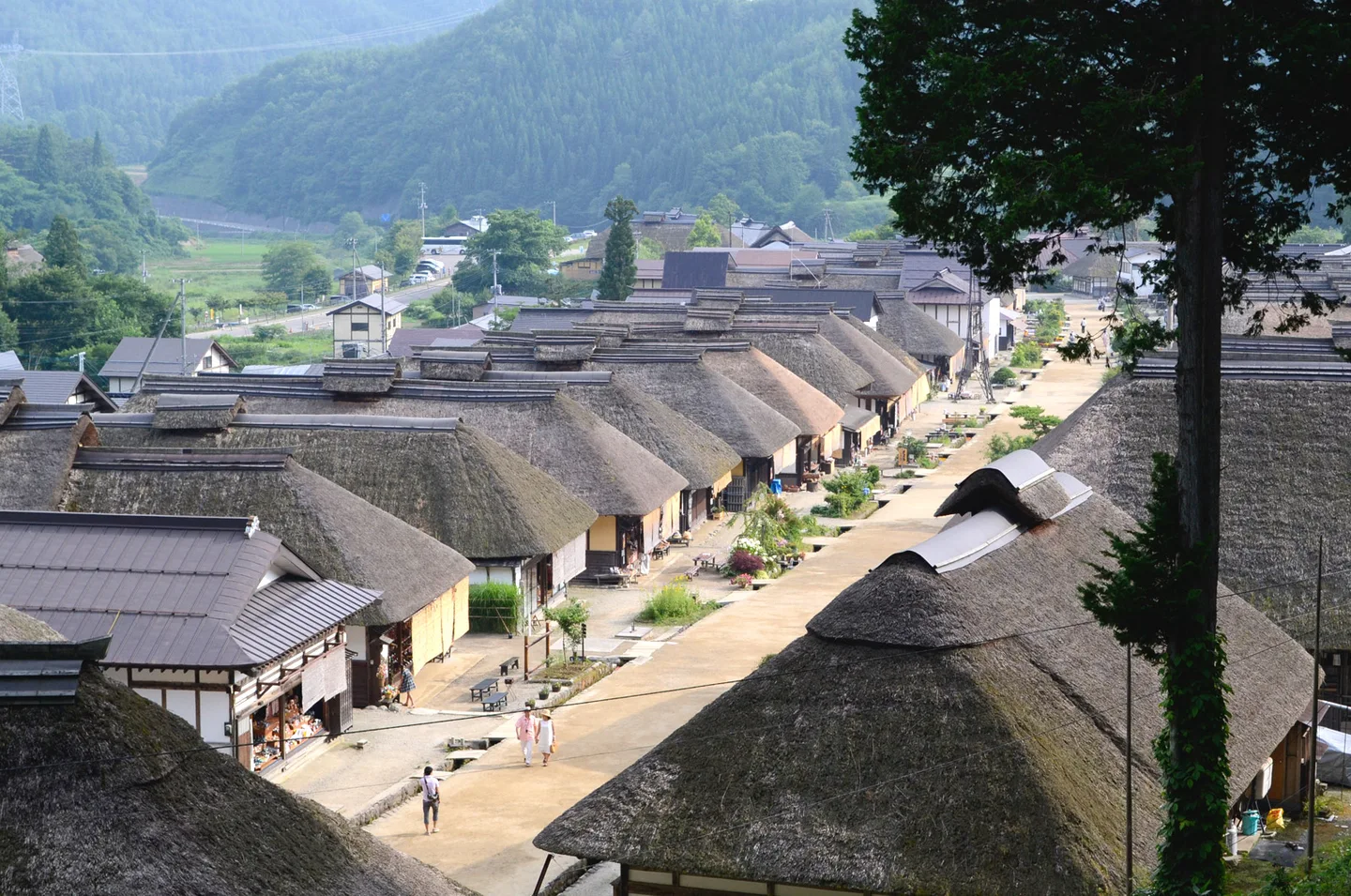
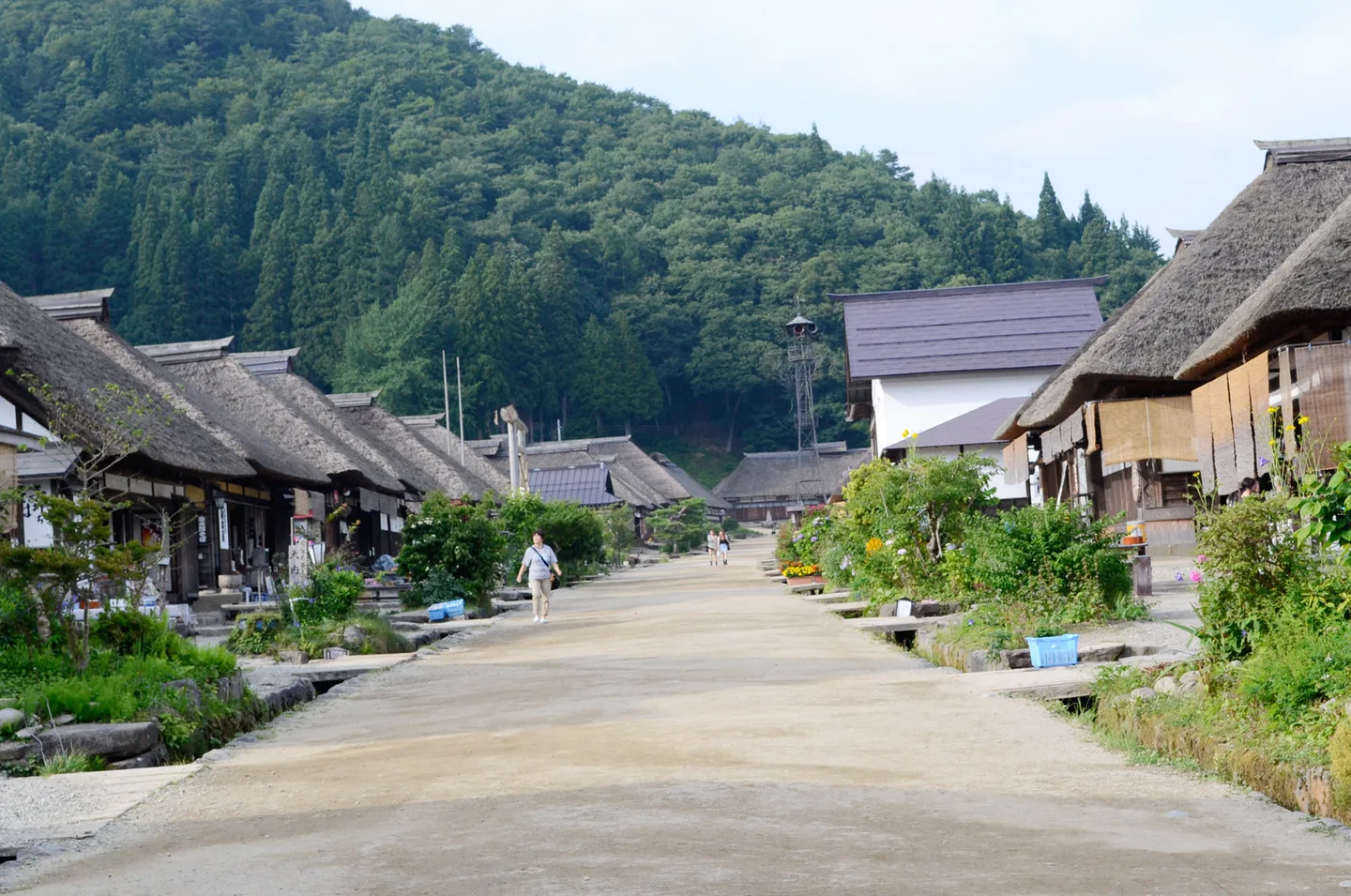
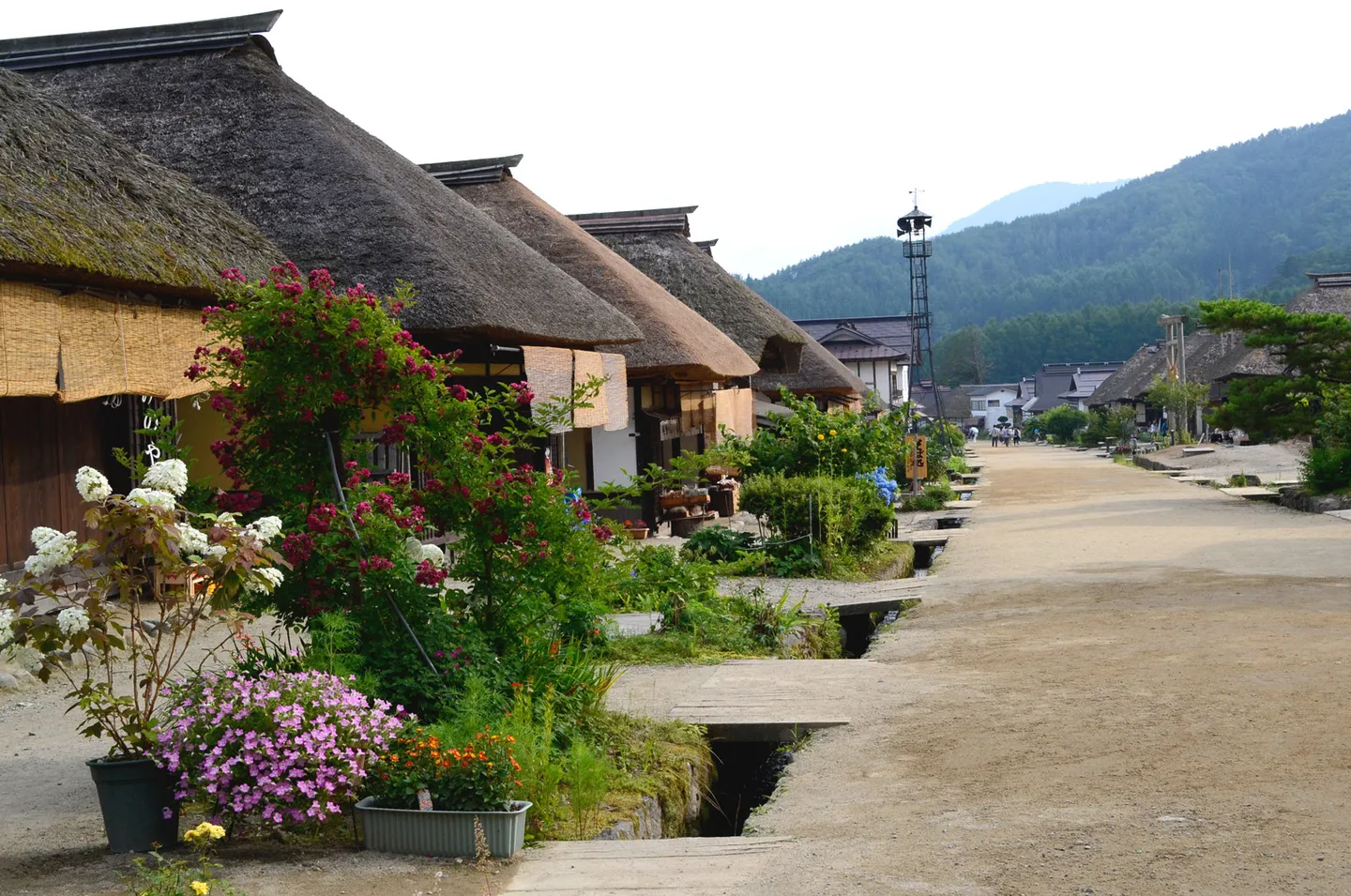
The preserved post-town street and its thatched buildings are the reason many visitors investigate Ouchi-juku. Use the walk to understand the settlement’s role on a historic travel route, rather than treating the village as a background for one hilltop photograph.
For a focused first visit, plan the main street, some historical context and lunch. If staying in Aizu-Wakamatsu, compare the village trip with the other places you want to visit across the stay. A smaller programme can leave more time for the atmosphere and food than several rural stops connected in a hurry.
The famous view is an optional climb
A viewpoint above the village offers a view across the roofs, with an ascent to assess around your mobility and the current surface conditions. It adds another perspective, but does not define whether the visit is worthwhile.
You can focus on the street and food if a climb does not fit your group. Respect private entrances and the instructions at buildings you enter. Preserved houses can contain homes, shops or restaurants with their own rules; an open-looking doorway is not an invitation to photograph every interior.
Make time for the local food
What to eat and where to look
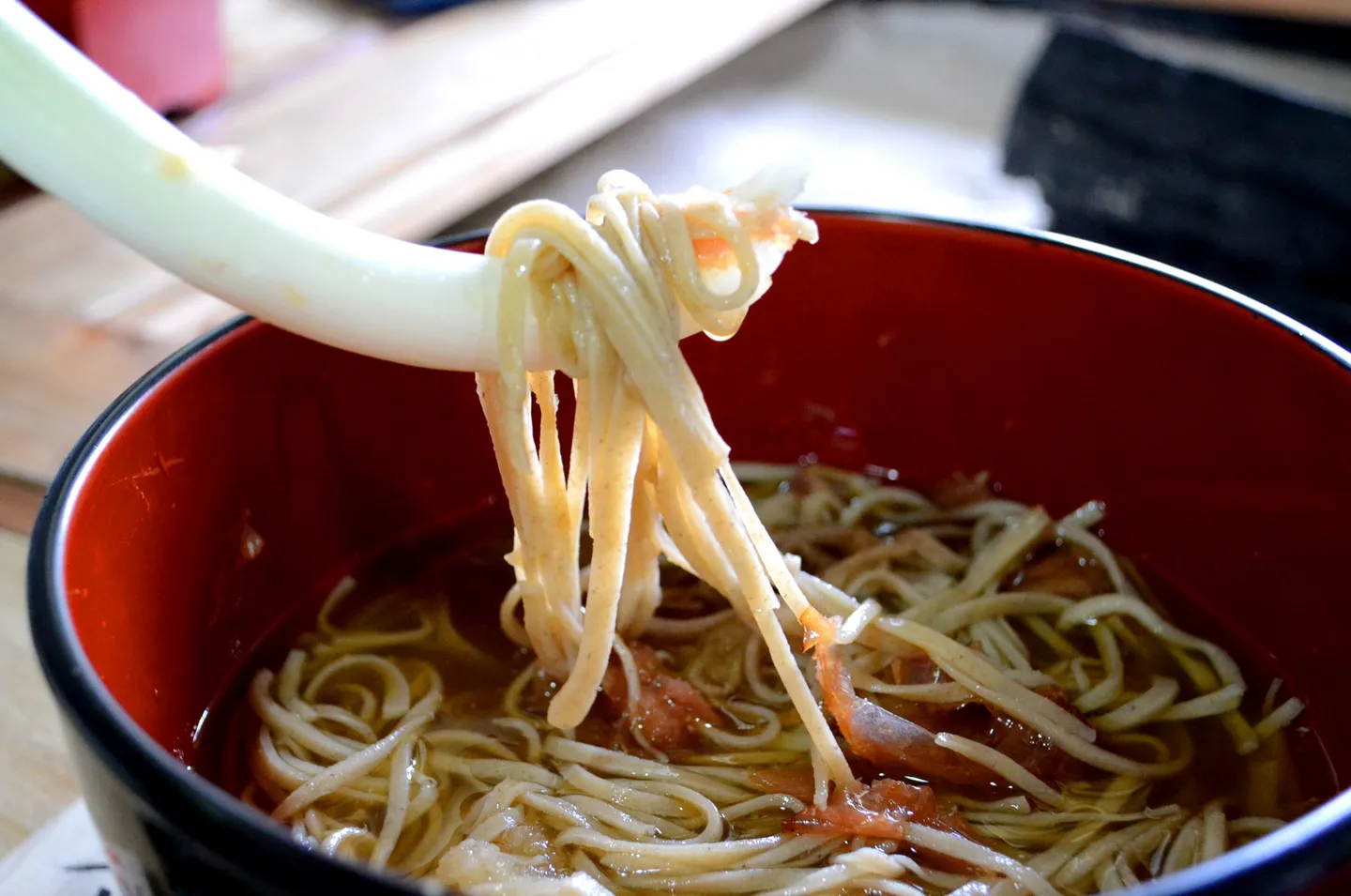
Negi soba
Soba served with a long green onion is one of the village’s best-known food traditions. Enjoy the noodle and onion combination in the way that is comfortable for you, asking about the preparation when needed.
- Where to look
- Restaurants named in Ouchi-juku Tourism’s current food directory.
- Fit it into your day
- Make this a seated main lunch rather than a quick taste while waiting for the return.
Kurumi soba
Walnut soba is another local preparation described in the village’s restaurant listings. It gives a different flavour focus from negi soba, with nuts to account for when choosing the meal.
- Where to look
- The Yamamotoya listing and establishments whose menu explicitly names kurumi soba.
- Fit it into your day
- Choose it as a main meal, or compare preparations across your travel group.
Shingoro
This grilled rice preparation belongs to Aizu’s local food culture. Its savoury coating makes it a different kind of stop from a sweet mochi dessert.
- Where to look
- The local association’s food listings and shops that identify shingoro on the menu.
- Fit it into your day
- A small extra before or after lunch if it fits your appetite and the departure time.
Tochi mochi and local sweets
The tourism association names tochi mochi among the village’s traditional foods. Choose an actual prepared sweet from a shop, and read its ingredients and storage information rather than relying on the regional name alone.
- Where to look
- Village food shops and current local listings.
- Fit it into your day
- A small afternoon taste or a suitable purchase for later, without delaying the return connection.
Negi soba is a reason to sit down
The tourism association lists restaurants serving negi soba, whose long green onion is associated with the way the noodles are eaten. Read the menu and enjoy the preparation at a pace that suits you. The food stop should be a pleasure rather than a performance for the camera.
For another local soba choice, Yamamotoya’s tourism listing describes kurumi soba with walnuts. Compare that with the onion preparation if your group wants different tastes, while checking the actual ingredients and any dietary needs directly. The restaurant listing is a starting point, not a promise of an available table.
Check Yunokami Onsen and the final leg
Investigate the Aizu railway journey to Yunokami Onsen, then the actual local bus or taxi arrangement to the village. The station and Ouchi-juku are separate parts of the route. Confirm the service for your date, its return and how it connects with the rest of the day.
If comparing an organised outing, look at its departure base, the amount of time in the village and whether lunch is included. A tour starting from another city is useful only when that start makes sense for your itinerary. Read the precise programme instead of relying on a regional label.
A quieter food and craft pause
The local association’s listings include shingoro, mochi and small cafés alongside the soba restaurants. These can add a second taste without turning the day into a list of every available dish. Choose the main lunch first, then leave a little room for a sweet or savoury stop.
Current listings also mention small craft experiences such as painting regional figures. If an experience is important to you, contact the establishment about the actual arrangement and language before making it the fixed point of the visit. Do not infer a bookable guided product from a general description of a shop.
Winter needs its own practical plan
Snow changes the appearance of the village and the walking conditions. Check footwear needs, the actual transport and the businesses you want to visit rather than copying a warm-season route. A snow photograph says little about which meal options will be open on your date.
The current restaurant listings show individual closing patterns and some winter arrangements. Use those listings to identify the right establishment to contact, then check its own current information. Keep the return connection in view so the last food stop remains enjoyable instead of rushed.
Practical questions
Should you visit Ouchi-juku from Tokyo or from Aizu?
Compare the actual journey, but an Aizu stay can make the visit less hurried and combine it with nearby history and food. Include the final village transfer in the decision.
Does Yunokami Onsen Station put you in the village?
No. Investigate the onward bus or taxi and the return arrangement for your date.
Do you need to climb to the viewpoint?
No. The street, heritage and lunch can form a worthwhile visit without the climb. Assess the ascent around your mobility and current conditions.
What should you eat in Ouchi-juku?
Investigate negi soba, walnut soba, shingoro and local sweets through current village listings. Check the restaurant’s actual menu and opening arrangements.
Sources and checks before you travel
Reference sources for the version dated 30 September 2026. Confirm opening times, access, transport and conditions for your travel dates.
Does this experience fit your route?
Explore related tours and experiences
Check dates and details on Viator ↗ — opens in a new tabAffiliate link · Book with ViatorPhoto credits
Thatched roofs in the historic village of Ouchi-juku, Fukushima.
Photograph: sayo ts — opens in a new tab · CC0 1.0 — opens in a new tab
Changes: Resized and converted to WebP; displayed with responsive crops. · Original photograph and licence details ↗ — opens in a new tab
The main street of Ouchi-juku, lined with traditional thatched houses.
Photograph: sayo ts — opens in a new tab · CC0 1.0 — opens in a new tab
Changes: Resized and converted to WebP; displayed with responsive crops. · Original photograph and licence details ↗ — opens in a new tab
Soba served with a long spring onion in Ouchi-juku.
Photograph: sayo ts — opens in a new tab · CC0 1.0 — opens in a new tab
Changes: Resized and converted to WebP; displayed with responsive crops. · Original photograph and licence details ↗ — opens in a new tab
Thatched houses and flowers along the street of Ouchi-juku.
Photograph: sayo ts — opens in a new tab · CC0 1.0 — opens in a new tab
Changes: Resized and converted to WebP; displayed with responsive crops. · Original photograph and licence details ↗ — opens in a new tab